A Window into a Lost Era: The Etched Elegance of Hermann Struck
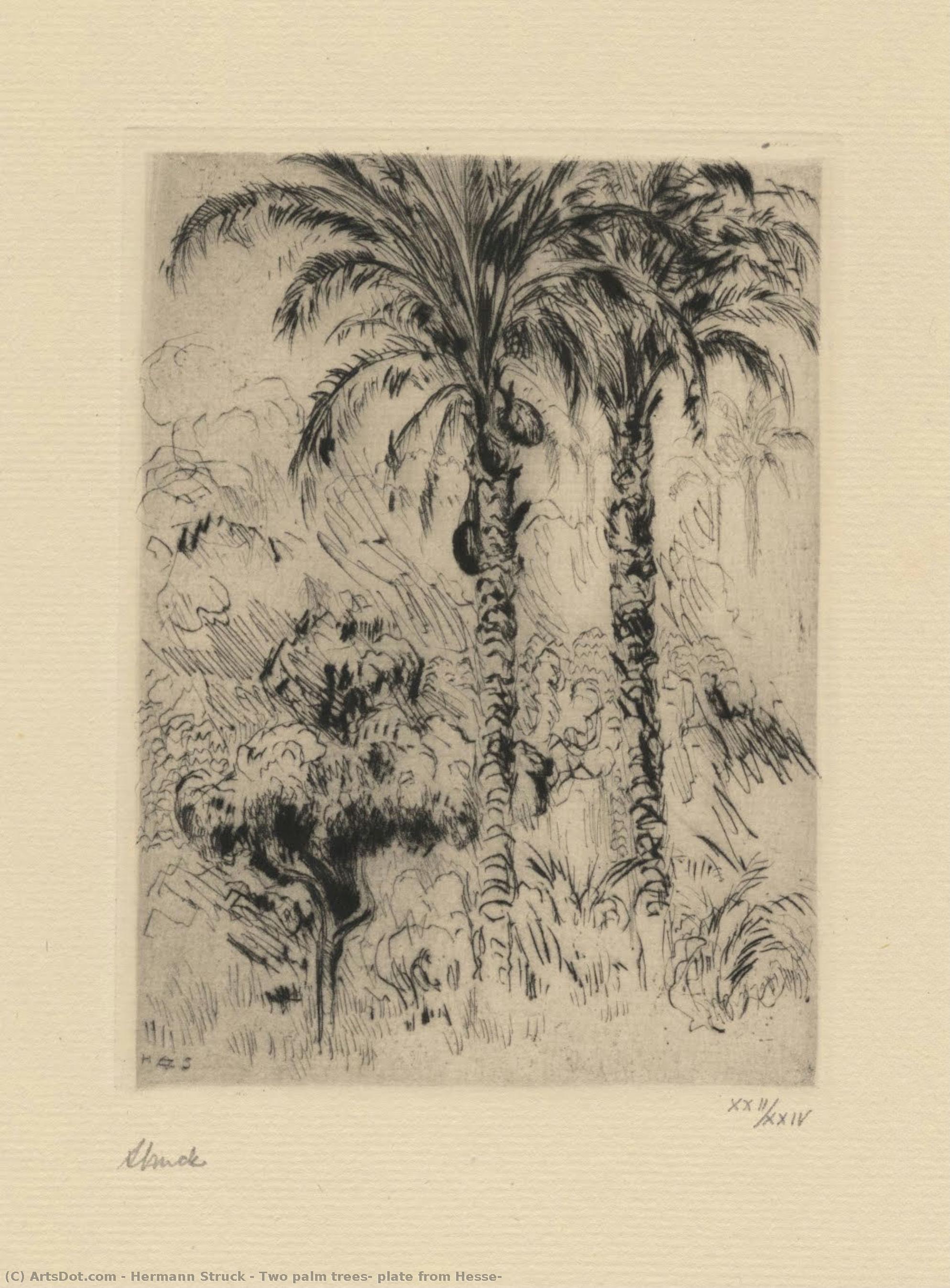
In the delicate interplay of light and shadow found within "Two palm trees, plate from Hesse," we encounter a profound moment of stillness captured by the master of the needle, Hermann Struck. Created in 1923, this exquisite etching serves as more than just a botanical study; it is a nostalgic voyage into a landscape that feels both intimate and expansive. The composition centers on two majestic palm trees, their long, textured trunks rising with a quiet strength against the backdrop of a structured building. Through the meticulous application of line and tone, Struck breathes life into the organic forms of the fronds, allowing them to fan out across the frame like frozen bursts of energy. The black and white medium strips away the distractions of color, forcing the viewer to confront the raw, rhythmic beauty of the etching process itself.
The technique employed here is a testament to Struck’s legendary mastery of the etching needle. As an artist who literally wrote the book on the craft, his ability to manipulate the acid-bitten lines of a copper plate is unparalleled. In this piece, one can observe the subtle gradations of grey that suggest depth and atmosphere, creating a sense of three-dimensional space within a two-dimensional plane. The fine, intricate details of the palm leaves contrast beautifully with the more solid, architectural elements of the background building, creating a balanced tension between nature and human construction. This mastery of texture makes the work particularly captivating for collectors who appreciate the tactile, artisanal quality of traditional printmaking.
Beyond the technical brilliance, there is a hauntingly beautiful narrative woven into the periphery of the scene. The presence of two distant figures—small, almost ghostly silhouettes observing the landscape—adds a layer of human connection and quiet contemplation to the work. These figures invite us to consider our own relationship with the environments we inhabit; they are witnesses to the enduring grace of the palms. For an interior designer or a discerning art lover, this piece offers a sophisticated emotional resonance. It brings a sense of historical weight and intellectual depth to a room, acting as a focal point that encourages slow looking and deep reflection. Whether placed in a contemporary gallery setting or a classic study, this reproduction of Struck’s work serves as an enduring tribute to the serene beauty of the natural world and the timeless art of the etched line.