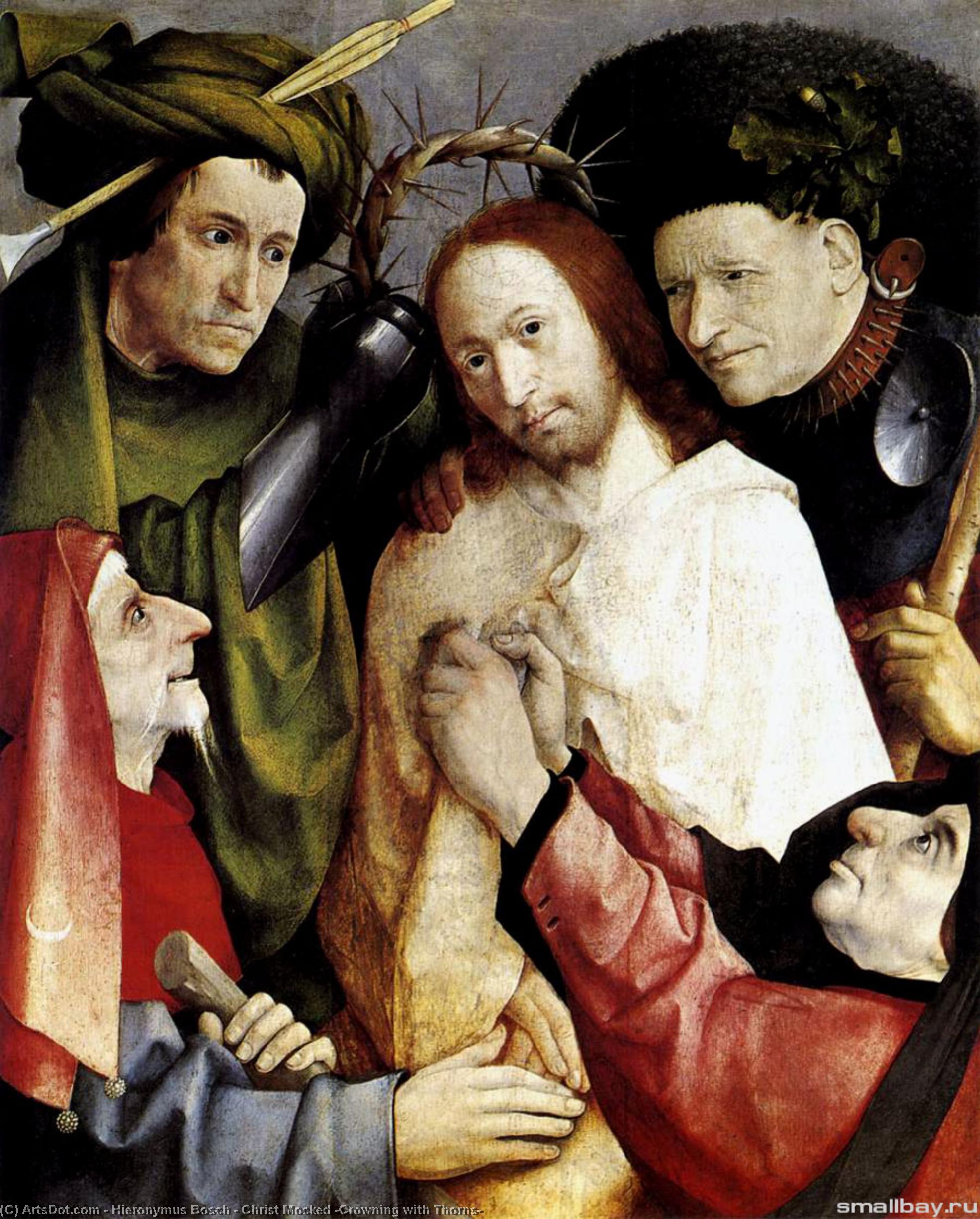
Explore Hieronymus Bosch's haunting depiction of Christ’s mockery – 'Christ Mocked (The Crowning with Thorns)' showcases unsettling symbolism and masterful composition within a pivotal Renaissance masterpiece.
Discover Hieronymus Bosch (c. 1450-1516), Dutch Renaissance master of surrealism & symbolism. Explore his iconic paintings, religious themes, and nightmarish visions – a lasting influence on art history.
Explore European art from the 13th-19th centuries at London's National Gallery! Discover masterpieces by Van Gogh, Rembrandt & more – free entry!
A Vision of Suffering and Moral Decay
Hieronymus Bosch’s “Christ Mocked (The Crowning with Thorns)” stands as one of the most unsettling and psychologically profound paintings produced during the High Renaissance. Executed around 1510, this oil on wood masterpiece transcends mere depiction; it plunges viewers into a realm of disturbing symbolism and confronts them with uncomfortable truths about human nature – specifically, its capacity for cruelty and spiritual corruption. Located in the National Gallery London, this artwork continues to fascinate scholars and artists alike due to its masterful composition and unsettling narrative.
The Narrative Unfolding: A Twisted Gospel Account
Bosch’s depiction isn't a straightforward retelling of the biblical story of Christ’s humiliation. Rather, he compresses several key events into a single frame—the mockery by Roman soldiers, the crowning with thorns, and ultimately, his impending crucifixion—creating an experience that is both visceral and intellectually stimulating. Drawing heavily from the Gospels, Bosch meticulously portrays each stage of Jesus' suffering, yet simultaneously injecting it with elements of folklore and psychological torment. The artist’s intention wasn’t merely to illustrate religious dogma but to explore its darker implications for human morality.
Technical Brilliance: Composition and Color Palette
Bosch’s technical prowess is evident in every aspect of the painting. He employs a pyramidal composition, anchoring Christ at the center while surrounding figures radiate outwards—a technique borrowed from Rogier van der Weyden and Hugo van der Goes—to emphasize his vulnerability amidst the oppressive throng of tormentors. The artist skillfully manipulates perspective to create an illusion of depth, layering figures in three planes that heighten the sense of claustrophobia. Furthermore, Bosch’s masterful use of color contributes significantly to the painting's emotional impact. Pale blues and whites dominate Christ’s figure, symbolizing purity and innocence against the backdrop of vibrant reds, greens, and yellows—representing the soldiers’ arrogance and the decaying flesh of the tormented men.
Symbolism: Layers of Meaning Beyond the Surface
“Christ Mocked” is rife with symbolic imagery that speaks to Bosch's preoccupation with moral decay and the anxieties of his time. The soldier’s spiked collar represents not only brutality but also a broader allusion to pagan rituals, highlighting the clash between Christian piety and primal instincts. The arrows piercing the soldier’s headdress symbolize death and destruction—a motif frequently employed by Bosch to convey spiritual corruption. Even seemingly minor details, such as the oak leaves adorning the soldier's hat, carry significant weight, referencing ancient beliefs about rebirth and transformation. The artist deliberately incorporates these symbols to provoke contemplation on themes of guilt, repentance, and the inescapable consequences of sin.
A Lasting Legacy: Psychological Horror and Artistic Innovation
Bosch’s “Christ Mocked” remains a landmark achievement in Renaissance art—and arguably one of the most disturbing images ever created. Its unsettling atmosphere and masterful composition continue to inspire artists today, demonstrating Bosch's unparalleled ability to translate psychological anxieties into visual form. More than just a depiction of biblical suffering, it is an exploration of the human condition itself—a chilling reminder that even in moments of profound spiritual crisis, humanity remains susceptible to base impulses and moral failings. Its enduring power lies in its capacity to unsettle viewers and compel them to confront uncomfortable truths about their own inner selves.