A Descent into Torment: Exploring Hieronymus Bosch’s ‘Christ Mocked’
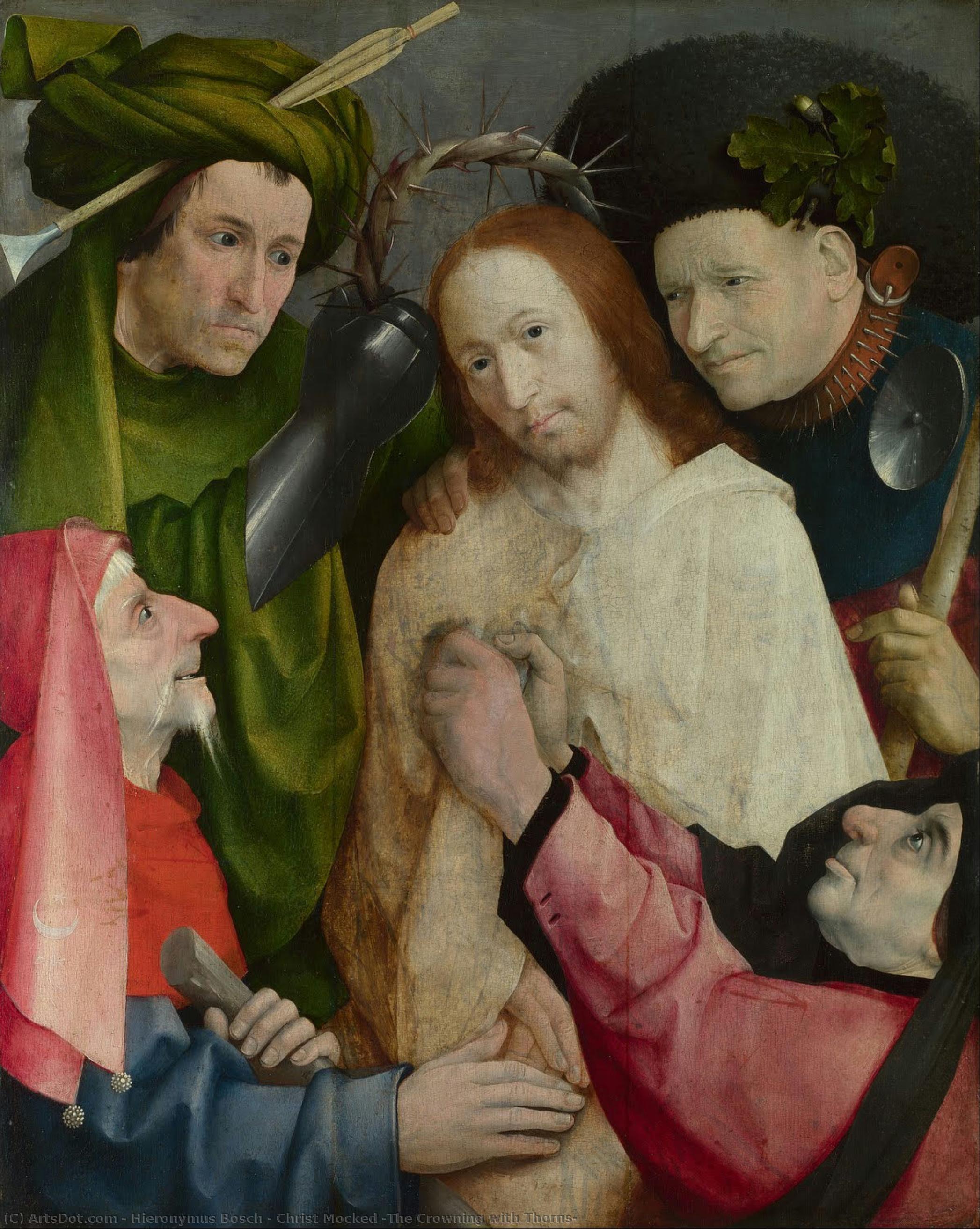
Hieronymus Bosch's “Christ Mocked (The Crowning with Thorns)” – a chilling and profoundly unsettling masterpiece housed within the National Gallery in London – isn’t merely a depiction of a biblical event; it’s an immersive descent into the darkest corners of human nature. Painted around 1510, this oil-on-oak panel transcends simple religious illustration, becoming a potent allegory of sin, suffering, and the grotesque realities lurking beneath the veneer of piety. Bosch, a master of psychological depth and fantastical imagery, doesn’t offer a comforting vision of Christ's humiliation; instead, he confronts us with a brutal tableau of torment, forcing a visceral engagement with themes of betrayal, violence, and the corruption of faith.
The scene unfolds within a claustrophobic space dominated by four figures – the torturers – who relentlessly press upon Christ. These aren’t idealized representations of Roman soldiers; Bosch renders them as unsettlingly human, their faces contorted in expressions of sadistic glee. They wield instruments of pain: an axe, a knife, a hammer, and even a bowl, each element contributing to the painting's disturbing atmosphere. Yet, it is Christ himself who commands our attention. He remains remarkably composed amidst this chaos, his gaze fixed outwards, seemingly accepting his fate with a quiet dignity that amplifies the horror surrounding him. The stark contrast between his serenity and the frenzied activity of the tormentors creates an immediate tension, drawing the viewer into the heart of the drama.
The Language of Symbolism: Decoding Bosch’s Vision
Bosch's genius lies not just in his technical skill but in his masterful deployment of symbolism. Every element within “Christ Mocked” carries a weighty meaning, inviting layers of interpretation. The green costumes worn by the torturers, for instance, are often linked to the color of envy and malice – potent forces driving their actions. The presence of various tools of torture speaks to the multifaceted nature of human cruelty, while the figures themselves can be seen as embodiments of specific sins. The placement of objects like a spade and a bowl hints at themes of death and judgment. Even the seemingly simple details—the intricate patterns on the clothing, the expressions on the faces—contribute to the painting’s complex narrative.
Notably, Bosch employs a carefully constructed geometric framework within the composition. The central figure of Christ forms an inner triangle, while a larger one is created by the iron gauntlet and the angle of his head and left shoulder. These shapes provide stability and balance to the chaotic scene, yet they also subtly reinforce Christ’s vulnerability and isolation. The use of color further enhances this effect: the pale robes of Christ stand in stark contrast to the vibrant hues of the tormentors, highlighting his purity amidst a sea of corruption.
A Renaissance Masterpiece with Enduring Relevance
“Christ Mocked” is a remarkable work that reflects both the artistic conventions and the psychological anxieties of the early 16th century. While not a traditional triptych, it shares similarities with Bosch’s other works in its detailed composition and symbolic themes – echoing his exploration of morality and human fallibility. Bosch's influence extends far beyond his own time; his unique style has inspired generations of artists, from the Surrealists to contemporary creators who continue to grapple with themes of darkness, desire, and the complexities of the human condition. The painting’s unsettling power lies in its ability to tap into our deepest fears and anxieties, reminding us of the ever-present potential for cruelty and corruption within ourselves.
Considered alongside Bosch's other works, such as “The Garden of Earthly Delights,” "Christ Mocked" offers a profound meditation on human nature. It’s a challenging yet rewarding experience, inviting viewers to confront uncomfortable truths about themselves and the world around them.