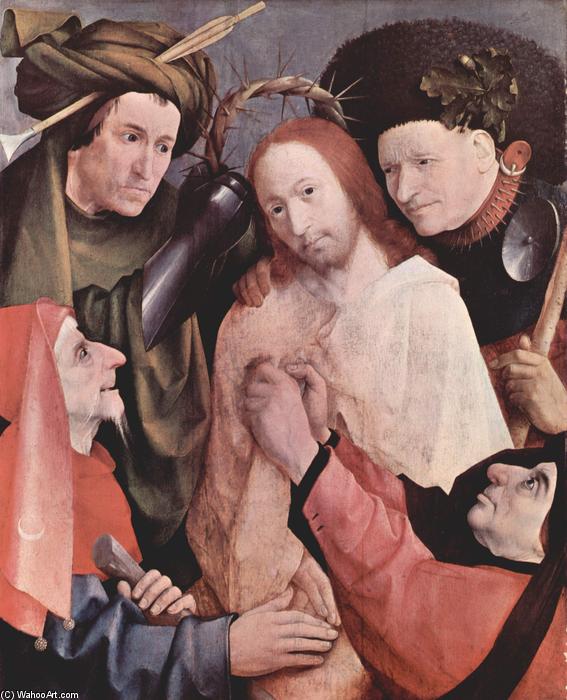
Hieronymus Bosch’s "Crowned with Thorns" depicts a hauntingly dramatic scene of Jesus' crucifixion, showcasing the artist’s signature surreal style and unsettling symbolism from around 1500. Explore this iconic masterpiece and bring its powerful narrative into your space.
A Descent into Suffering: Hieronymus Bosch’s “Crowned with Thorns”
Hieronymus Bosch's "Crowned with Thorns," painted circa 1500, is not merely a depiction of the biblical event; it’s a profound and unsettling meditation on human folly, religious hypocrisy, and the agonizing descent into suffering. This work, steeped in the anxieties of late medieval Europe, reveals Bosch’s unparalleled ability to translate complex theological concerns into a visual language that remains both captivating and deeply disturbing centuries later. The painting portrays the moment Jesus is crowned with thorns by a throng of figures – not angels or devout followers, but a chaotic assembly of men armed with swords, spears, and an unsettling air of mockery. Bosch masterfully captures the raw emotion of the scene, conveying not just the physical pain of Christ’s ordeal but also the spiritual corruption at its heart.
The Artist's Vision: A Netherlandish Enigma
- Bosch’s Unique Style: Born in ’s-Hertogenbosch, Netherlands, around 1450, Hieronymus Bosch developed a style utterly distinct from his contemporaries. His work is characterized by meticulous detail, fantastical imagery, and a pervasive sense of moral judgment.
- Religious Context: Painted during a period of intense religious fervor and societal unrest, "Crowned with Thorns" reflects the anxieties surrounding corruption within the Church and the perceived failings of humanity. Bosch’s art served as a powerful critique of these issues.
- Fragmentary Biography: Much about Bosch's life remains shrouded in mystery, adding to the allure of his work. His training likely involved traditional Netherlandish techniques, but he quickly forged his own path, driven by an extraordinary imagination and a deeply critical worldview.
Symbolism Woven into the Scene
The painting is rich in symbolic detail, reflecting Bosch’s complex theological understanding. The figures surrounding Jesus are not simply witnesses; they represent various aspects of human sin – greed, violence, and deceit. The presence of the bird perched atop one of the figures adds another layer of interpretation, often seen as a symbol of temptation or demonic influence. The weapons themselves—swords and spears—are potent symbols of earthly power and aggression, contrasting sharply with the vulnerability of Christ. The foreground men, taunting Jesus, represent the ultimate rejection of divine grace and the embrace of worldly desires. Bosch’s use of color is equally significant; the dark, earthy tones contribute to the painting's somber mood, while flashes of red – often associated with sin and violence – heighten the dramatic effect.
Technique and Materiality: A Masterful Execution
"Crowned with Thorns" exemplifies Bosch’s exceptional technical skill. Executed in oil on panel, the painting demonstrates a remarkable level of detail, from the intricate textures of the thorns to the expressions of anguish on the figures' faces. Bosch’s meticulous approach is evident in his use of sfumato – a technique that creates subtle gradations of tone and color – which adds depth and realism to the scene. The artist’s mastery of perspective and composition further enhances the painting’s dramatic impact, drawing the viewer into the heart of this harrowing event. The scale of the work, though unknown, would have been substantial, allowing Bosch to fully realize his ambitious vision.