Discover Hieronymus Bosch (c. 1450-1516), Dutch Renaissance master of surrealism & symbolism. Explore his iconic paintings, religious themes, and nightmarish visions – a lasting influence on art history.
Explore the Museo Nacional del Prado in Madrid! Discover masterpieces by Velázquez, Goya & El Greco, spanning centuries of European art. A must-see cultural landmark!
A Fragmented Vision of the Soul
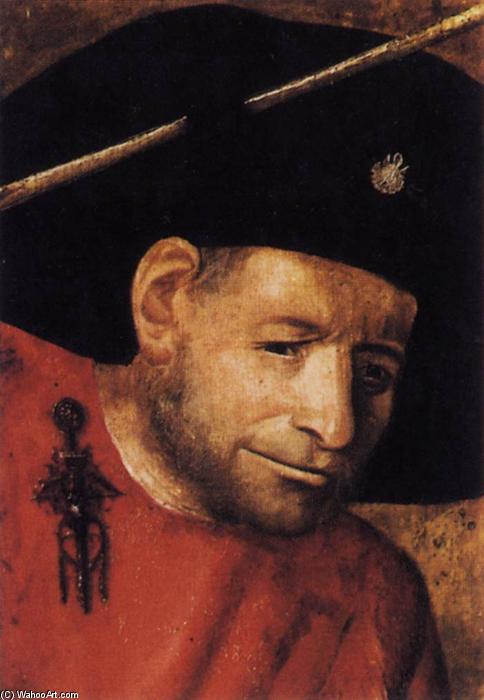
In the quiet corridors of the Museo Nacional del Prado, there exists a small, haunting window into a lost world. Hieronymus Bosch’s Head of a Halberdier (fragment) is not merely a remnant of a larger composition; it is a concentrated burst of psychological intensity that defies the boundaries of its modest size. Painted during the twilight of the fifteenth century, this fragment captures a moment of profound, unsettling stillness. The subject, a soldier identifiable by his station, gazes downward with an expression that oscillates between grim resignation and deep, spiritual contemplation. To look upon this face is to encounter the very essence of the Northern Renaissance—a period where the line between the earthly and the divine was often blurred by shadows and superstition.
The artistry on display is a masterclass in the Netherlandish tradition of meticulous detail and luminous glazing. Bosch, or perhaps a highly skilled follower operating within his orbit, utilized oil on panel to create a surface that seems to breathe with life. The subtle transitions of light across the man's weathered skin and the heavy texture of his dark headwear demonstrate a profound command over chiaroscuro. Even in this truncated form, the artist’s ability to manipulate light creates a sense of three-dimensional presence, pulling the viewer into the soldier's private, somber orbit. The use of earthy tones and muted golds provides a somber, dignified atmosphere that anchors the piece in a sense of historical weight.
Symbolism and the Weight of Existence
Beyond its technical brilliance, the painting serves as a vessel for the profound theological anxieties of Bosch’s era. During this period of late medieval Brabant, the human condition was viewed through a lens of constant spiritual peril. The downward gaze of the halberdier suggests more than mere fatigue; it evokes the concept of humilitas—the humility required before the divine judgment. There is a palpable sense of the "memento mori" within the frame, a reminder of the fleeting nature of life and the inevitability of mortality. The fragment itself acts as a metaphor for the fractured nature of human understanding in an age of religious upheaval.
For the discerning collector or interior designer, this piece offers a unique opportunity to introduce a sense of historical gravity and intellectual depth into a space. A high-quality reproduction of this work does not merely decorate a wall; it invites conversation and reflection. The painting’s ability to evoke emotion—ranging from melancholy to awe—makes it an ideal centerpiece for a study, a library, or a sophisticated gallery setting where the goal is to foster an atmosphere of quiet introspection. It is a piece that rewards repeated viewing, revealing new layers of shadow and nuance with every encounter.