Discover Hieronymus Bosch (c. 1450-1516), Dutch Renaissance master of surrealism & symbolism. Explore his iconic paintings, religious themes, and nightmarish visions – a lasting influence on art history.
Explore Venice's rich history at the Palazzo Ducale (Doge’s Palace)! Witness stunning art, secret passages & marvel at masterpieces by Titian & Veronese – a journey through Venetian power and beauty.
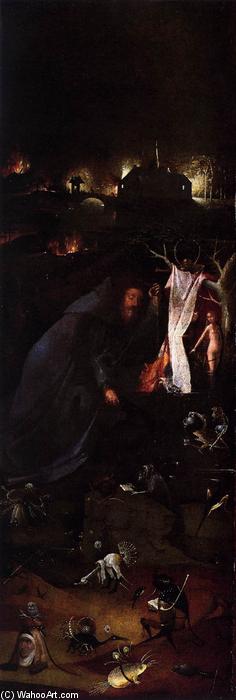
A Descent into Surreal Reflection: Analyzing Bosch’s Hermit Saints Triptych (Left Panel)
Hieronymus Bosch’s “Hermit Saints Triptych,” specifically the left panel depicting a desolate landscape teeming with grotesque figures, stands as an enduring testament to the artist's unparalleled ability to distill anxieties about faith and morality into visual form. Painted around 1505 during the High Renaissance—a period marked by burgeoning artistic innovation alongside deep religious introspection—this artwork transcends mere representation; it plunges viewers into a dreamlike realm populated by unsettling imagery that continues to fascinate scholars and inspire artists alike.
- Composition & Setting: The panel’s vertical orientation immediately establishes dominance, guiding the eye upwards towards an ambiguous horizon line punctuated by distant buildings and flickering fires. Below lies a chaotic tableau of animalistic creatures—birds with human faces, grotesque hybrids—and decaying bones strewn across a rocky terrain. This deliberate disregard for conventional perspective contributes to the pervasive sense of disorientation.
- Color Palette & Lighting: Bosch employs a muted palette dominated by browns and blacks, punctuated by splashes of orange and red emanating from the fires. The pale white highlights on the central figure serve as an unsettling beacon against the oppressive darkness, emphasizing isolation and vulnerability. Dramatic chiaroscuro—the interplay between light and shadow—amplifies the emotional impact, creating a palpable atmosphere of dread.
- Style & Technique: Bosch’s meticulous attention to detail is evident in the intricate lines delineating each creature and element within the scene. His technique – oil paint on wood panel – utilizes layering and glazing techniques to achieve remarkable tonal richness and subtle gradations, capturing the textures of stone and flesh with astonishing accuracy. This painstaking craftsmanship underscores the artist's commitment to conveying psychological depth.
- Symbolism & Narrative Depth: The imagery is rife with symbolic references rooted in medieval Christian iconography. The hermit figure embodies contemplation and penitence, while the surrounding animals represent temptations and moral failings—a visual embodiment of the struggle between good and evil. Bones serve as a poignant reminder of mortality, prompting reflection on the ephemeral nature of earthly existence.
- Emotional Resonance: “Hermit Saints Triptych” evokes a profound sense of unease and melancholy. Bosch’s masterful manipulation of color, composition, and lighting compels viewers to confront uncomfortable truths about human desire and spiritual decay. It remains a powerfully evocative artwork—a haunting glimpse into the subconscious anxieties that underpinned the Renaissance era.