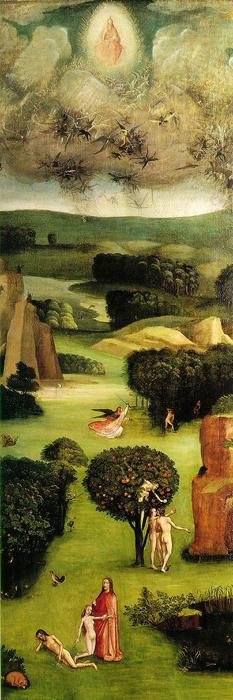
Hieronymus Bosch’s “Last Judgement, Left Wing of the Triptych” – A Descent into Humanity's Darkest Dreams
The left wing of Hieronymus Bosch’s monumental “Triptych of Last Judgement,” housed in the Academy of Fine Arts Vienna, isn’t merely a depiction of divine judgment; it’s an immersive descent into the very heart of human nature – a landscape sculpted from sin, temptation, and the unsettling beauty of decay. Painted between 1504 and 1508 during a period of profound religious fervor and societal unease in the Netherlands, this panel transcends simple theological illustration, offering instead a chillingly intimate portrait of our collective failings.
Bosch’s signature style is immediately apparent: a fantastical realm populated by bizarre creatures, grotesque figures, and an overwhelming abundance of vegetation. The scene unfolds within a lush, almost suffocating landscape dominated by verdant greens and browns – colors that simultaneously evoke paradise and the rotting fruit of transgression. Towering trees twist into unsettling shapes, their branches laden with strange, fleshy growths, while a winding river snakes through the foreground, reflecting a distorted sky. This isn’t the idealized Eden of biblical accounts; it's a world where nature itself seems to be corrupted by human desire.
At the center of this chaotic tableau stands Adam and Eve, not in their innocent state but caught in the throes of temptation. A magnificent, oversized fruit – reminiscent of the forbidden apple – dominates the scene, its form both alluring and menacing. A naked figure, seemingly a representation of humanity, is shown climbing beneath it, suggesting an act of desperate grasping for pleasure and knowledge. To the right, Eve is depicted in a state of blissful surrender, drawn into the embrace of a serpent-like creature, symbolizing the seductive allure of sin. The entire composition pulsates with a sense of impending doom, foreshadowing the expulsion from paradise and the consequences of disobedience.
Beyond this central drama, Bosch meticulously layers symbolic details that invite prolonged contemplation. A small, ornate fountain tower rises in the background, its surface covered in grotesque carvings – a visual metaphor for the corruption of earthly pleasures. A group of figures kneels at the base of the tower, seemingly offering tribute to the fruit, highlighting the pervasive nature of idolatry and the dangers of misplaced devotion. The inclusion of a naked man climbing beneath the fruit is particularly striking; he’s not actively consuming it but rather attempting to reach it, suggesting an obsessive desire that ultimately leads to ruin. The entire panel speaks to Bosch's profound understanding of human psychology – our capacity for both exquisite beauty and horrifying depravity.
Technique and Materials: A Masterclass in Early Netherlandish Painting
Bosch’s masterful technique is a testament to his skill as a painter and his deep knowledge of the materials he employed. The triptych was executed on oak panel, a traditional medium for Northern Renaissance painting. Bosch utilized oil paint, allowing him to achieve remarkable detail, rich colors, and subtle gradations in tone – particularly evident in the rendering of foliage and clothing. He skillfully combined glazing techniques with impasto, building up layers of pigment to create textures that are both tactile and visually arresting.
The use of grisaille—a monochrome technique employing shades of gray—in the exterior panels is a key element of Bosch’s composition. This choice not only provides a stark contrast against the vibrant colors of the central panel but also serves to mimic the appearance of stone, grounding the fantastical imagery in a sense of reality. The meticulous attention to detail – from the intricate patterns on clothing to the subtle expressions on the figures' faces – speaks volumes about Bosch’s dedication to his craft and his desire to create a truly immersive experience for the viewer.
Historical Context: A Reflection of Late Medieval Anxieties
To fully appreciate “Last Judgement, Left Wing,” it’s crucial to understand the historical context in which it was created. The late 15th century was a period of profound religious and social upheaval in Europe. The Black Death had decimated populations, challenging established beliefs about mortality and divine providence. The rise of humanism brought with it a renewed interest in classical antiquity, while simultaneously fueling anxieties about the corruption of society and the decay of traditional values.
Bosch’s work reflects these anxieties directly. His depiction of a world saturated with sin, temptation, and grotesque imagery is not simply an artistic exercise; it's a powerful commentary on the moral failings of humanity. The triptych can be seen as a warning against the dangers of earthly pleasures and a call to repentance – a message that resonated deeply with audiences during Bosch’s lifetime.
Symbolism and Emotional Impact: A Journey into the Soul
“Last Judgement, Left Wing” is replete with symbolism, inviting viewers to engage in a complex and layered interpretation. The fruit represents forbidden knowledge and the consequences of disobedience; the serpent embodies temptation and deceit; the naked figures symbolize humanity’s vulnerability and susceptibility to sin. The overall effect is profoundly unsettling – a visceral depiction of our own inner demons.
Despite its bleak subject matter, the panel possesses a strange beauty. Bosch's meticulous attention to detail, his masterful use of color and texture, and his ability to evoke a sense of atmosphere create an experience that is both disturbing and captivating. “Last Judgement, Left Wing” isn’t merely a painting; it’s a psychological portrait of humanity – a haunting reminder of our capacity for both good and evil, and a testament to the enduring power of art to confront us with uncomfortable truths.