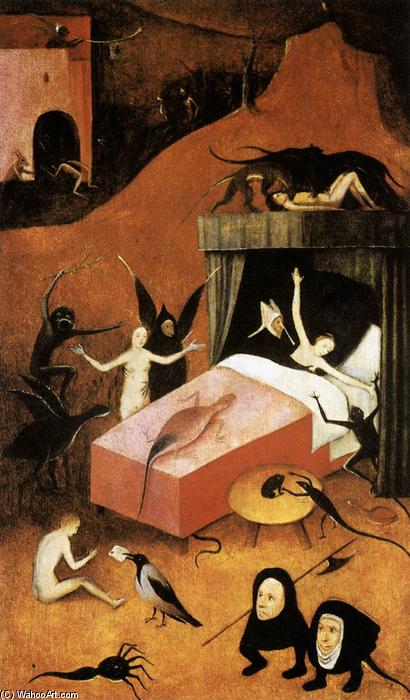
A chaotic fragment of Hieronymus Bosch’s ‘Last Judgment’ depicts a scene of unsettling figures, bizarre birds, and dogs amidst a bed, capturing the artist's unique vision from the early 16th century. Discover this captivating artwork and bring its dark beauty into your space.
A Descent into Chaos: Exploring Hieronymus Bosch’s “Last Judgment (Fragment of Hell)”
The fragmented scene before us – a swirling vortex of despair and grotesque beauty – is undoubtedly a fragment of Hieronymus Bosch's monumental "Last Judgment." Dating from the late 15th or early 16th century, this work offers a chilling glimpse into the artist’s profoundly unsettling vision of humanity’s fate. Bosch, a figure shrouded in mystery and working primarily in ‘s-Hertogenbosch, was a master of capturing not just religious iconography but also the anxieties and moral ambiguities simmering beneath the surface of late medieval society. This particular fragment, depicting what Bosch termed “Hell,” is a testament to his unparalleled ability to translate complex theological concepts into intensely personal and emotionally charged imagery.
- Subject Matter: The composition immediately confronts us with the core tenets of the Last Judgment – the reckoning of souls before God. However, Bosch doesn’t present this event as a serene, triumphant spectacle. Instead, he depicts a scene of utter chaos and disintegration, a visceral representation of damnation.
- Technique: Bosch's meticulous technique is immediately apparent. Executed in oil on panel, the painting showcases his mastery of detail, from the intricate folds of the bedclothes to the unsettling textures of the animal forms. The use of glazing – layering thin washes of color over a dried underpainting – creates a luminous depth and contributes significantly to the work’s otherworldly atmosphere.
Symbolism Woven into Nightmare
Bosch's paintings are renowned for their dense layers of symbolism, often drawing upon biblical narratives, folklore, and contemporary anxieties. In this fragment, several recurring motifs contribute to the overall sense of dread. The central figure lying on the bed is likely a representation of humanity itself, succumbing to sin and ultimately facing judgment. The scattered birds, frequently interpreted as symbols of vanity and fleeting pleasures, add to the scene’s unsettling dynamism. Their flight represents the futile attempts to escape divine retribution. The presence of two dogs – one positioned on the left and another on the right – is particularly significant. Dogs have long been associated with temptation and deceit in Christian iconography, further emphasizing the themes of moral corruption and spiritual peril.
- The Bed: Represents earthly comfort and indulgence, a trap for the soul.
- Birds: Symbolize vanity, fleeting pleasures, and the ephemeral nature of worldly pursuits.
- Dogs: Represent temptation, deceit, and the corrupting influence of sin.
Historical Context & Artistic Innovation
Bosch’s work emerged during a period of profound religious and social upheaval in Europe. The late medieval era was marked by increasing skepticism towards established institutions, coupled with anxieties about mortality and the threat of divine punishment. Bosch's art reflects this atmosphere, offering a stark critique of contemporary society while simultaneously engaging with fundamental theological questions. His innovative approach – blending realistic detail with fantastical imagery – challenged conventional artistic norms and cemented his place as one of the most original and influential artists of the Renaissance. Unlike many of his contemporaries who focused on idealized depictions of religious figures, Bosch embraced the grotesque and the macabre, creating a visual language that continues to fascinate and disturb viewers centuries later.
Emotional Impact & Artistic Reproduction
“Last Judgment (Fragment of Hell)” possesses an undeniable emotional power. The painting’s unsettling imagery evokes feelings of anxiety, dread, and perhaps even a sense of profound unease. It is a work that demands attention, forcing us to confront uncomfortable truths about human nature and our relationship with the divine. ArtsDot offers meticulously crafted hand-painted reproductions of this iconic masterpiece, allowing you to bring its haunting beauty into your home or office. Our skilled artisans employ traditional techniques and archival materials to ensure that each reproduction faithfully captures the original’s intricate details and evocative atmosphere. Own a piece of art history – experience the power of Bosch's vision firsthand.