A Visionary’s Retreat: Decoding Bosch's *St John the Evangelist on Patmos (reverse)*
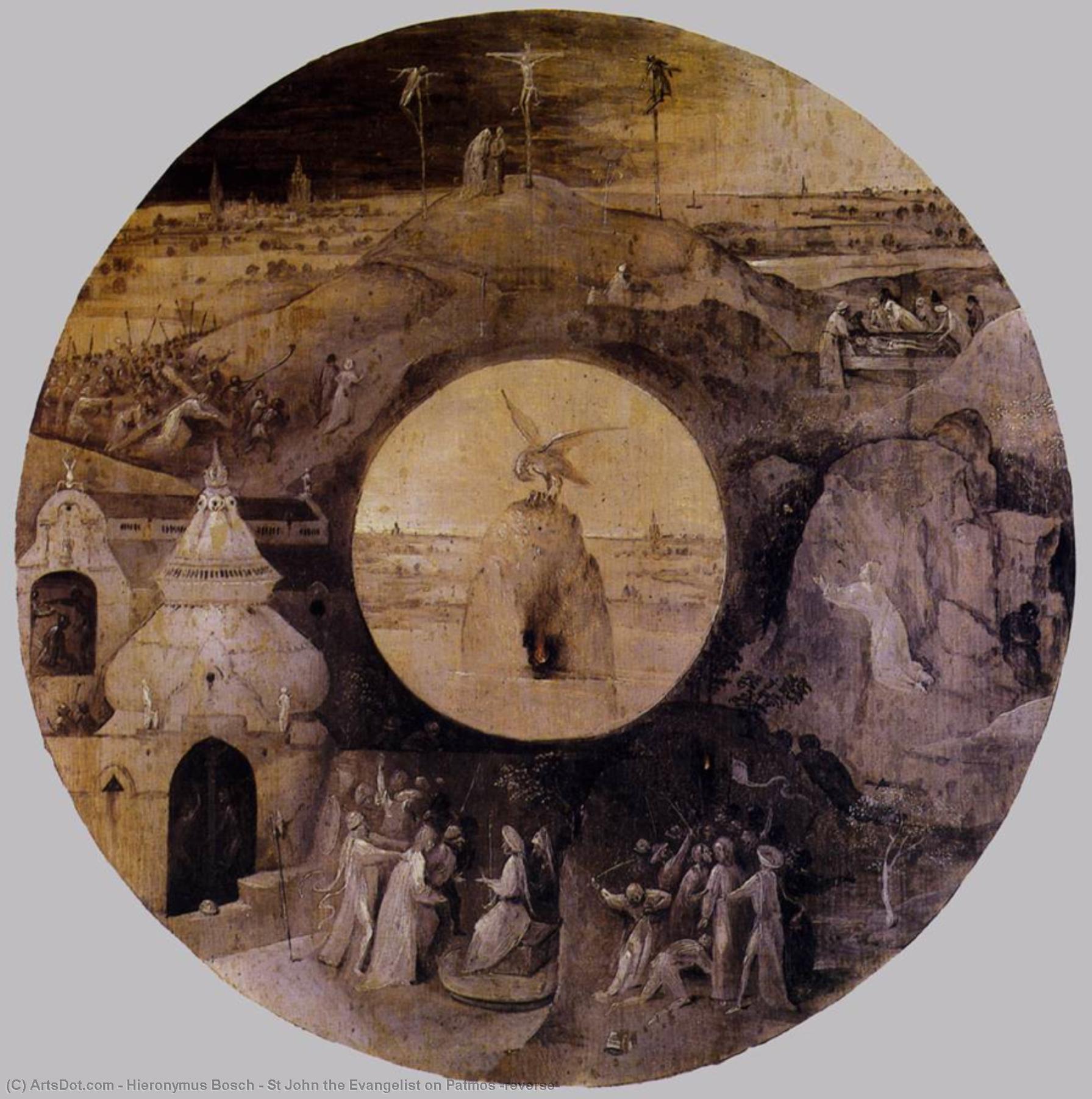
Hieronymus Bosch remains one of art history’s most enigmatic and captivating figures. This oil-on-panel painting, measuring a compact 39 x 39 cm and currently housed in the prestigious Gemäldegalerie, Berlin, is not merely a depiction of religious narrative; it's an invitation into a complex world of symbolism, spirituality, and the anxieties of the late medieval period. Often referred to as the “reverse” side of another work, this painting possesses its own distinct power and invites contemplation beyond its companion piece.
Subject & Composition: A Saint in Isolation
The scene portrays St. John the Evangelist during his exile on the island of Patmos, as described in the Book of Revelation. He is depicted not receiving divine visions – a common subject for this narrative – but rather *after* their occurrence, seemingly lost in contemplation amidst a rugged landscape. The composition is strikingly circular, drawing the eye inward towards St. John and the surrounding figures. A smaller circle within depicts a boat on turbulent waters, populated by individuals engaged in various activities. This juxtaposition of terrestrial and maritime elements creates a sense of both confinement and expansive possibility.
Artistic Style & Technique: Northern Renaissance Mastery
Bosch’s style is instantly recognizable – a blend of meticulous detail, fantastical imagery, and an unsettling realism. He was a master of the Early Netherlandish painting tradition, employing oil paints on oak panels to achieve luminous colors and intricate textures. The layering of glazes creates depth and atmosphere, while his precise brushwork brings each figure to life with remarkable clarity.
The use of light and shadow is particularly effective, highlighting key figures and creating a dramatic sense of space.
Historical Context & Symbolism: A World on the Brink
Created around 1489, *St John the Evangelist on Patmos (reverse)* reflects the religious fervor and anxieties prevalent in Europe at the close of the 15th century. The painting is rich with symbolism. St. John’s isolation speaks to the spiritual struggles of the individual, while the figures surrounding him – angels, demons, and ordinary people – represent the forces vying for his soul. The boat on the ocean can be interpreted as a metaphor for the Church navigating the turbulent waters of faith and societal change.
Bosch's work often served as moralizing tales, warning against sin and urging viewers to seek salvation.
Emotional Impact & Lasting Legacy
The painting evokes a sense of profound introspection and spiritual unease. It’s not a celebratory depiction of faith, but rather a raw and honest portrayal of the challenges inherent in belief. The somber color palette and the melancholic expressions on the figures' faces contribute to this atmosphere of quiet desperation. Bosch’s influence on subsequent generations of artists is undeniable. His visionary imagination and his willingness to explore the darker aspects of human nature continue to resonate with audiences today.
Collecting & Reproduction
For collectors and interior designers, a reproduction of *St John the Evangelist on Patmos (reverse)* offers a unique opportunity to introduce a touch of Renaissance mystique into any space. Its compact size makes it suitable for smaller rooms or as part of a larger gallery wall. The painting’s complex symbolism and rich detail provide endless opportunities for conversation and contemplation, making it a truly captivating addition to any art collection.