A Descent into the Grotesque: Hieronymus Bosch’s “Studies of Monsters”
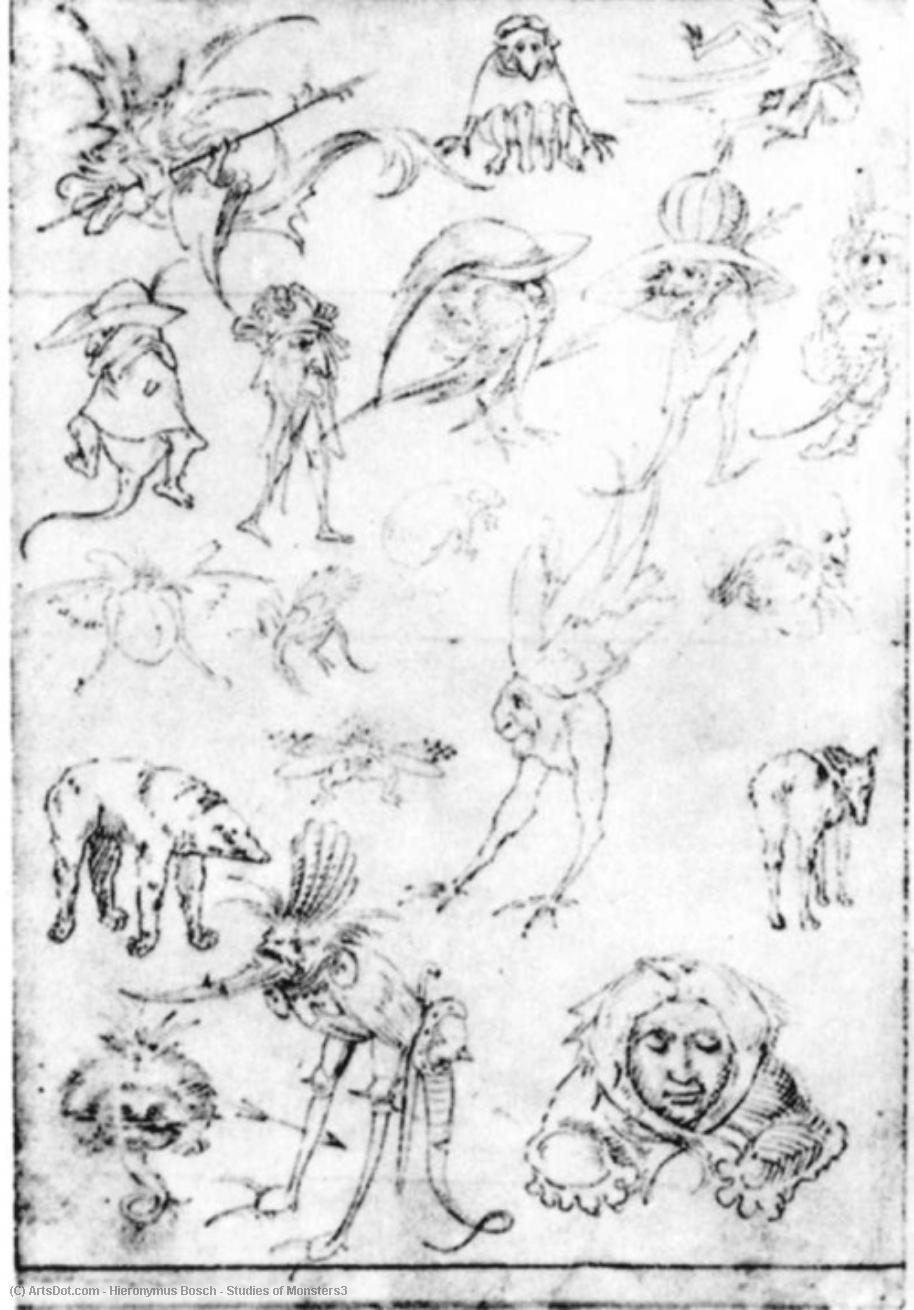
Hieronymus Bosch's "Studies of Monsters 3," a haunting double-sided drawing housed within the Ashmolean Museum in Oxford, offers a glimpse into the fevered imagination of one of art history’s most enigmatic figures. Created around 1500, this work transcends mere illustration; it is a meticulously rendered exploration of human anxieties, moral failings, and the unsettling potential lurking beneath the surface of everyday life. The drawing itself—a dense tapestry of pen and bistre ink on paper—is not intended for immediate comprehension but rather as a foundational study, a visual laboratory where Bosch wrestled with his most fantastical creations.
Bosch’s artistic world was deeply rooted in the late medieval period, a time marked by religious fervor, folklore, and a growing awareness of societal corruption. His upbringing within a family of artists—his grandfather and father both practiced painting—provided him with technical skills but also instilled a rebellious spirit, evident in his departure from conventional artistic norms. “Studies of Monsters” exemplifies this divergence; it’s not a polished finished piece, but rather a raw, almost frantic outpouring of ideas, reflecting the artist's intensely personal and often disturbing vision.
The Language of Line: Technique and Composition
The immediate impact of "Studies of Monsters 3" is one of overwhelming visual density. The composition is deliberately chaotic, a swirling mass of overlapping figures—humanoids, animals, hybrid creatures—each rendered with painstaking detail using the precise lines of pen and bistre ink. Hatching and cross-hatching techniques are employed to build up tonal values, creating a remarkable sense of texture and depth despite the monochromatic palette. The absence of traditional perspective forces the viewer’s eye to wander across the page, absorbing the unsettling details of each individual monster.
Bosch's mastery lies in his control over line. These aren’t simply outlines; they are imbued with a sense of movement and dynamism. The lines suggest not just form but also potential action, as if these creatures are poised to erupt from the page. The varying pressures applied to the bistre create subtle shifts in tone, adding layers of complexity to the overall image and contributing to its unsettling atmosphere.
Symbolic Beasts: Interpretation and Emotion
The subjects themselves—a menagerie of grotesque hybrids—are central to the drawing’s power. These are not simply monsters for their own sake; they represent a potent symbolic language, reflecting Bosch's anxieties about human nature and morality. Many scholars believe these figures embody temptations, vices, and the darker aspects of the soul. The recurring presence of animals – lions, dogs, birds – often carries specific allegorical meanings within Bosch’s work, frequently representing lust, greed, or deceit.
The overall emotional impact is undeniably unsettling. There's a palpable sense of unease, a feeling that we are witnessing something forbidden and deeply disturbing. This isn’t a comfortable image; it challenges the viewer to confront uncomfortable truths about themselves and the world around them. The lack of clear narrative or moral judgment further amplifies this effect, leaving us with a lingering sense of ambiguity and dread.
A Window into a Master's Mind: Historical Context and Legacy
"Studies of Monsters 3" provides invaluable insight into Bosch’s creative process. It reveals the meticulous planning and experimentation that went into his larger works, such as “The Garden of Earthly Delights.” Understanding this drawing allows us to appreciate the depth and complexity of Bosch's artistic vision—a vision rooted in both religious symbolism and a profound understanding of human psychology.
Bosch’s influence on subsequent artists is undeniable. His unique blend of realism, fantasy, and moral allegory continues to fascinate and inspire today. A reproduction of “Studies of Monsters 3” offers a remarkable opportunity to bring this extraordinary work into any setting, inviting contemplation and sparking dialogue about the enduring power of art to confront our deepest fears and desires.