A World of Temptation: Unveiling Bosch’s Masterpiece
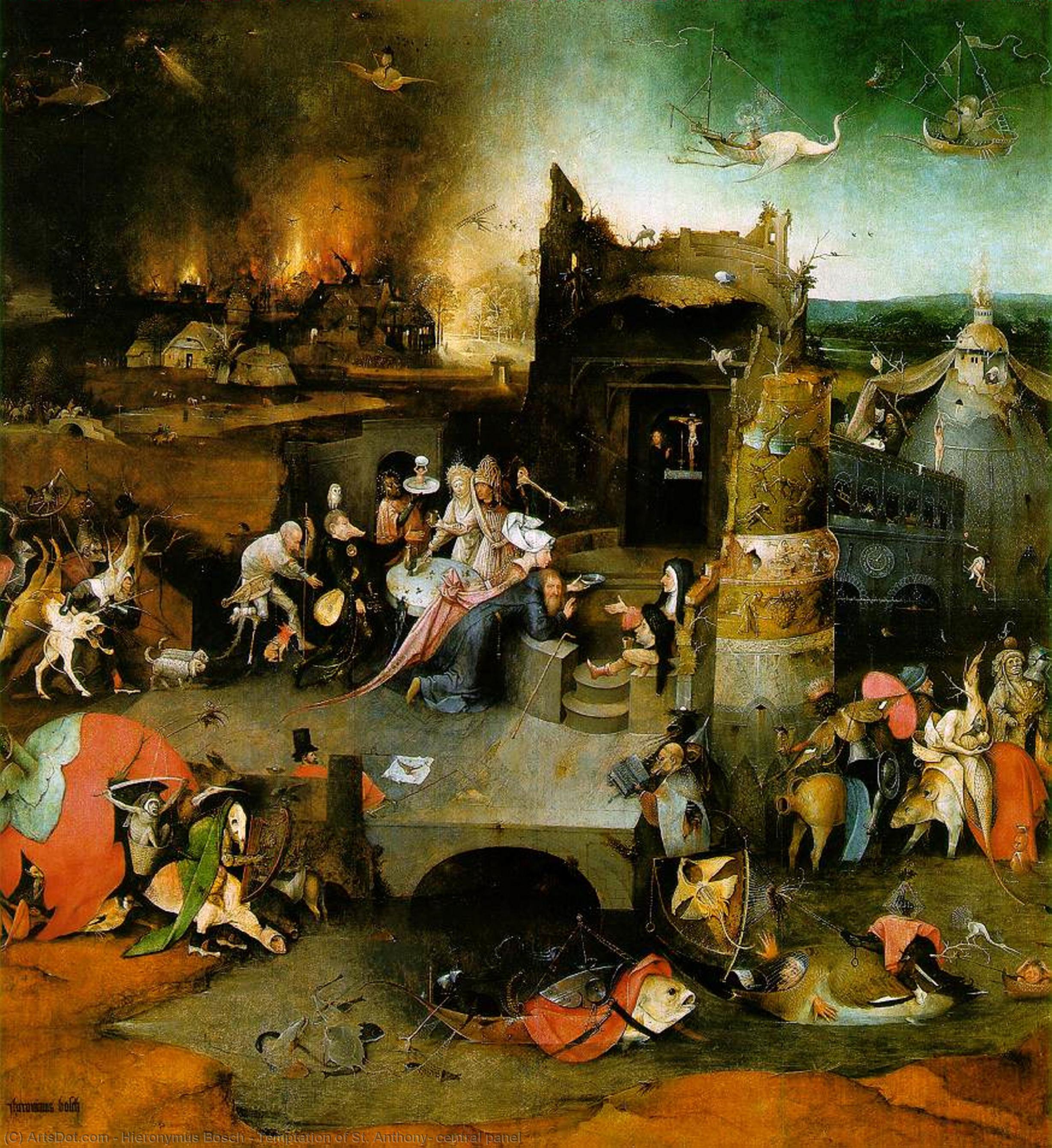
Hieronymus Bosch's *Temptation of St. Anthony* (central panel) is arguably one of the most captivating and enigmatic works from the Northern Renaissance. This oil-on-wood painting isn’t merely a depiction of religious struggle; it’s a profound exploration of human frailty, moral conflict, and the power of imagination—a visual feast brimming with bizarre imagery and symbolic weight.
Subject & Narrative
The central panel portrays St. Anthony Abbot, a 3rd-century hermit renowned for his unwavering faith, undergoing intense spiritual trials. Bosch doesn’t present a straightforward narrative but rather a chaotic panorama of temptations manifesting as grotesque creatures, fantastical landscapes, and scenes of earthly indulgence. Demons disguised in various forms—from alluring women to monstrous beasts—attempt to lure the saint from his path of devotion. The scene is teeming with activity; figures engage in gambling, feasting, and even what appears to be a blasphemous religious ceremony, all designed to test Anthony’s resolve.
Artistic Style & Technique
Bosch's style is uniquely his own—a blend of meticulous detail and unrestrained fantasy. While rooted in the
Renaissance tradition of realism, he transcends it with his otherworldly visions. His technique involves layering oil paint to create rich textures and luminous colors, particularly evident in the depiction of fabrics and skin tones. The composition is deliberately crowded and disorienting, reflecting the internal turmoil experienced by St. Anthony.
The use of perspective is often skewed, adding to the unsettling atmosphere and emphasizing the unreality of the scene.
Symbolism Decoded
Every element within *Temptation of St. Anthony* carries symbolic weight. The owl, frequently appearing in Bosch’s work, represents heresy and folly. Animals often embody lust or other vices. The fish, a symbol of Christ, is ironically present amidst scenes of debauchery, highlighting the contrast between spiritual purity and earthly corruption. Even seemingly innocuous objects—like eggs or musical instruments—are imbued with hidden meanings related to temptation and sin. Understanding these symbols unlocks deeper layers of interpretation within the painting.
Historical & Religious Context
Created around 1500, this panel was originally part of a larger triptych. The story of St. Anthony’s temptations was well-known during Bosch's time, popularized by accounts like Athanasius of Alexandria’s *Life of St. Anthony*. The painting reflects the religious anxieties of the late medieval period—a growing concern with sin, temptation, and the struggle for salvation. It also speaks to a broader cultural fascination with the grotesque and the macabre.
Emotional Impact & Lasting Legacy
*Temptation of St. Anthony* evokes a powerful emotional response. The painting is unsettling, disturbing even, yet undeniably compelling. Bosch’s masterful depiction of human weakness and the ever-present threat of evil resonates deeply with viewers across centuries. It serves as a cautionary tale about the dangers of succumbing to temptation and the importance of maintaining faith in the face of adversity. The work continues to inspire artists, writers, and filmmakers today, cementing its place as a cornerstone of art history.
Bring Bosch’s Vision Home
- Explore high-quality oil painting reproductions of *Temptation of St. Anthony* at ArtsDot.com, meticulously crafted to capture the essence of Bosch's original masterpiece.
- Discover other works by Hieronymus Bosch and delve deeper into his fascinating world.
- Consider how this iconic artwork can add a touch of intrigue and intellectual depth to your home or office décor.
ArtsDot.com offers a unique opportunity to own a piece of art history, beautifully reproduced for your enjoyment.