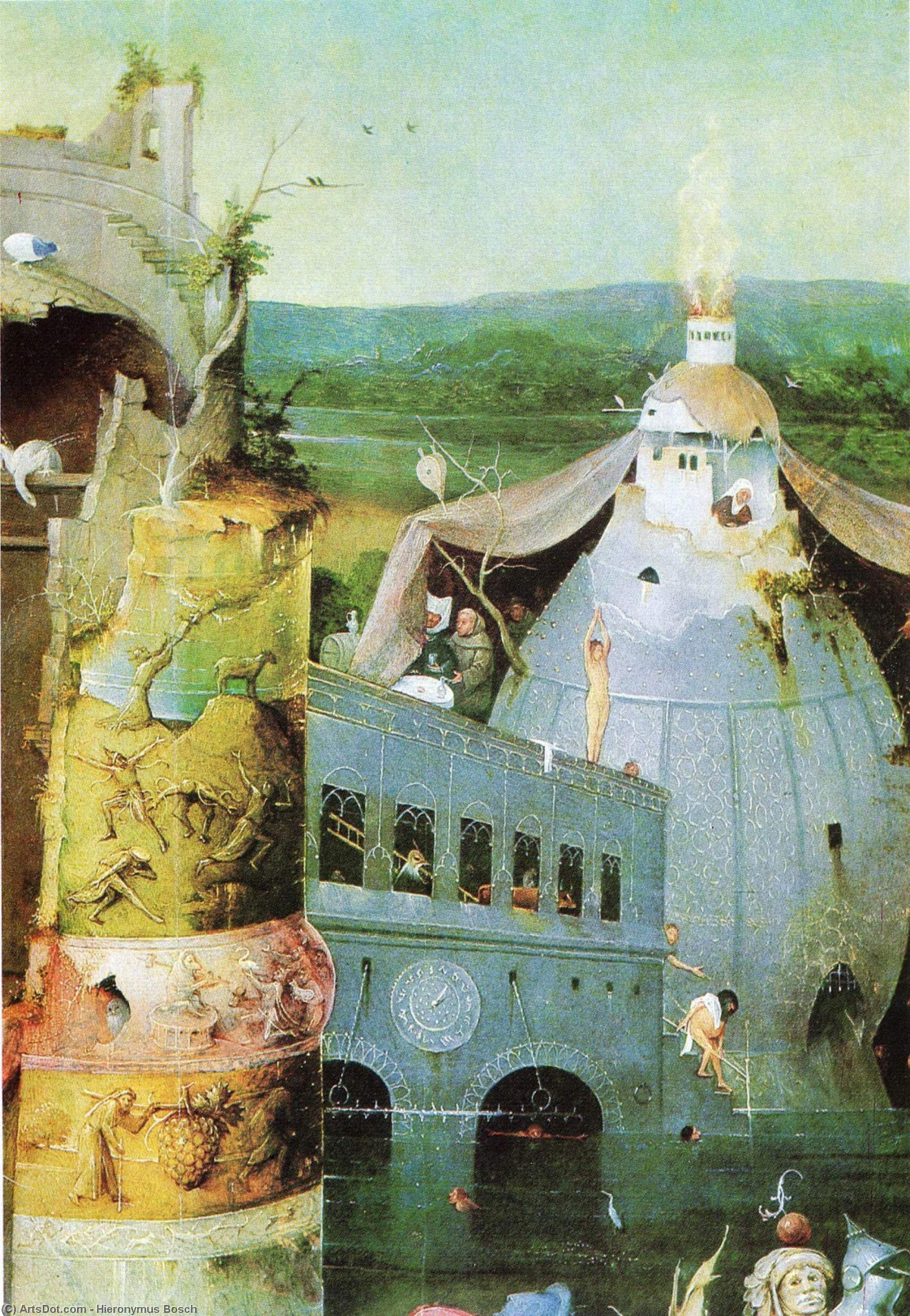
A Descent into Darkness: Exploring Hieronymus Bosch’s ‘Temptation of St Anthony’
Hieronymus Bosch remains an artist whose oeuvre defies easy categorization, cementing his place as one of the most singular voices of the Northern Renaissance. Born around 1450 in ’s-Hertogenbosch, Netherlands—a region grappling with religious upheaval and burgeoning anxieties about societal order—Bosch's artistic vision emerged from a crucible of medieval folklore and proto-scientific observation. Unlike many of his contemporaries who adhered to established artistic conventions, Bosch relentlessly pursued an unsettling aesthetic that continues to fascinate scholars and captivate audiences today. Biographical details stubbornly resist definitive reconstruction; archival records are fragmentary, fueling ongoing debate about his formative influences and personal life—a deliberate obscurity that arguably enhances the mystique surrounding his work.
- Subject Matter: Bosch’s ‘Temptation of St Anthony,’ like many of his paintings, delves into profound theological themes exploring the battle between good and evil within the human soul. The central figure, Saint Anthony—a hermit devoted to prayer—faces a harrowing confrontation with demonic forces attempting to lure him from his ascetic path.
- Style: Bosch’s distinctive style is instantly recognizable for its hallucinatory imagery, grotesque figures, and meticulously detailed landscapes populated by bizarre creatures and unsettling juxtapositions. He eschewed idealized representations of religious piety, opting instead for a vision steeped in nightmare logic—a stylistic hallmark that distinguishes him from other artists of his time.
- Technique: Bosch employed oil paint on panel with remarkable precision, layering thin glazes to achieve luminous effects and capturing subtle nuances of texture. His meticulous attention to detail extended beyond mere representation; he utilized symbolism extensively, embedding hidden meanings within every element of the composition.
Historical Context & Religious Symbolism
Bosch’s artistic output coincided with a period marked by intense religious fervor and anxieties surrounding heresy—particularly the Hussite movement in Bohemia. The Catholic Church faced challenges from reformers advocating for doctrinal purity, creating an atmosphere of intellectual ferment and spiritual questioning. Bosch's depiction of temptation reflects this broader cultural context, portraying demonic forces as embodiments of worldly desires and corrupt influences that threaten to undermine faith. Recurring symbols within the painting—such as birds representing evil spirits, grotesque animals symbolizing sinfulness, and a crumbling castle signifying decay—speak to anxieties about moral decline and the fragility of human existence. The architectural setting itself is deliberately ambiguous, mirroring the psychological turmoil experienced by Saint Anthony as he wrestles with temptation.
Emotional Impact & Artistic Legacy
‘Temptation of St Anthony’ transcends mere narrative depiction; it aims to evoke a visceral emotional response in the viewer—a confrontation with primal fears and anxieties about mortality. Bosch's masterful use of color, light, and shadow contributes to this unsettling atmosphere, immersing the audience in a dreamlike realm populated by disturbing imagery. The painting’s enduring influence can be seen in subsequent artistic movements, notably Surrealism, where artists sought to explore the subconscious mind and challenge conventional perceptions of reality. Bosch’s uncompromising vision continues to inspire artists and scholars alike, cementing his reputation as an unparalleled innovator who dared to confront the darkest recesses of human experience—a testament to the power of art to provoke contemplation and unsettle our understanding of the world.
Further Exploration
For a deeper appreciation of Bosch’s artistic genius, consider visiting the National Museum of Ancient Art in Lisbon (
National Museum of Ancient Art) where you can examine reproductions of his celebrated works alongside those of Raphael and other masters of Renaissance art. Alternatively, delve into Bosch’s ‘Triptych of Haywain’ (
Triptych of Haywain) and ‘Triptych of the Martyrdom of St Liberata’ (
Triptych of the Martyrdom of St Liberata) to gain insight into his broader artistic concerns and stylistic evolution.