A Descent into Delight: Exploring Hieronymus Bosch’s “The Garden of Earthly Delights”
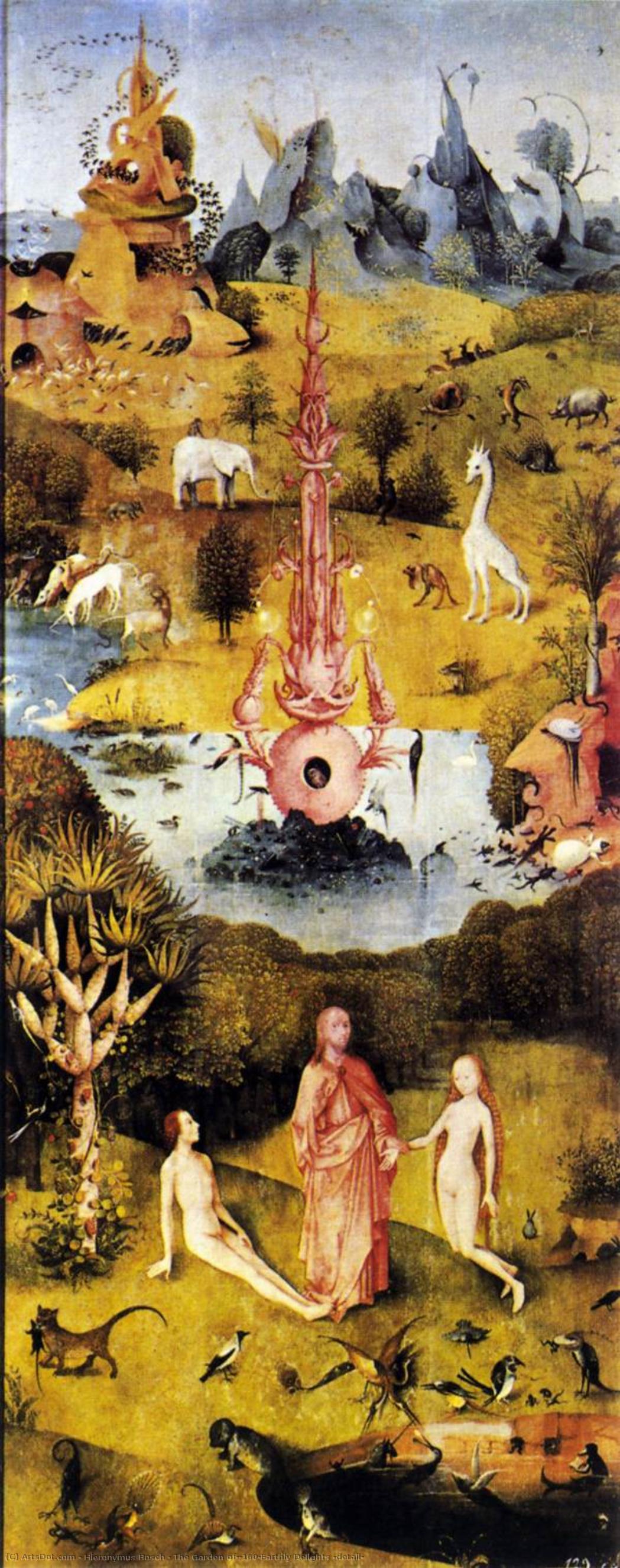
Hieronymus Bosch's "The Garden of Earthly Delights," a triptych painted between 1490 and 1510, is not merely a depiction of paradise; it’s an unsettling allegory, a fever dream rendered in meticulous detail. This particular section, focusing on the central panel, offers a glimpse into a world teeming with fantastical creatures, nude figures engaged in bizarre activities, and a landscape saturated with both opulent beauty and profound unease. Bosch, born around 1450 in ’s-Hertogenbosch, Netherlands, was an artist shrouded in mystery, his life as enigmatic as the visions he produced. His work reflects the anxieties of late medieval Europe – a period grappling with religious upheaval, burgeoning scientific thought, and a growing awareness of human desires – all filtered through a uniquely idiosyncratic artistic lens.
The Visual Feast: Technique and Composition
Bosch’s technique is immediately striking. He employs an astonishing level of detail, rendering every feather on a bird's wing, every ripple in the water, every expression on a figure’s face with painstaking accuracy. This hyperrealism contrasts sharply with the utterly improbable scenes unfolding before us. The painting is executed in oil on wood panel, a medium that allowed Bosch to achieve remarkable luminosity and depth of color – particularly evident in the vibrant reds and blues dominating this section. Notice how he utilizes atmospheric perspective; distant elements fade into a hazy blue, creating a sense of immense space within the garden. The composition itself is deliberately chaotic yet carefully orchestrated. Figures are arranged in clusters, seemingly oblivious to one another, while bizarre animals roam freely amongst them. A central boat, possibly representing a vessel for transporting souls or simply a stage for earthly pleasures, anchors the scene and draws the eye inward.
- Color Palette: Dominated by rich reds, blues, and greens – colors associated with both fertility and sin in Bosch’s time.
- Texture: The meticulous detail creates a tactile quality, inviting the viewer to reach out and touch the painted surfaces (though, of course, that's impossible!).
- Perspective: A complex interplay of linear and atmospheric perspective contributes to the painting’s unsettling depth.
A Tapestry of Symbolism – Decoding the Dream
“The Garden of Earthly Delights” is a veritable encyclopedia of symbolism, inviting endless interpretation. The nude figures are not simply representations of pleasure; they embody various aspects of human nature—lust, vanity, folly, and even piety. The abundance of fruit symbolizes temptation and the fleeting nature of earthly delights. The animals – some familiar, others monstrous – represent both innocence and corruption. The presence of a tower, reminiscent of Babel, hints at humanity’s hubris and its potential for self-destruction. Recurring motifs include musical instruments (often associated with sin), dice (representing chance and gambling), and various types of clothing, each carrying specific symbolic weight. The overall scene can be read as a cautionary tale about the dangers of indulging in worldly pleasures and neglecting spiritual pursuits.
It’s important to note that Bosch himself never explicitly explained the painting's meaning, adding to its enduring mystique.
Emotional Resonance – A Portrait of Human Condition
Despite its unsettling imagery, “The Garden of Earthly Delights” possesses a profound emotional resonance. It taps into our deepest desires and anxieties, confronting us with the complexities of human nature. The painting’s chaotic energy and ambiguous narrative evoke a sense of disorientation and unease – mirroring perhaps the spiritual turmoil experienced by Bosch himself. There's a palpable tension between beauty and decay, innocence and corruption, pleasure and pain. This section, in particular, captures a moment of intense interaction amongst the figures, suggesting a fleeting glimpse into a world where earthly desires reign supreme. A high-quality reproduction allows us to linger within this captivating scene, contemplating its timeless themes and Bosch’s extraordinary vision. ArtsDot offers meticulously crafted reproductions that faithfully capture the detail and atmosphere of this iconic masterpiece, bringing it into your home or office as a conversation piece and a window into the mind of one of art history's most enigmatic geniuses.