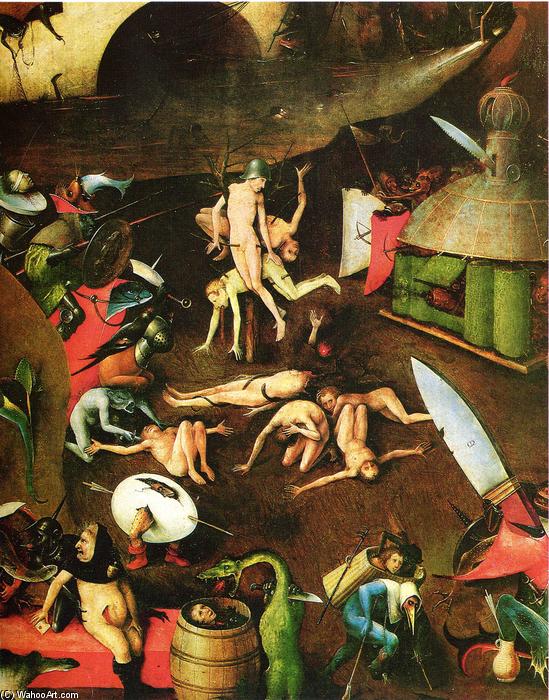
Bosch’s haunting ‘The Last Judgement’ detail showcases grotesque figures battling for salvation amidst a surreal landscape—a masterpiece of the Early Netherlandish Renaissance that captures profound psychological anxieties and invites contemplation on mortality.
Discover Hieronymus Bosch (c. 1450-1516), Dutch Renaissance master of surrealism & symbolism. Explore his iconic paintings, religious themes, and nightmarish visions – a lasting influence on art history.
A Descent into Surreal Horror: Exploring Hieronymus Bosch’s ‘The Last Judgement’
The painting “The Last Judgement,” a monumental detail from Hieronymus Bosch’s magnum opus, stands as an unparalleled testament to the anxieties and spiritual turmoil of the fifteenth century. More than just a depiction of biblical prophecy, it's a visceral journey into a landscape populated by grotesque figures and unsettling symbolism—a realm where morality is relentlessly scrutinized and damnation looms large. Bosch’s vision transcends mere religious illustration; he crafts a psychological drama that continues to resonate with audiences centuries later.
The Artist’s Vision: Late Medieval Angst
Bosch's life remains shrouded in mystery, fueled by scant biographical records. Born around 1450 in ’s-Hertogenbosch—a city at the epicenter of Brabant—he emerged from a family steeped in artistic tradition, yet swiftly rejected conventional stylistic approaches. This rebellious spirit wasn’t merely aesthetic; it reflected the broader societal anxieties of his time – fears surrounding heresy, plague outbreaks, and the encroaching influence of humanist thought challenging established dogma. Bosch absorbed these concerns into his art, channeling them into images that depict not just judgment but also the pervasive corruption and moral decay plaguing European society.
A Symphony of Technique: Oil Paint on Panel
Bosch’s mastery lay in his innovative use of oil paint on panel—a technique relatively new at the time compared to tempera—allowing for unprecedented luminosity and textural complexity. He meticulously layered pigments, achieving astonishing realism within a fantastical setting. The artist employed hatching and cross-hatching techniques to sculpt form and create dramatic chiaroscuro effects, emphasizing the grotesque distortions of his figures and highlighting the unsettling atmosphere of the scene. This painstaking process demanded considerable patience and skill, resulting in an artwork that embodies both meticulous observation and imaginative invention.
Symbolism Unleashed: Decoding Bosch’s Nightmare Landscape
“The Last Judgement” is saturated with symbolism—a deliberate strategy designed to provoke contemplation and unsettle viewers. The central figure of Jesus Christ dominates the composition, radiating divine authority yet simultaneously confronting the horrors unfolding before him. Surrounding him are naked sinners – embodiments of earthly failings – each grappling with instruments of torture and despair. The inclusion of weapons like swords and spears underscores the struggle between good and evil, while shields represent protection against divine wrath. Notably, the horse—often interpreted as representing demonic influence—appears prominently in the center, symbolizing pride and rebellion against God’s will. Scattered birds contribute to the overall visual language, potentially signifying souls ascending or descending into judgment.
Emotional Resonance: Confronting Mortality
Ultimately, Bosch's masterpiece compels us to confront uncomfortable truths about human nature and mortality. The painting doesn’t offer solace but rather forces viewers to grapple with the inevitability of death and the consequences of sinful behavior. Its unsettling imagery—the decaying flesh, the tormented faces, the grotesque creatures—serves as a powerful reminder that earthly pleasures are fleeting and that true salvation lies beyond the realm of material concerns. “The Last Judgement” remains an enduring symbol of existential dread and spiritual apprehension, cementing Bosch’s place as one of art history's most unforgettable provocateurs.