Intriguing Subject and Symbolism
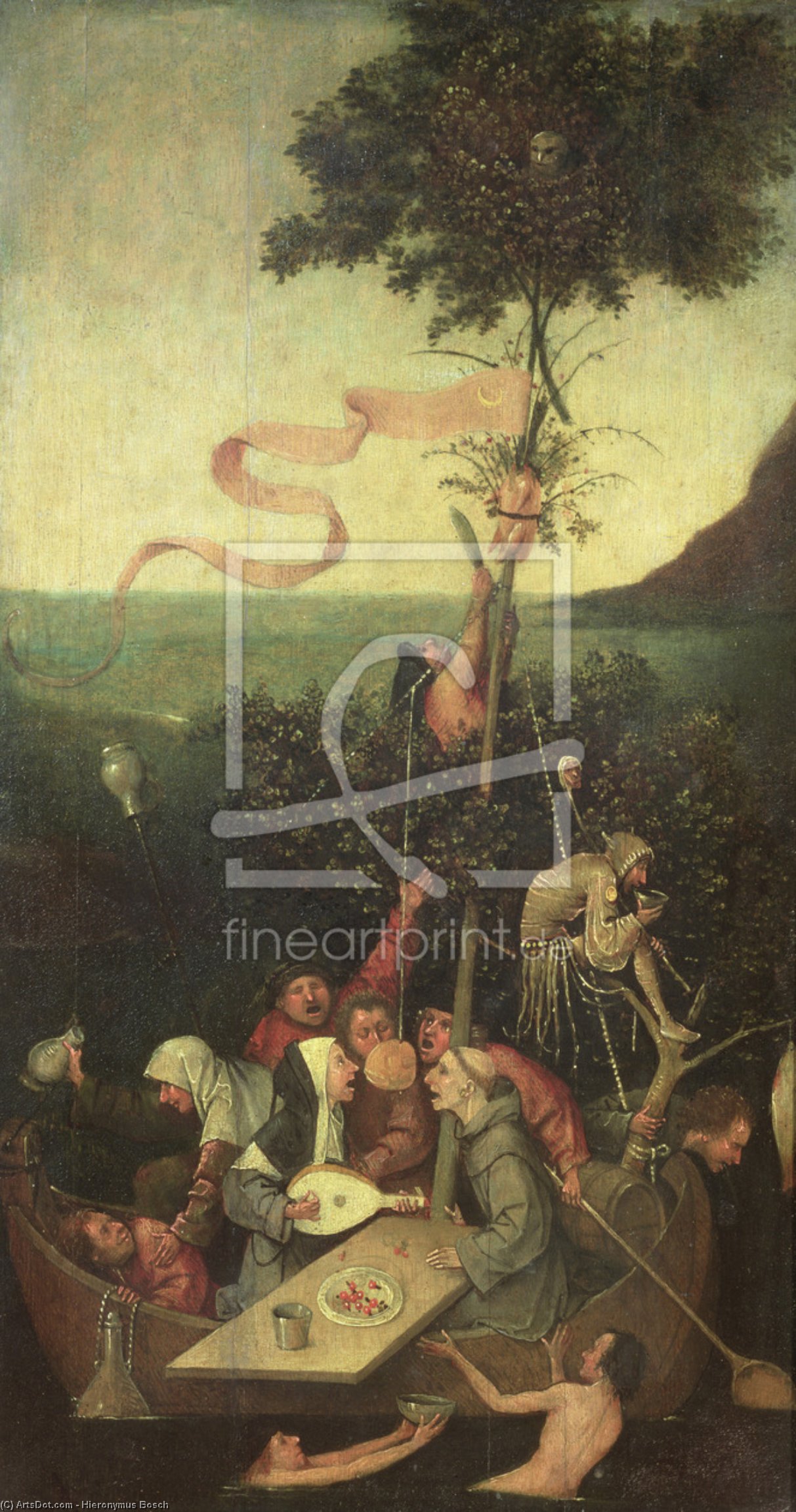
This captivating masterpiece presents a vivid allegory of human folly and societal excess, vividly depicted through a surreal and symbolic scene. Central to the composition is a fantastical figure with a bird-like head, perched atop a lush, mystical tree embedded with a skull, symbolizing mortality and the transient nature of human life. Below, a chaotic boat filled with diverse, expressive figures embodies the collective foolishness and moral decay of society, inviting viewers to reflect on the consequences of excess and moral neglect.
Distinctive Style and Technique
Created in the early 16th century, this work exemplifies the Northern Renaissance's fascination with detailed realism combined with fantastical and symbolic elements. The artist employs meticulous brushwork and layered glazes characteristic of oil painting on wood, resulting in a luminous, textured surface. The composition’s layered depth and intricate details draw viewers into a complex narrative, encouraging close examination and personal interpretation.
Historical and Cultural Context
Produced around 1500, this painting reflects the moral and religious concerns of its time, particularly the critique of societal excess and spiritual neglect. It is believed to be a fragment of a larger triptych that once served as a moral warning, aligning with the period’s focus on the seven deadly sins. Its allegorical imagery echoes the moral sermons and didactic art of the Northern Renaissance, making it a profound reflection of its era’s spiritual and cultural values.
Symbolism and Emotional Impact
The artwork’s rich symbolism—such as the skull within the tree, the chaotic figures, and the central bird-headed messenger—evokes a contemplative mood, stirring feelings of curiosity, unease, and introspection. Its dark, mystical atmosphere invites viewers to explore themes of mortality, human folly, and the spiritual journey. The intense emotional tone makes it a powerful centerpiece that sparks conversation and reflection, ideal for inspiring thought-provoking interior spaces.
Perfect for Collection and Interior Design
Whether displayed in a private collection or a sophisticated interior, this high-quality reproduction offers a timeless connection to the Northern Renaissance’s visionary artistry. Its intricate details and symbolic depth make it an engaging focal point, adding a layer of intellectual and aesthetic richness to any environment. An exceptional choice for art lovers, collectors, and interior designers seeking a piece that combines historical significance with artistic mastery.