Painted during the Northern Renaissance, it reflects a period of artistic experimentation and societal introspection.
Discover Hieronymus Bosch (c. 1450-1516), Dutch Renaissance master of surrealism & symbolism. Explore his iconic paintings, religious themes, and nightmarish visions – a lasting influence on art history.
A Surreal Descent into Medieval Anxiety
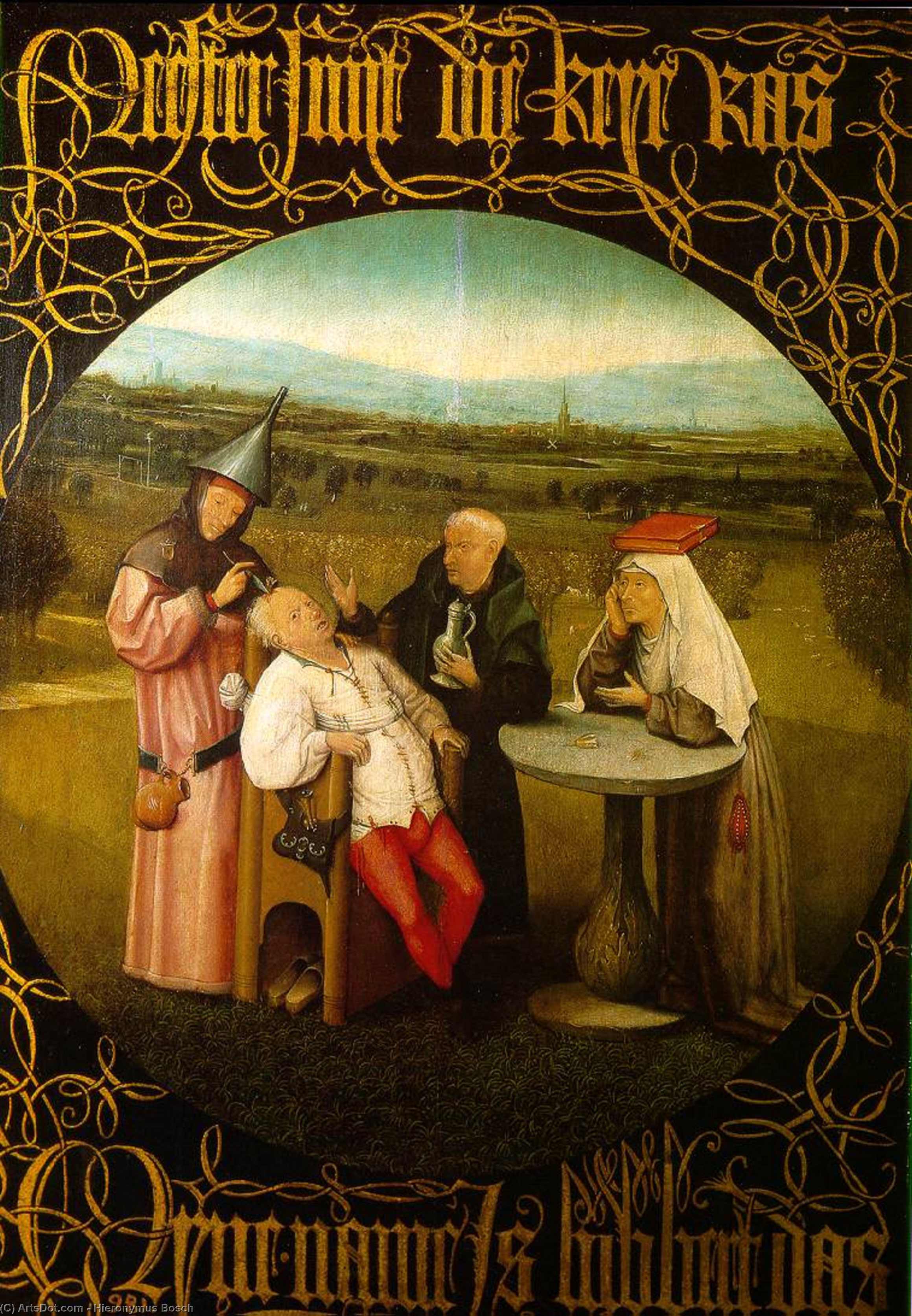
Step into a world where the boundaries between reality and nightmare dissolve. In Hieronymus Bosch’s haunting masterpiece, The Stone Operation, we are thrust into an outdoor theater of the grotesque. At first glance, the scene captures a visceral medical procedure: a man lies prone, subjected to the invasive extraction of a stone from his skull. Yet, beneath this clinical surface lies a profound sense of unease. The meticulous detail of the surgeon’s tools and the grim focus of the onlookers create a tension that is both fascinating and deeply unsettling. For the discerning collector, this work offers more than mere imagery; it provides a window into the collective psyche of an era gripped by fear and spiritual uncertainty.
The Language of Folly and Faith
To gaze upon Bosch’s work is to decode a complex visual language where every creature and gesture carries weight. The central motif—the extraction of the stone—servs as a powerful metaphor for the medieval struggle against folly and madness. In the theological landscape of the time, the "stone" represented the heavy burden of sin or the irrationality of the human spirit. By depicting its removal, Bosch invites us to contemplate the arduous journey toward purification and redemption. The surrounding tableau, populated by bizarre animals and enigmatic figures, acts as a symbolic landscape of temptation and chaos. This interplay of light and shadow, of earthy tones and sudden, vibrant accents, ensures that the painting remains a captivating subject for any sophisticated interior, sparking endless dialogue and reflection.
A Timeless Vision for the Modern Collector
Beyond its historical significance, the technical mastery displayed in this oil on panel is nothing short of extraordinary. Bosch’s ability to weave intricate narratives within a relatively small scale—just 48 x 35 cm—demands close inspection, rewarding the viewer with hidden details and subtle textures. For interior designers seeking to infuse a space with character and intellectual depth, a high-quality reproduction of this piece serves as an unparalleled focal point. It brings a sense of historical gravity and artistic mystery to a room, bridging the gap between the late Middle Ages and the contemporary aesthetic. Owning such a vision is an invitation to inhabit a world of profound imagination, where every brushstroke tells a story of the human condition.