Discover Hieronymus Bosch (c. 1450-1516), Dutch Renaissance master of surrealism & symbolism. Explore his iconic paintings, religious themes, and nightmarish visions – a lasting influence on art history.
Explore the Museo Nacional del Prado in Madrid! Discover masterpieces by Velázquez, Goya & El Greco, spanning centuries of European art. A must-see cultural landmark!
A Descent into Surreal Darkness
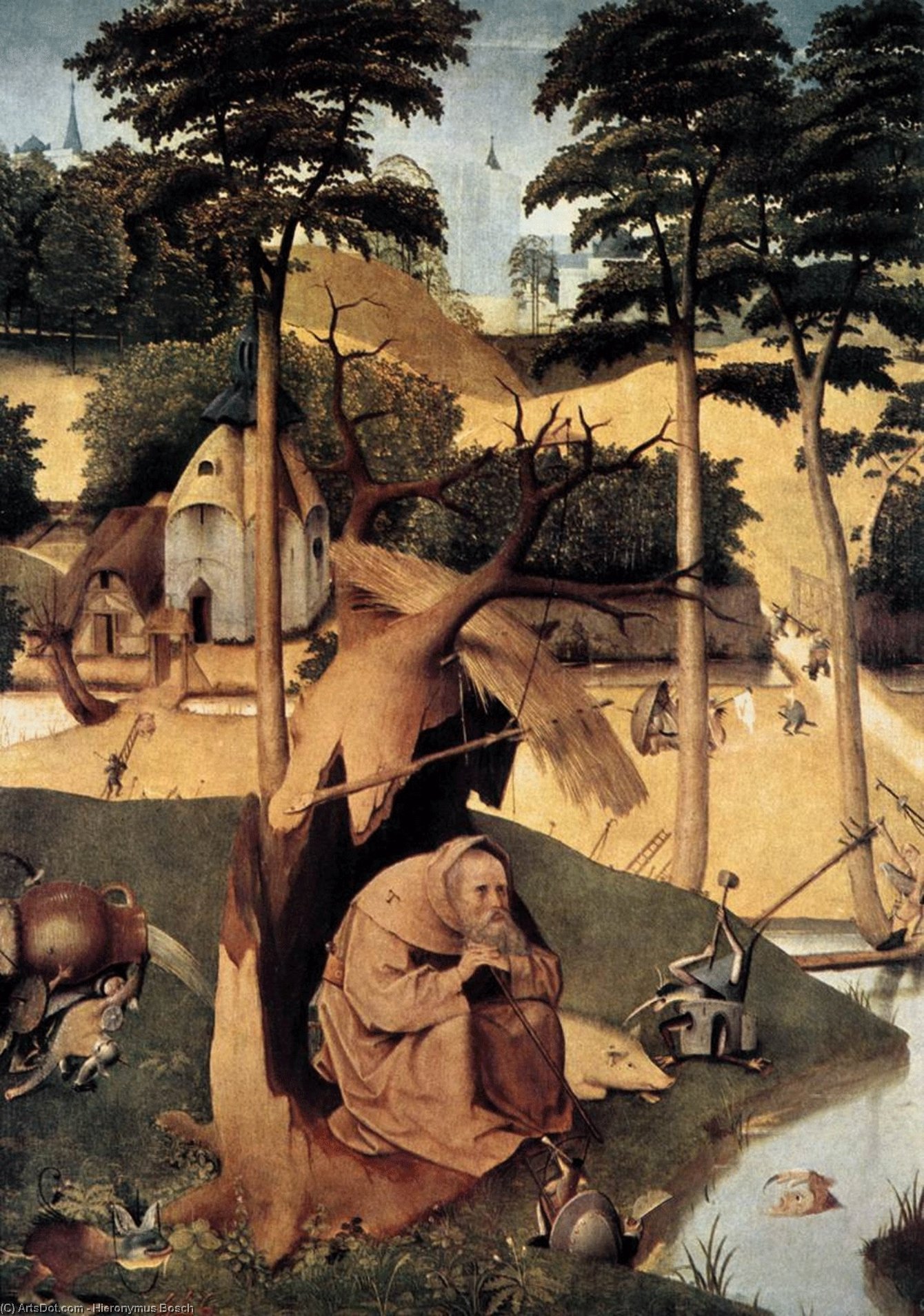
To gaze upon Hieronymus Bosch’s The Temptation of St. Anthony is to step through a threshold into a realm where the boundaries between reality and nightmare dissolve. Created during the height of the Northern Renaissance, around 1510-1515, this masterpiece serves as a profound meditation on the fragility of the human soul. The painting does not merely depict a scene; it immerses the viewer in a hallucinatory landscape of psychological turmoil. At its heart lies St. Anthony, portrayed in a moment of profound spiritual vulnerability, kneeling amidst a desolate and encroaching wilderness. He is besieged not by traditional monsters, but by a parade of grotesque, hybrid creatures—humanoids adorned with unsettling masks and feathers that seem to pulse with a sinister vitality. This is a world where the familiar is twisted into the uncanny, making it an irresistible subject for those drawn to art that challenges the senses and provokes deep contemplation.
The visual narrative is a masterclass in Boschian symbolism, where every element serves as a metaphor for the struggle between piety and sin. The dense, claustrophobic forest surrounding the saint acts as a labyrinth of temptation, mirroring the internal confusion of a mind under siege. Notice the subtle presence of birds—one perched precariously on a tree trunk and another circling like an omen—which represent the fleeting allure of worldly vanity and the distractions that pull the spirit away from its divine purpose. For the discerning collector or interior designer, this piece offers more than just visual intrigue; it provides a focal point of immense intellectual depth, capable of anchoring a room with its complex layers of meaning and its haunting, atmospheric presence.
Mastery of Technique and Renaissance Vision
Beyond its surreal imagery, the technical execution of The Temptation of St. Anthony reveals the extraordinary skill of Bosch, a painter whose influence echoes through centuries of art history. Utilizing oil paint on Baltic oak planks, Bosch achieved a level of luminosity and textural richness that allows the light to seem as though it is emanating from within the shadows themselves. His meticulous attention to detail—a hallmark of the Netherlandish tradition influenced by masters like Albrecht Dürer—ensures that even the smallest, most bizarre creature is rendered with startling clarity. This precision creates a sense of hyper-reality; the grotesque becomes tangible, making the spiritual battle feel disturbingly real.
The emotional impact of the work lies in this very tension between exquisite craftsmanship and chaotic subject matter. The painting’s ability to evoke both awe and unease makes it a timeless treasure. For those seeking to adorn a space with a high-quality reproduction, this artwork offers an unparalleled opportunity to bring a sense of historical gravity and avant-garde spirit into a modern setting. It is a piece that demands attention, inviting viewers to linger on its intricate details and lose themselves in the eternal struggle between light and shadow, goodness and evil.