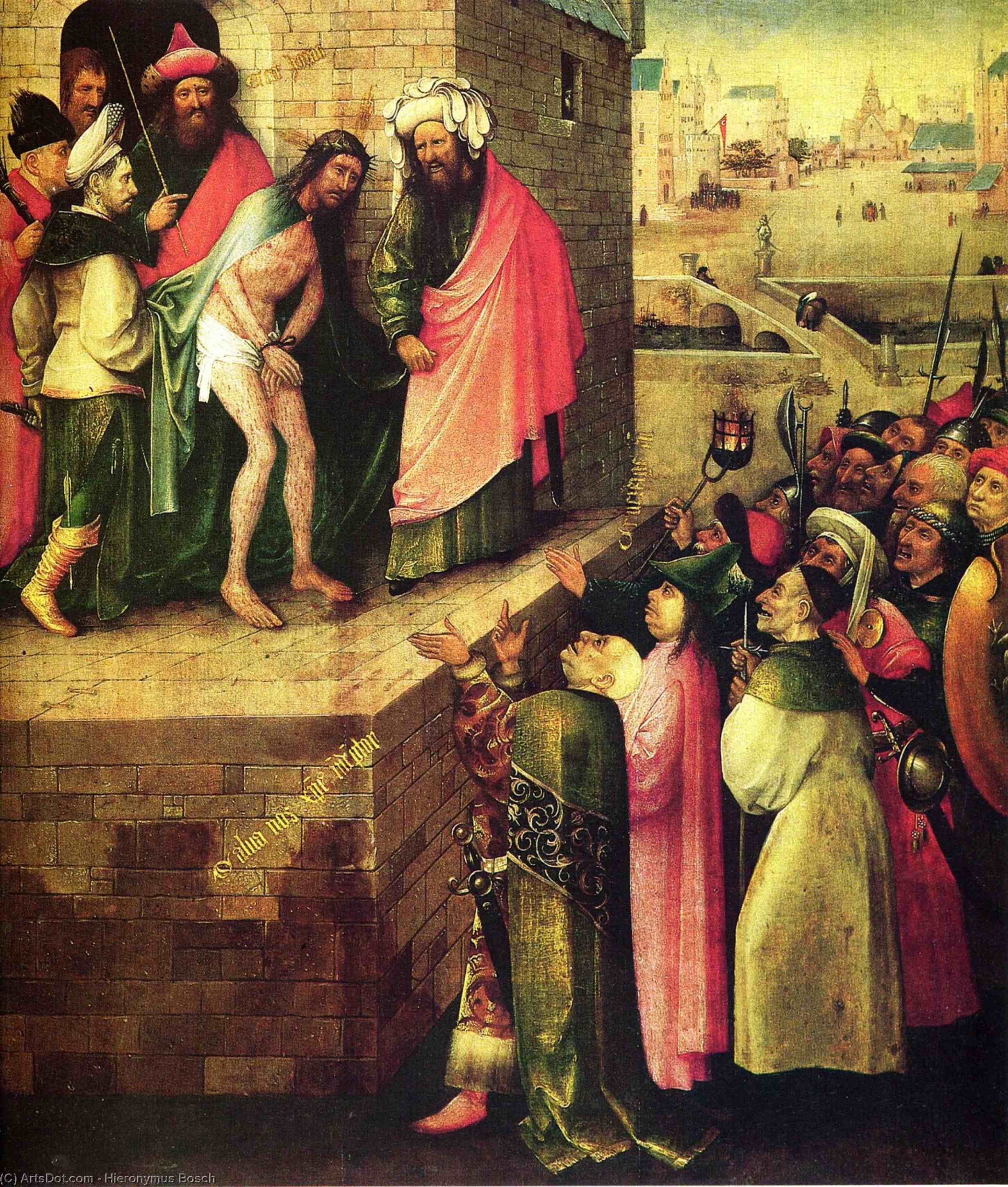
Bosch’s haunting depiction of ‘Ecce Homo,’ showcasing Jesus Christ on the cross amidst mourners and symbolic objects like swords and wine glasses, embodies the unsettling psychological realism characteristic of the Early Netherlandish Renaissance. Explore this iconic masterpiece and bring its timeless drama into your home.
A Portrait of Suffering: Exploring Hieronymus Bosch’s “This is a Human”
The painting "This is a Human," attributed to the enigmatic Netherlandish artist Hieronymus Bosch (1450-1516), stands as a haunting testament to the anxieties and spiritual turmoil of its time. Born in ’s-Hertogenbosch, Brabant—a region grappling with religious reformation and burgeoning urban life—Bosch’s artistic output defies easy categorization, cementing his place among the most distinctive voices of the Early Renaissance. Unlike many artists preoccupied with idealized beauty or classical grandeur, Bosch relentlessly pursued a vision rooted in grotesque realism and psychological depth, creating images that simultaneously repel and fascinate viewers centuries later.
- Subject Matter: The artwork depicts the crucifixion of Jesus Christ—a pivotal event in Christian theology—but Bosch’s depiction transcends mere religious iconography. Rather than presenting a serene tableau of piety, he portrays a scene fraught with palpable emotion and unsettling detail. Figures surrounding the crucified Jesus are rendered with unflinching honesty, capturing expressions of grief, bewilderment, and despair.
- Style: Bosch’s style is undeniably unique—characterized by an astonishing blend of meticulous observation and fantastical imagination. He meticulously captures anatomical accuracy alongside bizarre creatures and symbolic landscapes, resulting in a visual language that anticipates Surrealism and foreshadows the anxieties of modernity. The artist's penchant for disturbing imagery distinguishes him from his contemporaries.
Technique: A Masterclass in Detail
Bosch’s technique is remarkable for its precision and expressive power. Executed in oil paint on panel—a common medium of the period—he employed a layering process that allowed him to build up textures and create astonishing levels of detail. Bosch meticulously rendered every element of his compositions, from the folds of drapery to the expressions on the faces of the figures. The artist’s use of chiaroscuro—the dramatic interplay between light and shadow—further enhances the emotional impact of the painting, emphasizing the suffering endured by Jesus and amplifying the sense of unease within the scene.
- Color Palette: Bosch utilized a muted color palette dominated by earthy tones—browns, ochres, and reds—reflecting the somber mood of the crucifixion. However, splashes of vibrant hues—particularly crimson—serve to draw attention to key elements within the composition, intensifying their symbolic significance.
- Composition: Bosch’s compositional choices contribute significantly to the painting's unsettling effect. The figures are arranged in a claustrophobic space, creating a sense of confinement and mirroring the psychological torment experienced by those witnessing the crucifixion. The placement of objects—such as the wine glass and swords—further reinforces the symbolic narrative.
Historical Context: Fear and Faith Amidst Uncertainty
“This is a Human” emerged during a period of profound religious upheaval in Europe. The Protestant Reformation was challenging papal authority and reshaping theological beliefs, sparking intense debates about salvation and morality. Bosch’s artwork reflects this intellectual ferment by confronting viewers with uncomfortable questions about human nature and the consequences of sin. Furthermore, the painting anticipates anxieties surrounding mortality and decay—themes prevalent in medieval art but powerfully articulated by Bosch through his grotesque imagery.
Symbolism: Decoding Layers of Meaning
The symbolism embedded within “This is a Human” operates on multiple levels. The crucifixion itself represents sacrifice and redemption, yet Bosch presents it not as an idealized spiritual experience but as a brutal confrontation with suffering. The figures surrounding Jesus embody various aspects of human emotion—compassion, grief, fear—highlighting the universality of human experience. Objects like the wine glass and swords symbolize judgment and divine retribution, underscoring the painting’s moral dimension. Bosch's masterful use of symbolism elevates the artwork beyond mere depiction to profound meditation on faith, mortality, and the darker recesses of the human psyche.