A Descent into Delightful Darkness
Hieronymus Bosch's 'Triptych of Garden of Earthly Delights' stands as one of the most monumental and enigmatic achievements of the Northern Renaissance, a work that continues to haunt and fascinate the modern imagination. Painted around 1500 in the Netherlands, this masterpiece transcends mere visual storytelling; it plunges the viewer into a realm of unsettling fantasy and profound moral allegory. The specific detail presented here offers an intimate glimpse into Bosch’s masterful technique, inviting us to contemplate the complex tapestry of imagery woven throughout his larger composition. It is a window into a world where the boundaries between the divine and the demonic are perpetually blurred, making it an irresistible centerpiece for any collection dedicated to the profound mysteries of art history.
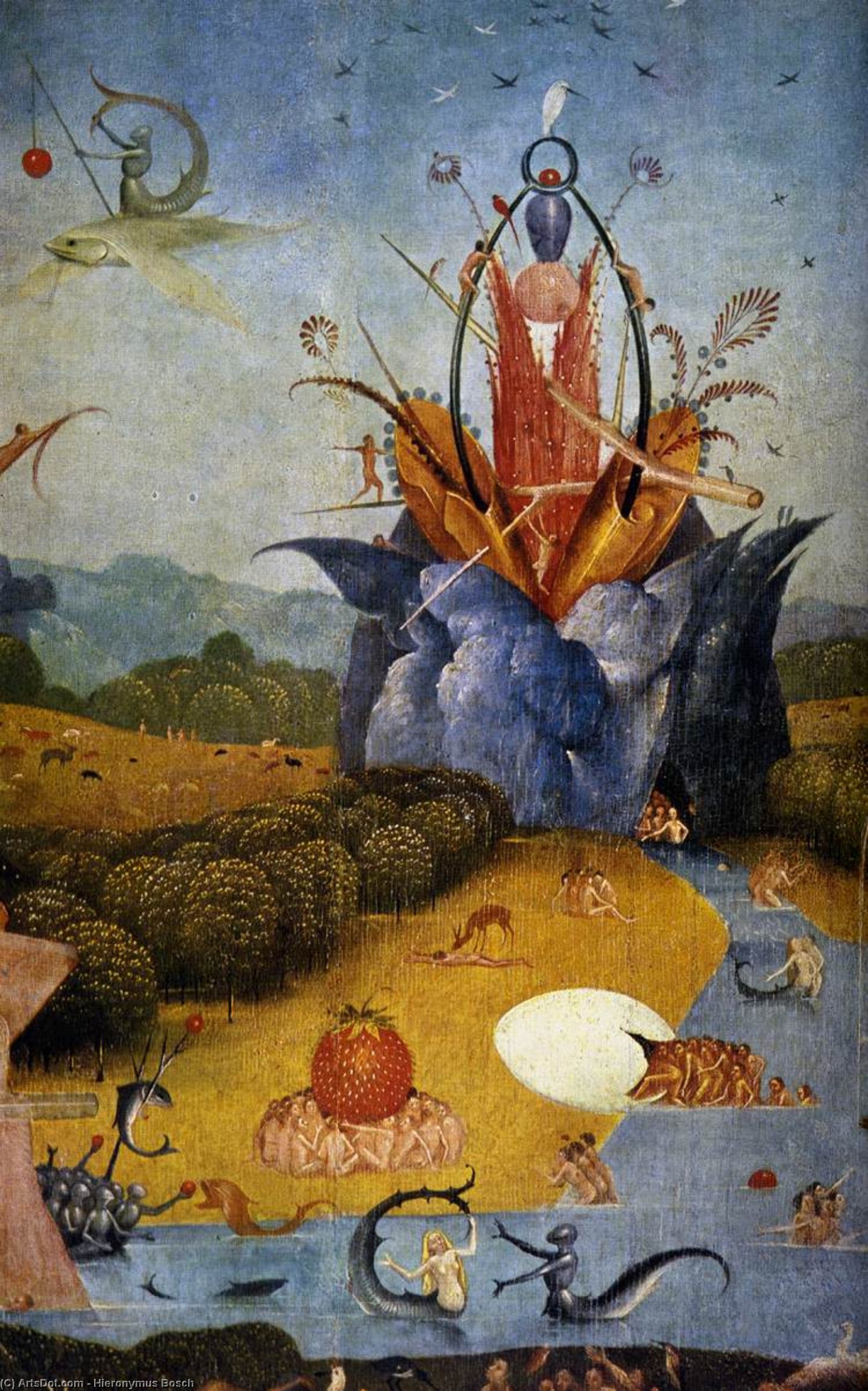
In this captivating detail, we encounter a scene of surreal beauty and underlying tension. A woman sits poised upon a colossal rock, her presence anchored amidst a landscape of bizarre creatures. A bird perches near her, perhaps acting as a symbol of divine grace or, conversely, an emblem of earthly temptation. The composition is populated by a menagerie of the strange—a lion and a dragon emerge from the shadows, representing primal forces that threaten the spiritual equilibrium. This meticulous arrangement of figures creates a sense of movement and narrative depth, drawing the eye through a landscape where every element, from the smallest insect to the largest mythical beast, plays a role in Bosch’s grander vision of human existence.
Mastery of Technique and Symbolism
To behold this work is to witness the pinnacle of Netherlandish precision. Bosch employed grisaille—a monochrome technique utilizing oil pigments on oak panels—to achieve a remarkable textural depth and luminosity. The meticulous layering of paint demonstrates his dedication to realism within an entirely unreal context, capturing minute details that heighten the unsettling atmosphere of the piece. This technical brilliance ensures that even in a reproduction, the sense of light and shadow remains palpable, offering a tactile quality that can transform the ambiance of a sophisticated interior.
Beyond its visual splendor, the painting is a dense thicket of symbolism designed to provoke introspection. The presence of an egg in the scene serves as a potent emblem of fertility, rebirth, and divine providence, yet within Bosch's world, such symbols often carry dual meanings that challenge the viewer's perception. His humanist conviction—that art should convey moral lessons—is evident in every brushstroke. For the discerning collector or interior designer, this piece offers more than mere decoration; it provides a conversational focal point that invites endless interpretation and intellectual engagement.
An Eternal Legacy for the Modern Collector
The emotional impact of Bosch's vision is nothing short of transformative. There is a certain gravity to his work, a weight of history and spiritual inquiry that commands attention in any room. Whether one is drawn to the surrealist precursors found in his dreamlike landscapes or the technical mastery of his Renaissance training, this triptych detail offers an unparalleled aesthetic experience. It is a piece that does not merely sit upon a wall but actively interacts with the space around it, casting a shadow of mystery and a light of profound beauty.
For those seeking to curate a collection of high-quality reproductions, this work represents an opportunity to own a fragment of art history's most enduring enigma. It is an ideal selection for spaces that value depth, complexity, and the evocative power of the unexpected. Bringing such a masterpiece into a home or gallery is an act of preserving the sublime, ensuring that the fever dreams of Hieronymus Bosch continue to inspire wonder for generations to come.