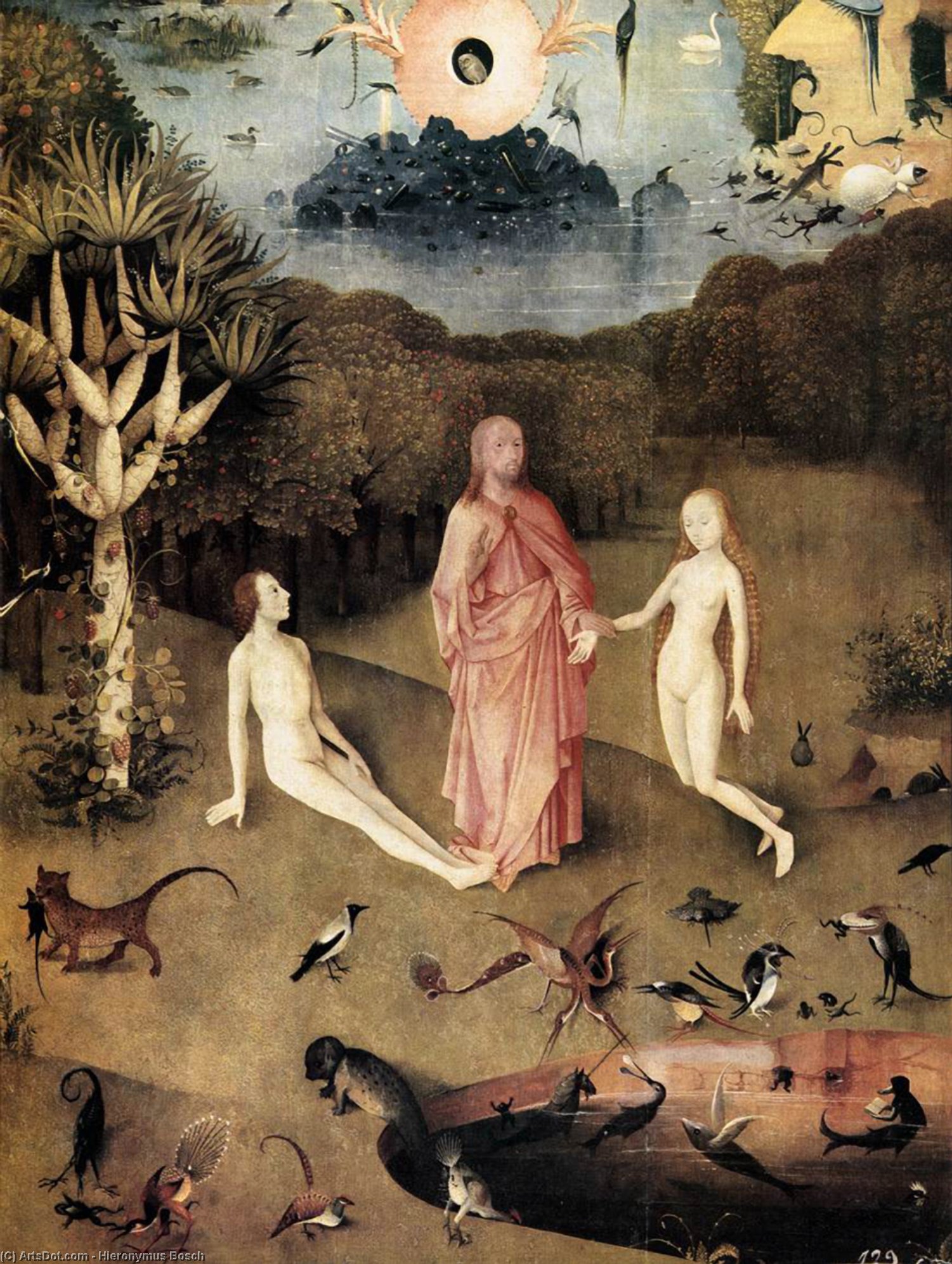
A Window into Paradise & Peril: Exploring Bosch’s *Garden of Earthly Delights* (Detail)
This captivating detail from Hieronymus Bosch's monumental triptych, *The Garden of Earthly Delights*, offers a mesmerizing glimpse into one of art history’s most enigmatic and influential works. Painted around 1500-1510, this panel isn’t merely a painting; it’s a complex visual encyclopedia of late medieval anxieties, desires, and beliefs – a world teeming with symbolism and surreal imagery that continues to fascinate viewers centuries later.
Subject & Composition: A Moment Suspended
The detail focuses on the central panel, often interpreted as representing the earthly paradise before the Fall. We see a group of nude figures—men and women—intermingled amidst an abundance of exotic birds and lush vegetation. They engage in playful interactions, seemingly lost in sensual pleasure. The composition is deliberately crowded and layered, creating a sense of overwhelming abundance and perhaps, underlying unease. A cat and dog nestled near the bottom left corner introduce a domestic element into this fantastical scene, while potted plants hint at human attempts to control nature. The figures are not idealized; they possess an earthy realism that grounds the otherwise dreamlike quality of the painting.
Bosch’s Unique Artistic Style & Technique
Hieronymus Bosch was a true original. His style, characterized by its fantastical and often unsettling imagery, stands apart from the prevailing artistic trends of his time. He masterfully blended meticulous detail with imaginative invention, creating scenes that are both alluring and disturbing. Bosch employed oil paint on an oak panel, utilizing layers of translucent glazes to achieve a remarkable luminosity and depth of color. His brushwork is precise yet retains a textural quality, particularly evident in the rendering of foliage and animal forms.
This detail exemplifies his ability to create a world that feels simultaneously real and utterly unreal.
Decoding the Symbolism: A Moral Allegory?
The *Garden of Earthly Delights* is rife with symbolism, much of which remains open to interpretation. The abundance of fruit often represents temptation and sensual pleasure, while the various animals carry their own symbolic weight – birds can signify lust or spiritual aspiration, for example. The nude figures themselves are not simply representations of physical beauty; they embody humanity’s susceptibility to earthly desires. Many scholars believe the triptych functions as a moral allegory, warning against the dangers of unchecked indulgence and foreshadowing the consequences of sin depicted in the right panel (Hell).
Historical Context & Legacy
Bosch lived during a period of significant social and religious upheaval. The late Middle Ages were marked by anxieties about mortality, damnation, and the fragility of human existence. His art reflects these concerns, offering a stark commentary on the follies and temptations of humankind. His influence extended far beyond his own lifetime, profoundly impacting artists like Pieter Bruegel the Elder and inspiring generations of surrealist painters in the 20th century. Today, the complete triptych resides in the Museo del Prado in Madrid, Spain, where it continues to draw crowds and inspire scholarly debate.
Emotional Impact & Interior Design Considerations
This detail from *The Garden of Earthly Delights* evokes a complex range of emotions – wonder, curiosity, unease, and perhaps even a touch of melancholy. Its rich colors and intricate details make it a striking focal point for any interior space.
For collectors and designers, a high-quality reproduction can add a layer of intellectual depth and artistic sophistication to a room. The painting’s fantastical imagery lends itself well to eclectic or bohemian décor schemes, while its historical significance adds gravitas to more traditional settings. It's a piece that invites contemplation and sparks conversation – a true masterpiece for those who appreciate art with substance and soul.
- Artist: Hieronymus Bosch (c. 1450-1516)
- Date: c. 1500-1510
- Medium: Oil on oak panel
- Location: Museo del Prado, Madrid, Spain