Discover Hieronymus Bosch (c. 1450-1516), Dutch Renaissance master of surrealism & symbolism. Explore his iconic paintings, religious themes, and nightmarish visions – a lasting influence on art history.
Explore the Museo Nacional del Prado in Madrid! Discover masterpieces by Velázquez, Goya & El Greco, spanning centuries of European art. A must-see cultural landmark!
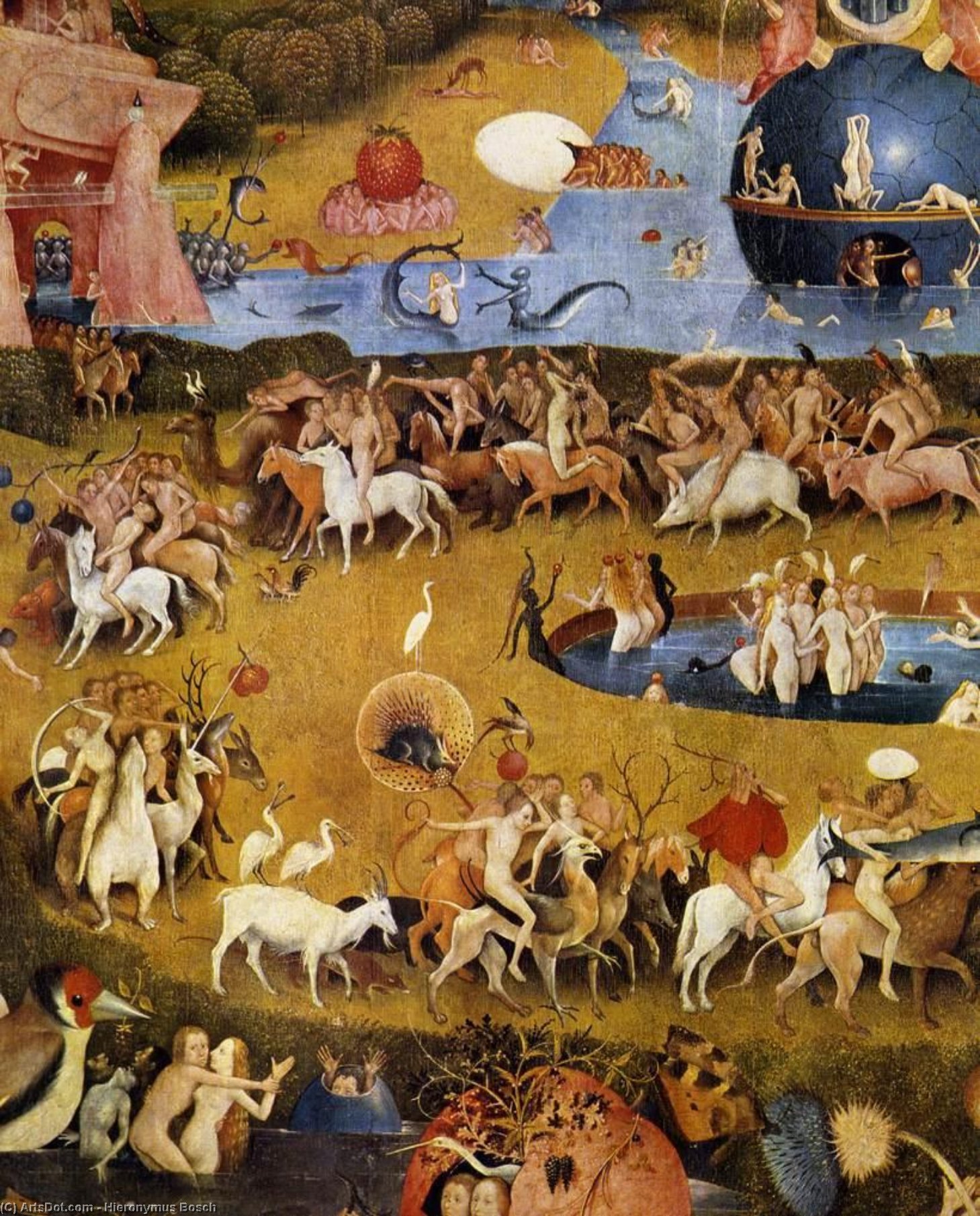
A Descent Into Delightful Darkness: Exploring Hieronymus Bosch’s ‘Triptych of Garden of Earthly Delights’ (Detail)
The Triptych of Garden of Earthly Delights, meticulously crafted by the enigmatic Dutch painter Hieronymus Bosch between 1490 and 1510, stands as a monumental achievement of Early Netherlandish art—and arguably one of the most unsettling visions ever conceived. This detailed panel from the larger triptych resides within the Museo del Prado in Madrid, Spain, offering viewers an unparalleled glimpse into Bosch’s singular artistic mind and his profound engagement with theological anxieties of the Renaissance era. Beyond its breathtaking visual complexity lies a labyrinthine tapestry of symbolism designed to provoke contemplation and challenge conventional understandings of morality and salvation.
A Vision of Paradise Lost
Bosch's depiction centers on the central panel, portraying what scholars interpret as a harrowing representation of Eden’s fall—a scene rife with grotesque figures engaged in hedonistic pursuits. Lush vegetation dominates the composition, teeming with bizarre animals – serpents entwined amongst blossoms and fantastical creatures—reflecting Bosch’s fascination with both biblical narratives and folklore traditions prevalent in his time. Naked figures cavort amidst opulent feasts and sensual encounters, embodying a disturbing juxtaposition of earthly pleasure and spiritual corruption. The meticulous detail achieved through oil paint on oak panel underscores Bosch's mastery of technique; observe the subtle gradations of color and texture that bring forth an astonishing level of realism within this fantastical landscape.
Symbolism Steeped in Moral Allegory
The symbolism embedded within ‘Garden of Earthly Delights’ is notoriously difficult to decipher, fueling centuries of scholarly debate. Bosch deliberately eschewed straightforward didacticism, opting instead for a multilayered approach that utilizes imagery drawn from biblical texts alongside medieval bestiaries and dream visions. Recurring motifs—such as the apple tree bearing poisoned fruit symbolizing temptation—serve as potent reminders of humanity's susceptibility to sin. Furthermore, the figures’ postures and expressions convey an overwhelming sense of despair and futility, hinting at the inescapable consequences of indulging in earthly desires without regard for divine judgment. The artist’s intention was not merely to depict a fantastical scene but to deliver a powerful moral warning—a cornerstone of humanist thought during Bosch's lifetime.
Influence Beyond Its Time
Bosch’s influence extended far beyond his immediate contemporaries, shaping the artistic sensibilities of subsequent generations and establishing him as a precursor to Surrealism. Pieter Bruegel the Elder, notably, absorbed Bosch’s stylistic innovations, incorporating grotesque imagery and moral allegory into his own landscapes—a testament to Bosch's enduring legacy. Today, reproductions of ‘Garden of Earthly Delights,’ particularly detailed versions capturing the nuances of Bosch’s masterful brushwork, continue to captivate audiences worldwide. They serve as a poignant reminder that art can transcend its historical context, provoking emotional responses and prompting viewers to confront uncomfortable truths about human nature—a timeless exploration of desire, fear, and faith.