A Descent into the Netherlandish Nightmare
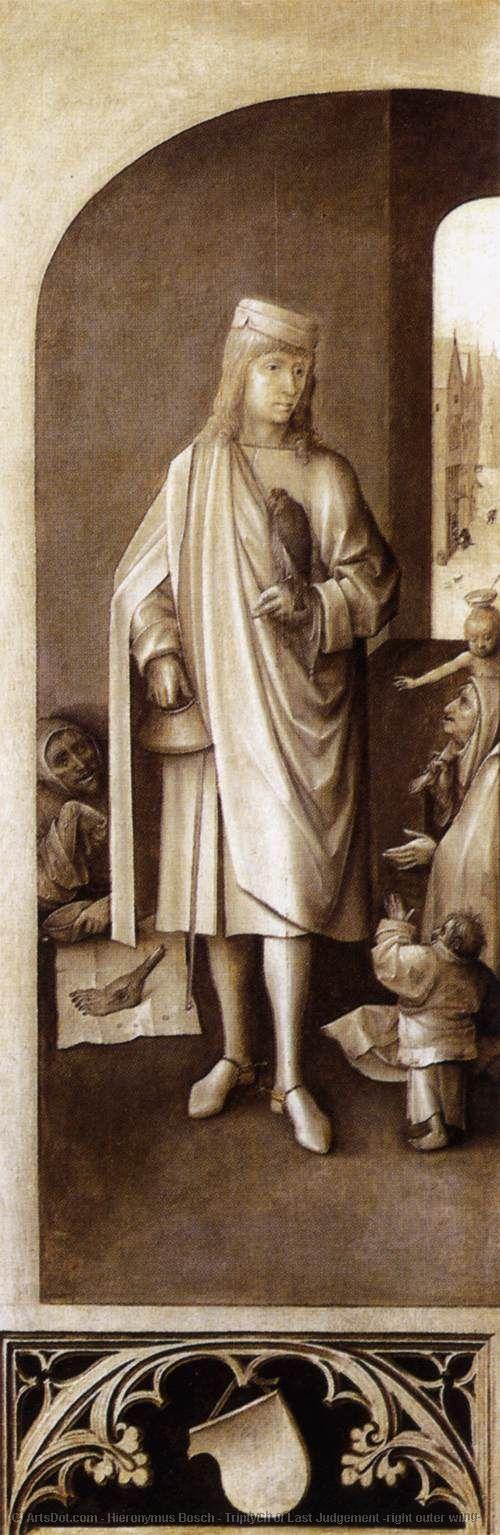
To gaze upon the right outer wing of Hieronymus Bosch’s Triptych of Last Judgement is to step through a threshold into one of the most harrowing visions ever committed to wood. While many are drawn to the serene Garden of Eden or the divine majesty of the central panel, this specific fragment offers a visceral encounter with the artist's mastery of the macabre. Bosch, a master of the Early Netherlandish school, does not merely paint a scene; he constructs a psychological landscape where the boundaries between reality and nightmare dissolve. The composition is a swirling vortex of chaos, populated by grotesque hybrid creatures and tormented souls, all caught in the eternal machinery of divine retribution. For the discerning collector, this piece represents more than just a historical artifact; it is an invitation to contemplate the profound depths of human anxiety and the enduring power of surrealist imagination.
The technique employed by Bosch in this work is nothing short of miraculous. Utilizing oil on oak wood, the artist achieved a level of microscopic detail that demands close inspection. Each brushstroke serves a purpose, building layers of texture that give life to the most unsettling forms. One can observe the way light fails to penetrate the dense, suffocating atmosphere of this hellscape, instead clinging to the jagged edges of demonic anatomy and the pale, flickering skin of the damned. This meticulous precision is what makes a high-quality reproduction so essential; only through careful craftsmanship can the subtle glazes and the intricate, fine-lined terror of Bosch's original vision be truly resurrected for a modern interior.
Symbolism and the Architecture of Chaos
Every element within this right wing functions as a complex signifier in Bosch’s moral vocabulary. The artist utilizes a language of symbols that would have been intimately recognizable to his 15th-century contemporaries, yet they remain hauntingly enigmatic to us today. The presence of distorted animals, strange mechanical contraptions, and fragmented human bodies serves as an allegory for the disintegration of the soul through sin. There is a profound sense of spiritual vertigo in the way Bosch juxtaposes the small, fragile figures of humanity against the overwhelming, monstrous scale of their tormentors. This tension creates an emotional impact that is both repulsive and deeply captivating, pulling the viewer into a meditation on justice, consequence, and the fragility of the human condition.
For interior designers and art enthusiasts, integrating such a powerful work into a space requires an appreciation for its dramatic weight. A reproduction of this triptych wing acts as a profound focal point, injecting a sense of historical gravity and intellectual depth into a room. It is a piece that sparks conversation, challenging the observer to look beyond the surface of the grotesque to find the underlying narrative of morality and redemption. Whether placed in a study filled with classical literature or as a bold statement in a contemporary gallery-style living space, Bosch’s vision remains an unparalleled testament to the power of art to confront the darkest corners of the human psyche.