A Descent into Vice: Exploring Hieronymus Bosch’s “Temptation of St Anthony”
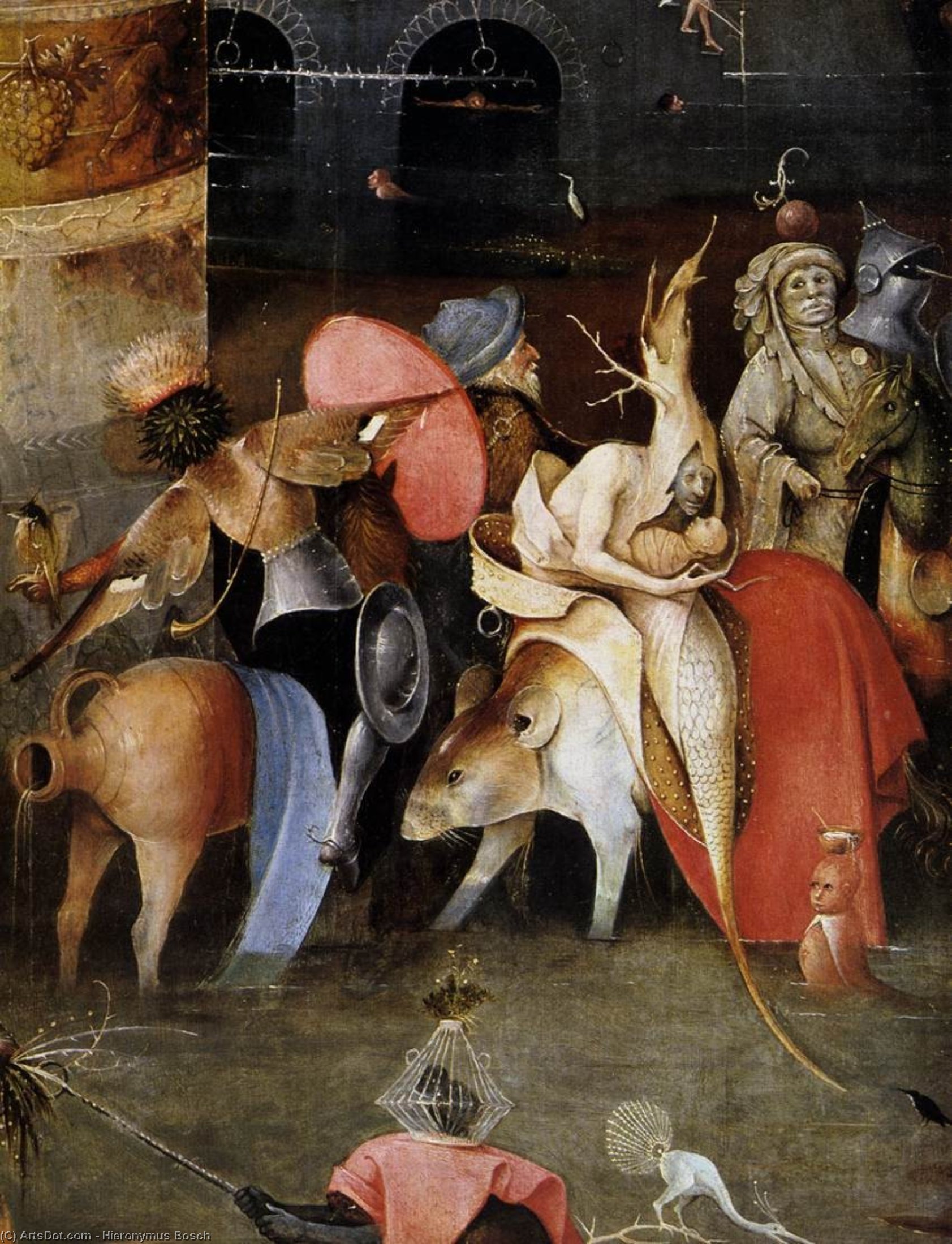
Hieronymus Bosch's "Triptych of Temptation of St Anthony" (detail) is not merely a painting; it’s an immersive descent into the shadowed corners of human desire and spiritual struggle. Painted around 1505, this remarkable work, part of a larger triptych housed in the Museo del Prado, Madrid, offers a glimpse into the turbulent mind of one of art history's most enigmatic figures – Bosch himself. The detail presented here, focusing on a specific section of the scene, reveals a meticulously constructed world teeming with unsettling imagery and profound psychological depth. It’s a piece that continues to provoke debate and fascination centuries after its creation, inviting viewers to confront uncomfortable truths about human nature.
The Narrative Landscape: Setting and Figures
Bosch transports us to a bizarre, almost hallucinatory landscape – a muddy courtyard or perhaps a desolate field, rendered in earthy browns and ochres. The scene is populated by a diverse cast of characters engaged in a bewildering array of activities. We see men and women, some standing rigidly, others seated or kneeling in postures of contemplation or, more often than not, blatant indulgence. There’s no clear narrative progression; instead, Bosch presents a collection of vignettes, each contributing to the overall atmosphere of moral decay and temptation. The figures are rendered with startling realism, yet their expressions and actions are imbued with an unsettling quality – a mixture of vulnerability, curiosity, and outright depravity. Note the prominent horses, symbols often associated with earthly pleasures and fleeting desires, and the scattered birds, which can be interpreted as messengers of warning or harbingers of doom.
Symbolism in Detail: Objects and Their Meanings
Bosch’s genius lies not just in his depiction of figures but also in the intricate symbolism woven into every element of the scene. The bowl, a cup, and the knife are particularly significant. The bowl, often associated with abundance and sensual gratification, is placed prominently in the left center. The cup, positioned high on the right, might represent spiritual nourishment or, conversely, the fleeting pleasures of earthly possessions. The knife, situated at the bottom-left corner, speaks to the potential for violence and destruction inherent within human desires. Beyond these key objects, observe the various fruits, animals, and bizarre contraptions – each carrying a potent symbolic weight. The presence of a musical instrument suggests the allure of worldly entertainment, while other details hint at anxieties surrounding death, sin, and the corruption of the soul.
Technique and Emotional Resonance: Bosch’s Unique Vision
Bosch's technique is characterized by an astonishing level of detail and a masterful use of perspective. He employed oil paint on wood panel, allowing for rich colors and intricate textures. The figures are rendered with meticulous precision, yet their faces often convey a sense of vacantness or unsettling detachment. Crucially, Bosch’s work isn't about straightforward representation; it’s about evoking an emotional response in the viewer. The painting’s unsettling atmosphere, combined with its complex symbolism, creates a profound sense of unease and moral questioning. It’s a testament to Bosch’s ability to tap into the deepest anxieties of his time – and, arguably, our own. The triptych as a whole offers a layered experience, inviting repeated viewing and contemplation, revealing new symbolic connections with each encounter.
ArtsDot.com offers exceptional, hand-painted reproductions of Hieronymus Bosch’s “Temptation of St Anthony,” allowing you to bring this extraordinary work into your home or office. Our artists meticulously recreate the details and atmosphere of the original, ensuring a faithful representation of Bosch's visionary masterpiece. Explore our collection today and discover the power of art to provoke thought and inspire emotion.