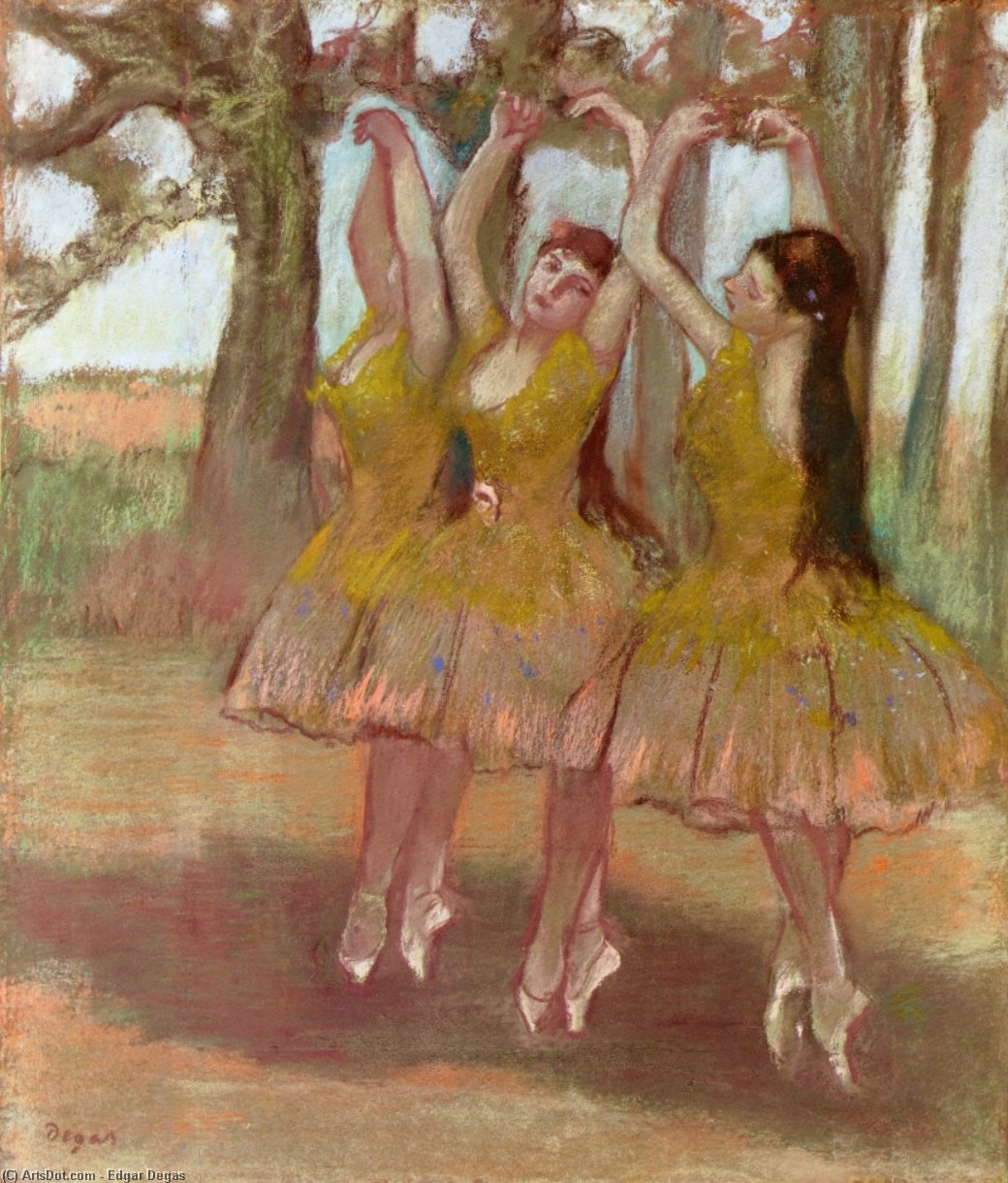
A Grecian Dance: Capturing Movement and Illusion
Edgar Degas, born Hilaire Germain Edgar De Gas in Paris in 1834, stands as a singular figure within the Impressionist movement—though he vehemently resisted categorization. He championed realism alongside artistic innovation, meticulously observing the world around him to distill its essence onto canvas. This duality defines his oeuvre and illuminates why ‘A Grecian Dance,’ created between 1885 and 1890, continues to resonate with audiences today.
- Subject Matter: The painting depicts two ballet dancers poised in a graceful arabesque—a hallmark of classical ballet technique—capturing the fleeting beauty of performance.
- Style & Technique: Degas’s masterful use of pastel on paper exemplifies Impressionism's core principles. Unlike oil paints, pastels offer unparalleled luminosity and subtlety, allowing for nuanced color blending that mimics the effects of natural light.
The composition itself is deceptively simple yet profoundly effective. Degas eschews traditional perspective, flattening the space to emphasize the dancers’ figures and their interaction with each other. This deliberate reduction in depth contributes to an atmosphere of immediacy—as if we are witnessing a moment frozen in time.
Color Palette & Symbolism: Hints of Sunlight and Effortless Grace
Dominating the canvas is a vibrant yellow tutu, strategically positioned to draw the eye and highlight the dancers’ movements. This bold hue isn't merely decorative; it symbolizes energy and vitality—reflecting the dynamism inherent in ballet performance. The muted earthy tones of the background serve as a counterpoint, grounding the figures and emphasizing their delicate posture.
- Color Symbolism: Yellow represents optimism and joy, mirroring the exhilaration felt by dancers during rehearsals and performances.
- Light & Atmosphere: Degas skillfully captures the diffused sunlight filtering through the studio window, creating an ethereal glow that enhances the painting’s emotional impact.
Beyond its aesthetic qualities, ‘A Grecian Dance’ speaks to a deeper thematic concern—Degas' desire to challenge the prevailing artistic conventions of his time. He rejected the academic preoccupation with idealized forms and meticulous detail, opting instead for an approach that prioritized observation and emotional expression.
Legacy & Influence: An Icon of Impressionist Art
'A Grecian Dance’ remains a cornerstone of Degas's legacy—a testament to his pioneering use of pastel and his unwavering commitment to portraying the human figure with sensitivity and realism. Its influence extends far beyond the art world, inspiring artists across disciplines to embrace spontaneity and capture fleeting moments of beauty.
Currently residing in a private collection, this artwork continues to captivate viewers with its evocative depiction of movement and illusion—a timeless masterpiece that embodies the spirit of Impressionism.