A Moment of Intimate Realism: Exploring Degas’ “After the Bath”
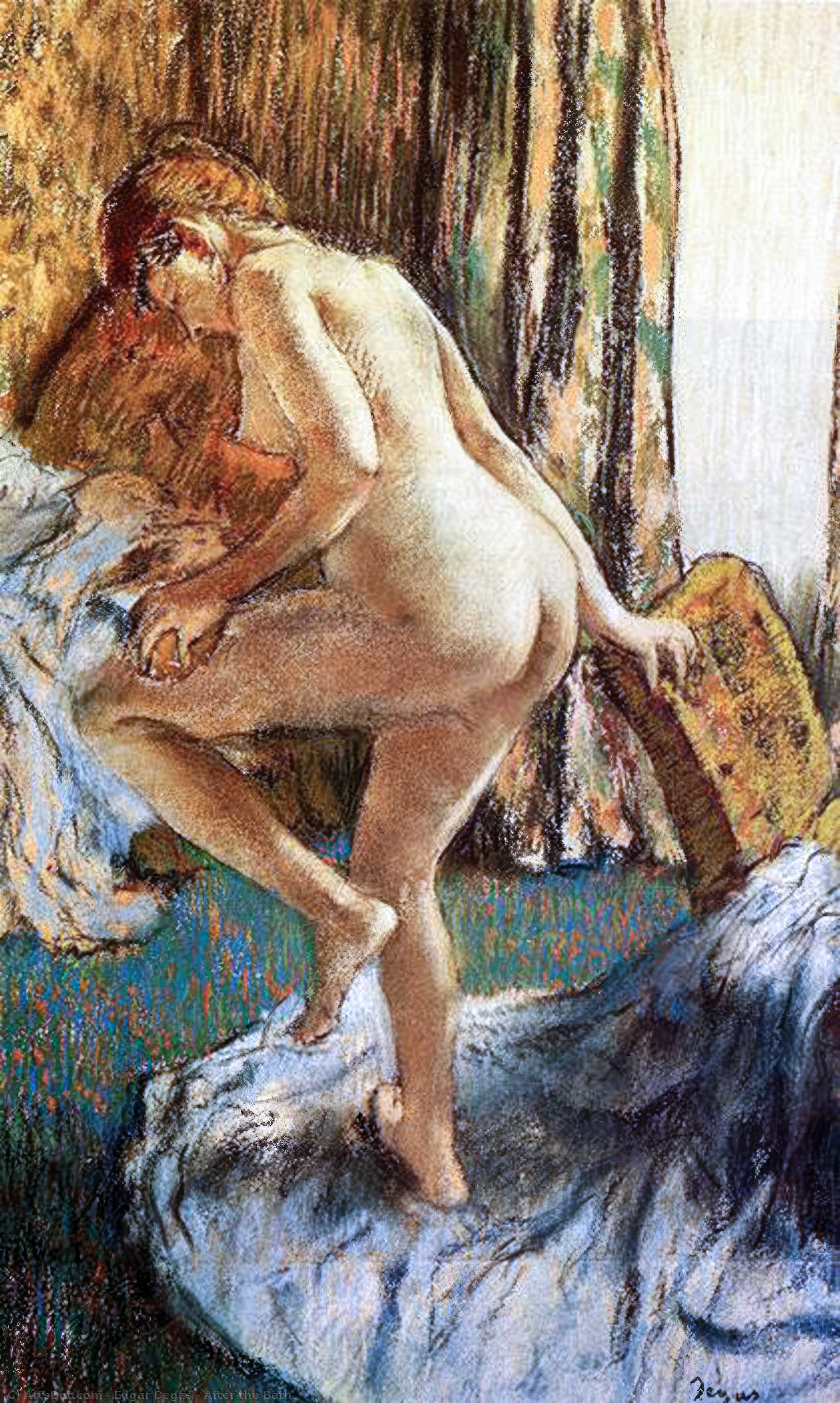
Edgar Degas's 1883 pastel, *After the Bath, Woman Drying Herself*, is a quintessential example of *Intimism* – an artistic movement that prioritized scenes of domestic life and quiet introspection. While often categorized as an Impressionist, Degas resisted this label, identifying instead as a realist concerned with capturing modern life with unflinching honesty. This work beautifully embodies that commitment, offering a glimpse into a private moment rarely depicted in art before its time.
Subject & Composition: A Study in Vulnerability
The artwork presents a woman, seen from the back, delicately drying herself after bathing. Her pose is natural and unposed – not idealized or overtly sensual, but rather strikingly *real*. Degas masterfully avoids direct eye contact, enhancing the sense of privacy and vulnerability. The composition is carefully balanced; the figure occupies the central space, framed by a subtly patterned curtain that suggests an interior setting without revealing excessive detail. This deliberate ambiguity focuses our attention entirely on the woman and her quiet act of self-care.
Technique & Style: The Luminous Quality of Pastel
Degas was a pioneer in his use of pastels, elevating the medium from a preparatory sketch tool to a finished work of art. In *After the Bath*, he exploits pastel’s unique qualities – its ability to create soft, velvety textures and luminous color effects. The delicate pinks and whites used to render the woman's skin convey a sense of warmth and fragility. Notice how Degas layers the pastel strokes, building up form and creating subtle gradations of light and shadow. This technique lends the artwork an ethereal quality, enhancing its intimate atmosphere.
Historical Context: Modern Life & Artistic Innovation
During the late 19th century, traditional academic painting often focused on historical or mythological subjects. Degas, along with other Impressionist and Realist artists, challenged this convention by turning their attention to everyday life. His fascination with bathing women wasn’t simply about nudity; it was a way of exploring modern urban existence and the changing roles of women in society. He frequently depicted scenes from Parisian life – ballet dancers, laundresses, café singers – capturing fleeting moments that revealed the complexities of the modern world.
Symbolism & Emotional Impact: Solitude & Self-Reflection
The artwork’s power lies not in overt symbolism but in its ability to evoke a profound emotional response. The woman's solitude invites viewers to contemplate their own vulnerabilities and private moments. There is a sense of quiet dignity in her self-possession, even in this most intimate state. Degas doesn’t offer narrative closure; we are left to imagine what came before and what will follow, allowing us to project our own experiences onto the scene. The artwork speaks to universal themes of self-care, privacy, and the beauty found in everyday moments.
A Timeless Masterpiece for Your Space
Consider this artwork for:
- Adding a touch of sophisticated intimacy to bedrooms or boudoirs.
- Creating a calming focal point in living rooms or studies.
- Inspiring moments of quiet contemplation and self-reflection.
*After the Bath, Woman Drying Herself* is more than just a beautiful image; it’s a window into a private world, rendered with exceptional skill and sensitivity. A high-quality reproduction allows you to experience the emotional resonance and artistic brilliance of this timeless masterpiece in your own home.
It's an investment in beauty, tranquility, and a connection to art history.