At the Milliner’s: A Snapshot of Domestic Life and Impressionistic Brilliance
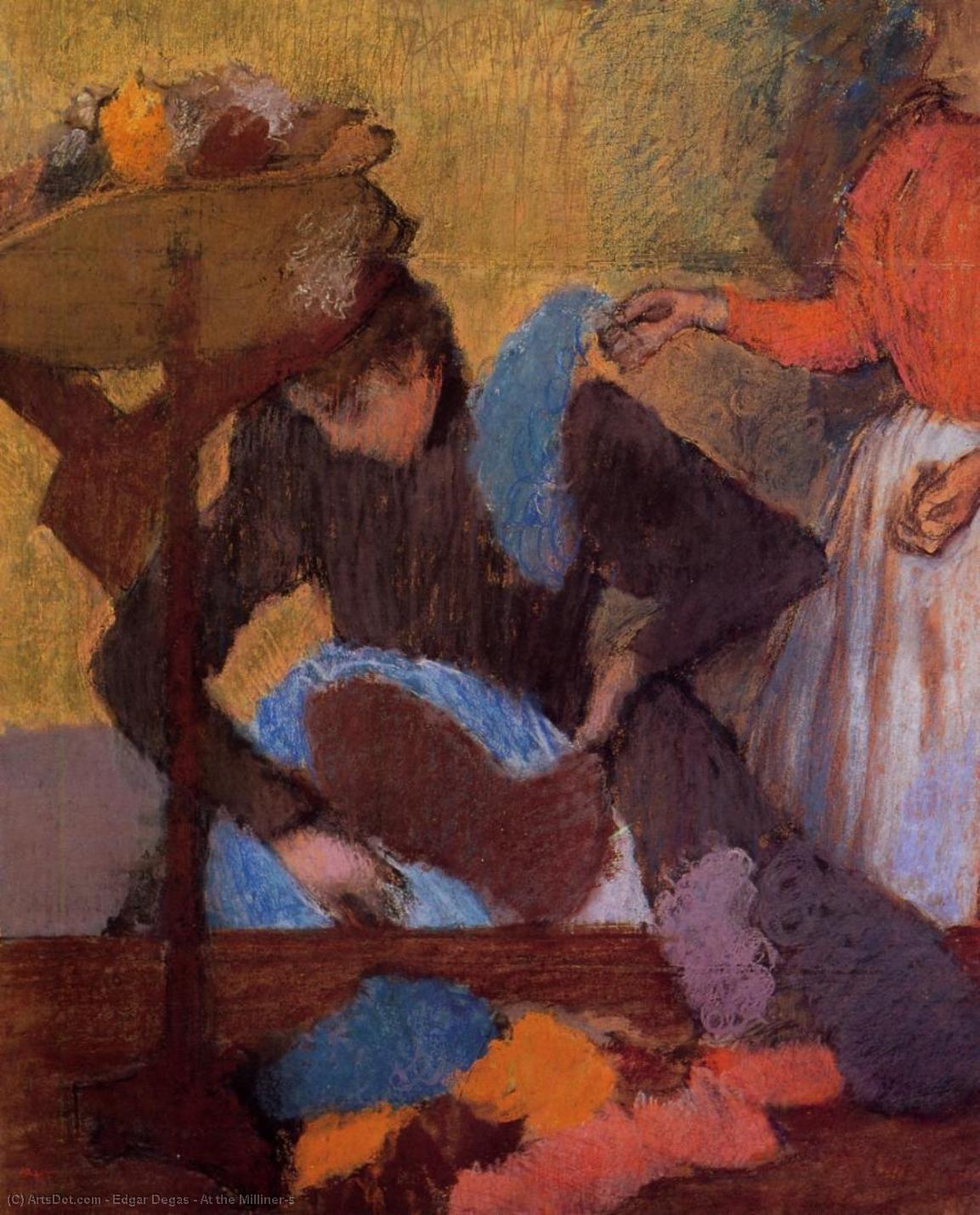
Edgar Degas's “At the Milliner’s,” painted circa 1905-1910, isn’t merely a depiction of women engaged in textile work; it’s a masterful distillation of Impressionist ideals—movement, fleeting light, and an intimate observation of everyday life. More than just capturing a scene, Degas sought to convey the spirit of his time, presenting a portrait of Parisian society grappling with evolving roles for women.
- Subject Matter: The artwork centers on three women meticulously examining hats in a millinery shop. This seemingly simple subject—the quiet industry of domestic labor—holds deeper significance within the context of late 19th-century France, where discussions about women’s rights and independence were gaining momentum.
- Style & Technique: Degas's signature Impressionistic brushwork dominates the canvas. Loose, visible strokes create a sense of immediacy and dynamism, prioritizing capturing the effects of light and color over precise representation. Pastel on paper lends itself beautifully to this style, producing soft, blended tones that evoke warmth and tranquility.
- Composition & Perspective: The cropped composition draws the viewer into the scene, focusing intently on the figures and their immediate surroundings. Flattened perspective contributes to an intimate atmosphere, minimizing depth while maximizing visual impact. Lines are gestural rather than rigid, defining forms with expressive energy.
Decoding Impressionistic Symbolism
Beyond its aesthetic qualities, “At the Milliner’s” resonates with subtle symbolic elements. The muted pastel palette—characteristic of Impressionist painters—suggests a melancholic contemplation of repetitive tasks and perhaps a quiet yearning for beauty amidst routine. The careful observation of light – diffused and warm – underscores Degas's fascination with capturing atmospheric conditions, mirroring his broader interest in portraying the ephemeral nature of experience.
Degas’s Method: Observation and Artistic Intuition
Degas meticulously documented his subjects through sketches and studies, prioritizing accuracy alongside artistic interpretation. He wasn’t interested in idealized portrayals; instead, he aimed to capture the essence of human behavior—the boredom, the concentration, the subtle gestures—with unflinching honesty. As Lillian Schacherl notes, Degas's approach was driven by a desire to explore movement and emotion, reflecting his belief that art should strive for truthfulness.
A Legacy of Impressionistic Vision
"At the Milliner’s" exemplifies Degas’s commitment to realism blended with Impressionist aesthetics. Its enduring appeal lies in its ability to transport us back to a pivotal moment in artistic history—a time when painters like Degas challenged academic conventions and embraced a new way of seeing the world. Reproductions offer an opportunity to appreciate this masterpiece's beauty and nuance, bringing its evocative atmosphere into modern interiors.