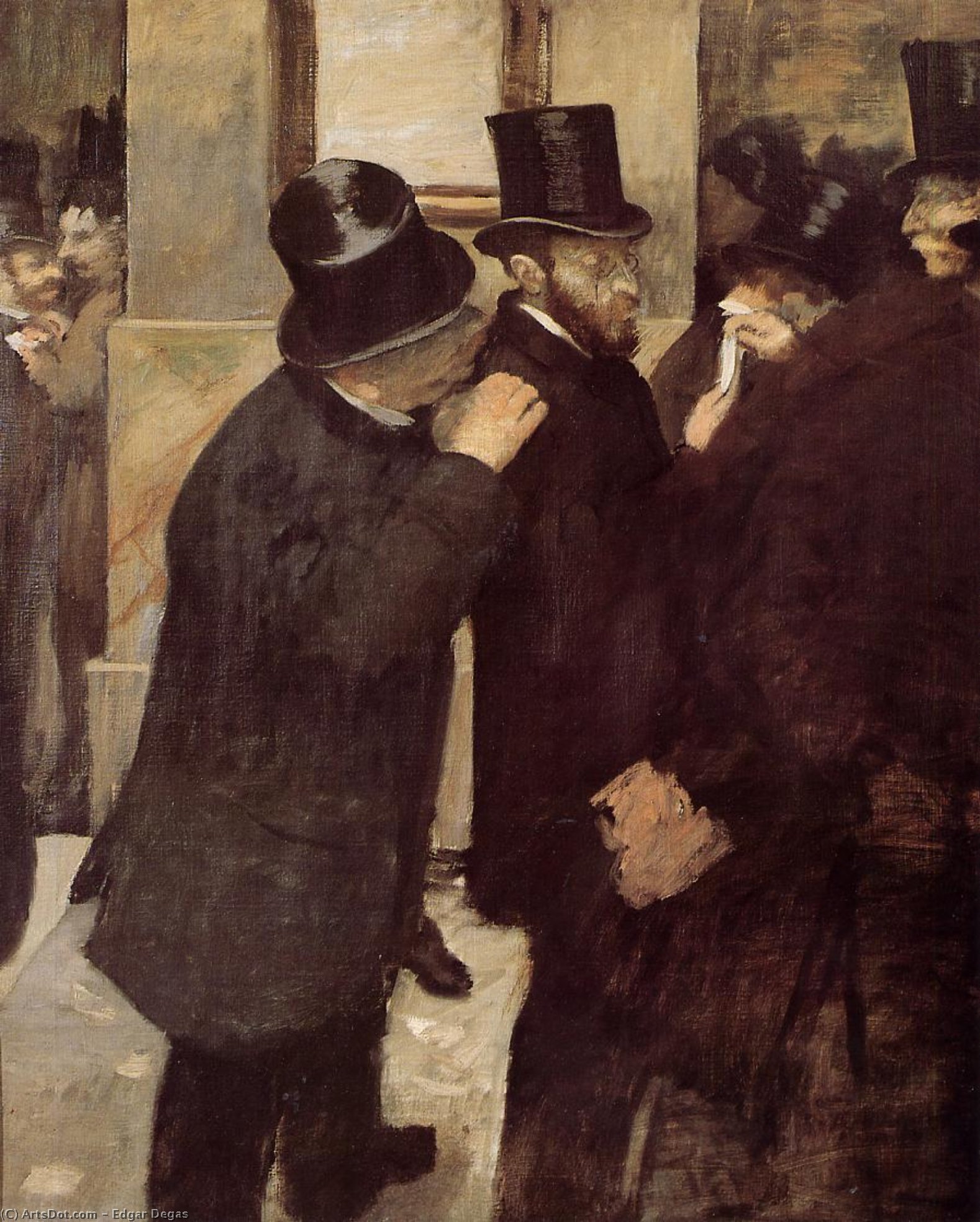
At The Stock Exchange: A Portrait of Anxiety and Artistic Rebellion
Edgar Degas’s “At The Stock Exchange,” completed in 1879, stands as a pivotal work within the Impressionist movement—though Degas himself vehemently resisted categorization. More than just capturing a scene of financial dealings, this monochrome print delves into anxieties surrounding societal power dynamics and embodies a subtle defiance against artistic conventions.
- Historical Context: The painting emerged during a period rife with speculation about Jewish financiers manipulating the Parisian bourse. Degas’s personal family experienced bankruptcy due to banking ventures, fueling whispers of antisemitic sentiments within his worldview—a controversial element debated by scholars today. This context underscores the broader societal anxieties prevalent in late Victorian Europe.
- Artistic Style and Technique: Impressionism championed a revolutionary approach to painting, prioritizing fleeting impressions of light and color over meticulous detail. Degas’s masterful brushstrokes—characterized by rapid, loose movements—capture the atmosphere of the bourse with remarkable immediacy. The absence of vibrant hues amplifies the psychological impact, fostering a sense of detachment that aligns perfectly with Impressionist aesthetics.
- Composition and Symbolism: The stark black and white palette emphasizes the seriousness of the subject matter. A single man in a top hat dominates the frame, positioned centrally amidst several figures dressed in suits—a deliberate choice reflecting the formality of the financial world. Notably, men’s hands are raised towards their faces, conveying unspoken tension and preoccupation. The inclusion of a chair suggests deliberation and contemplation during crucial business discussions.
Beyond its visual elements, “At The Stock Exchange” speaks to Degas's broader artistic philosophy. He rejected the idealized representations favored by academic painters, prioritizing observation and capturing the essence of human experience. This commitment to realism—coupled with Impressionist technique—creates a powerful juxtaposition that invites viewers to confront uncomfortable truths about power, ambition, and the pressures of societal expectations.
Currently residing in the Musée d'Orsay in Paris, this artwork continues to resonate with audiences today. Its enduring appeal lies not only in its artistic merit but also in its ability to provoke contemplation on themes of social commentary and psychological nuance—making it a treasured piece for collectors and an inspiring subject for interior designers seeking to infuse their spaces with intellectual depth.