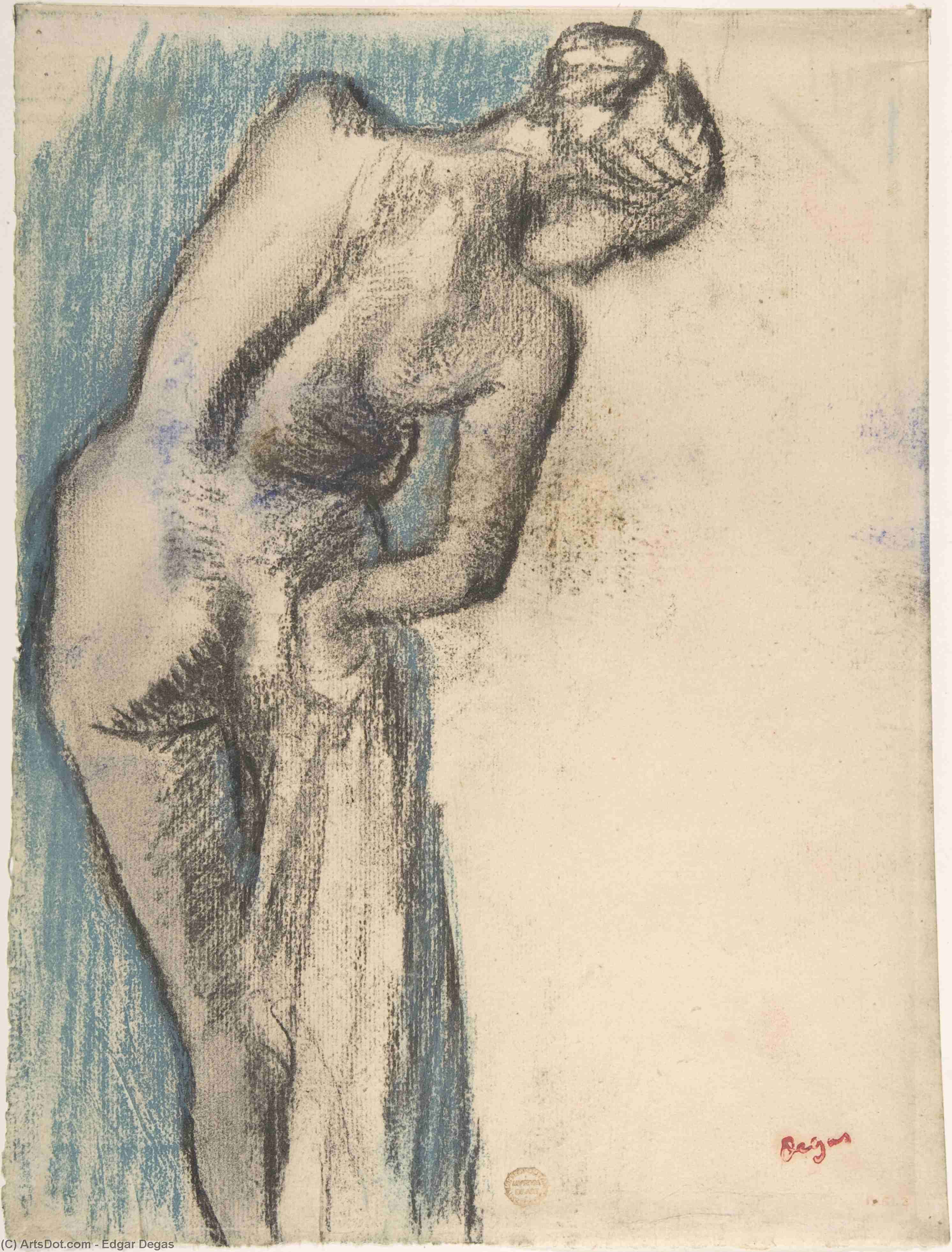
Bather Drying Herself: An Intimate Glimpse into Degas's World
Edgar Degas’s “Bather Drying Herself” is more than just a depiction of a woman in private repose; it’s a meticulously crafted meditation on movement, observation, and the quiet dignity of everyday life. Painted around 1884-1885, this work exemplifies Degas's unique approach to portraying the human form – one that prioritized realism and an almost journalistic eye for detail over idealized beauty or grand narratives. The painting’s power resides in its ability to draw us into a fleeting moment, capturing not just the physical act of drying but also the vulnerability and stillness inherent within it.
- Subject Matter: The central figure, a woman partially obscured by a simple towel, embodies a departure from traditional nude studies. Degas wasn’t interested in glorifying the body; instead, he presented it as he found it – vulnerable, exposed, and utterly human.
- Impressionistic Technique: While often associated with Impressionism, Degas resisted this label, preferring to focus on his own rigorous method of observation. The painting showcases a characteristic impressionistic style through loose brushstrokes, broken color, and an emphasis on capturing the effects of light and shadow.
- Composition & Movement: Notice how Degas uses diagonal lines – the towel, the floorboards – to create a sense of dynamic movement, even in this seemingly static scene. This subtle manipulation contributes significantly to the painting's overall impact.
Decoding the Artist’s Vision: Style and Technique
Degas’s mastery lies not just in his subject matter but also in his technical execution. He employed a combination of charcoal and pastel, layering these materials to build up texture and create a remarkable sense of depth. The use of muted tones – primarily browns, grays, and creams – contributes to the painting's somber mood and emphasizes the materiality of the scene. The artist’s attention to detail is astonishing; you can almost feel the roughness of the towel against the woman’s skin, the coolness of the floor beneath her feet.
- Charcoal & Pastel: Degas's skillful blending of charcoal and pastel allowed him to achieve a remarkable level of tonal variation and texture.
- Loose Brushwork: The visible brushstrokes contribute to the painting’s sense of immediacy and spontaneity, reflecting Degas’s commitment to capturing fleeting moments.
- Emphasis on Light & Shadow: Degas meticulously observed how light interacted with surfaces, creating subtle gradations of tone that enhanced the realism of the scene.
Historical Context and Symbolism
“Bather Drying Herself” was created during a period of significant artistic change in France. The Impressionists were challenging traditional academic conventions, and Degas, while often associated with this movement, maintained his own distinct approach. The painting’s focus on the everyday lives of women reflects a broader shift in artistic interest towards realism and social commentary. The woman's posture – relaxed yet alert – suggests a quiet strength and resilience. It is important to note that depictions of nude figures were often laden with symbolism within art history, and Degas’s choice here deliberately avoids overt mythological or allegorical interpretations.
A Legacy of Observation
Degas's “Bather Drying Herself” remains a powerful testament to his artistic vision. It is a painting that rewards careful observation, inviting us to contemplate the beauty and complexity of ordinary moments. Its enduring appeal lies in its ability to capture not just an image but also a feeling – a sense of intimacy, vulnerability, and the quiet dignity of human existence. This piece exemplifies Degas’s profound understanding of movement, light, and the subtle nuances of the human form.