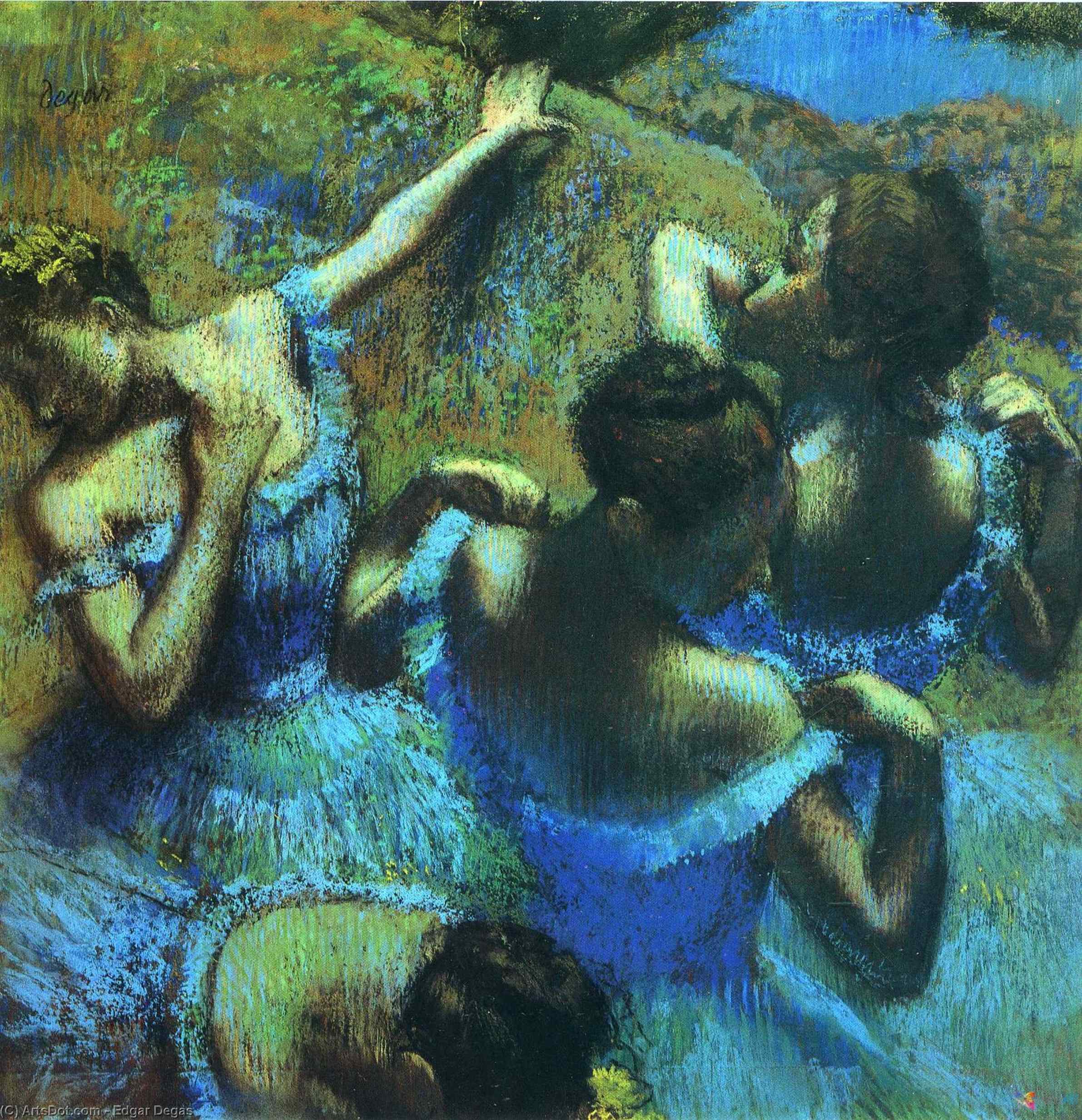
A Symphony in Blue: Decoding Edgar Degas’s ‘Three Dancers’
The pastel landscape of “Three Dancers,” executed by Hilaire-Germain-Edgar Degas in 1876, transcends mere depiction; it embodies a profound exploration of movement and emotion—a cornerstone of Impressionist philosophy. This seemingly simple tableau captures the fleeting grace of ballet dancers rehearsing backstage, presenting an arresting glimpse into the artistic spirit of its time. Examining this artwork reveals layers of meaning beyond its visual surface, inviting contemplation on art’s role in capturing ephemeral beauty.
The Impressionist Vision: Light and Atmosphere
Degas firmly rejected the rigid conventions of academic painting, prioritizing instead the observation of natural light—a principle championed by Monet and Renoir. Unlike traditional canvases dominated by dark hues and meticulous detail, “Three Dancers” utilizes a delicate pastel technique characterized by soft blending and luminous washes. The artist skillfully renders the backstage environment not as a static backdrop but as an active participant in the dancers’ performance, conveying a palpable sense of atmosphere—the warmth emanating from incandescent lamps casting dappled shadows across the floorboards. This deliberate choice underscores Impressionism's commitment to portraying sensory experience rather than idealized representations.
Composition and Movement: Capturing Fleeting Gestures
The composition itself is masterful, guiding the viewer’s eye through a carefully orchestrated sequence of lines and shapes. Degas arranges the dancers in asymmetrical groupings—one dancer positioned prominently on the left, another slightly off-center—creating dynamism and visual interest. More crucially, he captures fleeting gestures—a dancer reaching for her skirt, another adjusting her posture—transforming static figures into embodiments of movement. These subtle nuances are achieved through meticulous attention to detail, reflecting Degas’s unwavering dedication to realism while simultaneously embracing Impressionist principles. The pastel medium lends itself perfectly to conveying these delicate movements, allowing for a remarkable level of nuance and subtlety.
Symbolism Within Elegance: Beyond the Ballet Studio
While ostensibly depicting ballet dancers, “Three Dancers” resonates with deeper symbolic significance. The blue skirts worn by the dancers represent serenity and tranquility—a deliberate contrast to the anxieties prevalent in Victorian society. Furthermore, the pastel hues themselves evoke feelings of nostalgia and remembrance, hinting at a yearning for beauty and harmony amidst chaos. Degas’s artistic vision extends beyond mere representation; he seeks to communicate intangible emotions—the joy of performance, the vulnerability of human experience—transforming the ballet studio into a microcosm of universal themes.
Emotional Resonance: A Moment Frozen in Time
Ultimately, “Three Dancers” succeeds in evoking a powerful emotional response from the viewer. The pastel’s soft luminescence imbues the scene with warmth and intimacy, transporting us back to the backstage bustle of a Parisian ballet troupe. We witness not just dancers performing but also human beings striving for perfection—a poignant reminder of our shared desire for beauty and grace. Degas's masterpiece remains an enduring testament to Impressionism’s ability to capture fleeting moments of emotion with breathtaking artistry—a timeless exploration of movement, light, and the human spirit.
- Artist: Edgar Degas
- Year: 1876
- Medium: Pastel on Paper
- Museum: Musée d’Orsay, Paris