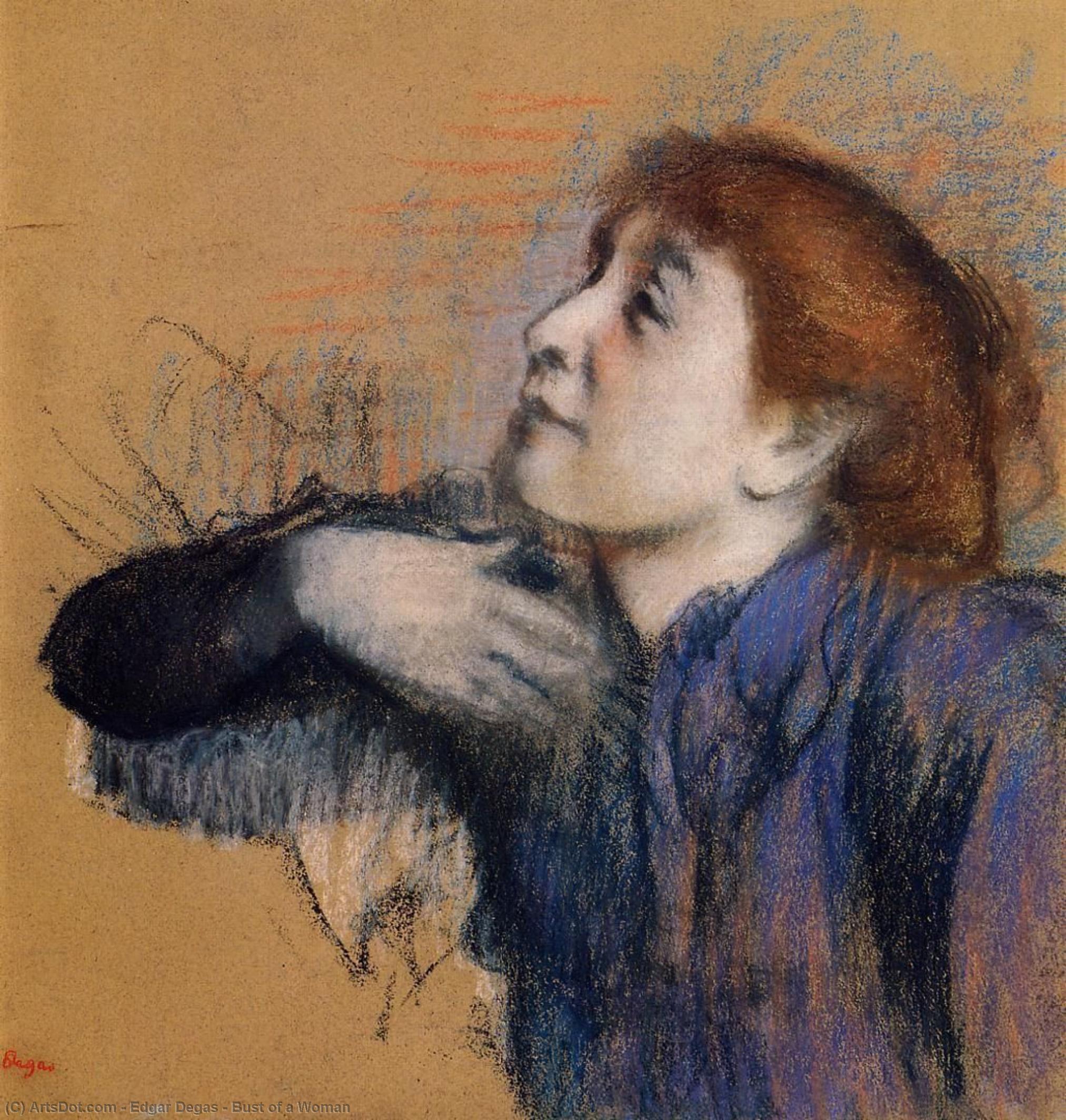
A Moment of Contemplation: Edgar Degas’ ‘Bust of a Woman’
Edgar Degas’ “Bust of a Woman,” painted in 1885, is more than just a portrait; it's a poignant study in quiet introspection. This pastel masterpiece, housed within the Impressionist movement, offers a rare glimpse into the inner life of its subject – a woman lost in thought, her gaze directed downward with an almost melancholic intensity. Degas, a master of capturing fleeting moments and human emotion, doesn’t offer grand gestures or dramatic poses; instead, he presents us with a simple yet profoundly affecting scene of quiet contemplation.
The painting immediately draws the eye to the woman's face – a delicate balance of features rendered with remarkable sensitivity. Her brown hair, softly defined, frames her face, while her blue shirt provides a subtle contrast against the muted tones of the background. Degas’ skill lies not just in his technical proficiency but also in his ability to imbue the subject with an aura of vulnerability and thoughtfulness. The slight tilt of her head, the almost imperceptible furrowing of her brow – these small details speak volumes about her internal state.
Artistic Style and Composition: Impressionism at its Finest
“Bust of a Woman” is a quintessential example of Degas’ distinctive style. He was a key figure in the Impressionist movement, prioritizing capturing the *impression* of light and atmosphere over precise detail. This is evident in the loose brushstrokes, the soft pastel colors that blend seamlessly together, and the hazy background—a yellowish hue that creates a sense of warmth and intimacy. Unlike traditional portraiture which often aimed for idealized beauty, Degas’ approach was far more realistic, focusing on portraying his subjects as they truly were – with all their imperfections and vulnerabilities.
The composition itself is carefully considered. Rather than placing the subject centrally, Degas opts for an off-center arrangement, creating a sense of movement and dynamism within the frame. The background, deliberately blurred, serves to further isolate the woman, intensifying her contemplative mood. This strategic use of space draws the viewer’s eye directly to her face, inviting us to share in her silent reflection.
A Glimpse into Degas' World: Context and Influences
To understand “Bust of a Woman,” it’s helpful to consider Edgar Degas’ broader artistic context. He was fascinated by modern life, particularly the world of ballet dancers – a subject he explored extensively in his paintings and drawings. This interest extended beyond mere documentation; Degas sought to capture the *essence* of these performers, their grace, their dedication, and even their moments of quiet contemplation between rehearsals. His work often reflects the realities of this profession, moving away from romanticized depictions.
Degas’ artistic journey was shaped by several influences, most notably Jean-Auguste-Dominique Ingres, a prominent academic painter who initially guided Degas towards drawing and classical techniques. However, Degas ultimately forged his own path, blending these foundations with his Impressionist sensibilities to create a uniquely personal style. His other notable works, such as “A Grecian Dance” and “Ballerina and Lady with a Fan,” further demonstrate this masterful blend of realism and impressionistic technique.
Symbolism and Emotional Resonance
While the painting’s surface details are captivating, it's the underlying symbolism that truly elevates "Bust of a Woman." The woman’s downward gaze suggests introspection, perhaps even sadness or longing. It invites us to speculate about her thoughts and experiences – what is she contemplating? What burdens does she carry? Degas deliberately leaves these questions unanswered, allowing each viewer to project their own emotions and interpretations onto the image.
Ultimately, “Bust of a Woman” is a testament to Degas’ ability to capture not just a likeness but also a mood – a moment of quiet beauty and profound human emotion. It's a painting that lingers in the mind long after it has been viewed, prompting reflection on the complexities of the human experience.
For more information on Edgar Degas and his works, visit ArtsDot.com or Wikipedia.