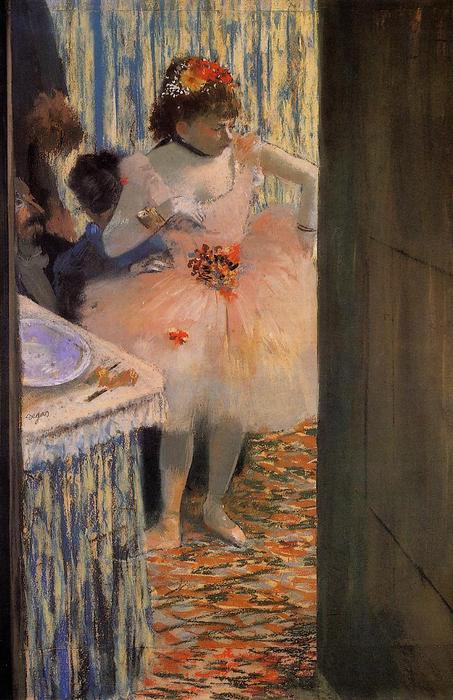
Edgar Degas’s ‘Dancer in Her Dressing Room,’ a captivating 1880 pastel depicting a ballerina preparing for her performance, showcases Impressionist intimacy and innovative composition. Discover this timeless masterpiece and bring its beauty into your space.
A Moment Frozen in Time: Edgar Degas’ Dancer in Her Dressing Room
Edgar Degas' “Dancer in Her Dressing Room,” created in 1880, transcends mere representation; it embodies the very spirit of Impressionism and offers a profound glimpse into the backstage world of Parisian ballet. More than just a depiction of a woman preparing for her performance, this pastel masterpiece speaks volumes about artistic observation, compositional innovation, and Degas’s unwavering fascination with capturing fleeting moments of beauty.
Subject Matter & Composition: The painting portrays a ballerina in the midst of her dressing room rituals—adjusting her costume, applying makeup, and taking deep breaths before stepping onto the stage. Degas eschews grand theatrical gestures, opting instead for a quiet intimacy that draws us into this private sphere. Notably, he employs bold foreshortening and an unconventional viewpoint, mirroring techniques found in Japanese prints – a stylistic influence that profoundly shaped Degas’s artistic vision. The inclusion of other figures—a seated man and a dancer partially obscured—adds depth to the scene, suggesting a shared space and highlighting the collaborative nature of ballet performance.
- Technique: Degas' masterful use of pastel on paper lends an ethereal quality to the image. The soft hues blend seamlessly together, creating a hazy atmosphere that captures the diffused light of the dressing room.
- Color Palette: Dominated by muted shades of gray and beige—reflecting the somber tones of backstage—the painting’s palette is punctuated by subtle accents of pink and yellow, hinting at the vibrancy of the dancer's costume and conveying a sense of anticipation.
- Detail & Observation: Degas’s meticulous attention to detail is evident in every element of the composition – from the folds of fabric to the textures of the dressing room walls. This painstaking observation aligns perfectly with his realist approach, prioritizing accuracy over idealized beauty.
Historical Context & Artistic Significance: Produced during Degas’s peak creative period, “Dancer in Her Dressing Room” reflects the broader artistic currents of Impressionism—a movement that challenged academic conventions and championed subjective experience. Like many Impressionist artists, Degas sought to capture not just what he saw but how he felt about what he saw. This painting stands as a testament to his ability to distill complex emotions into a deceptively simple visual form.
Symbolism & Emotional Impact: Beyond its formal qualities, “Dancer in Her Dressing Room” carries symbolic weight. The dancer represents grace, discipline, and aspiration—qualities admired within the ballet world and mirrored in Degas’s artistic endeavors. The quiet stillness of the scene conveys a sense of vulnerability and anticipation, inviting viewers to contemplate the pressures faced by performers and the beauty found in moments of preparation.
Resources for Further Exploration: For those wishing to delve deeper into Edgar Degas' oeuvre, “Dancer in Her Dressing Room” can be viewed at The Musée d’Orsay and National Gallery of Ireland. Additionally, a visit to Kirchner Museum Davos offers an unparalleled opportunity to experience Expressionist art alongside Degas’s Impressionistic legacy.