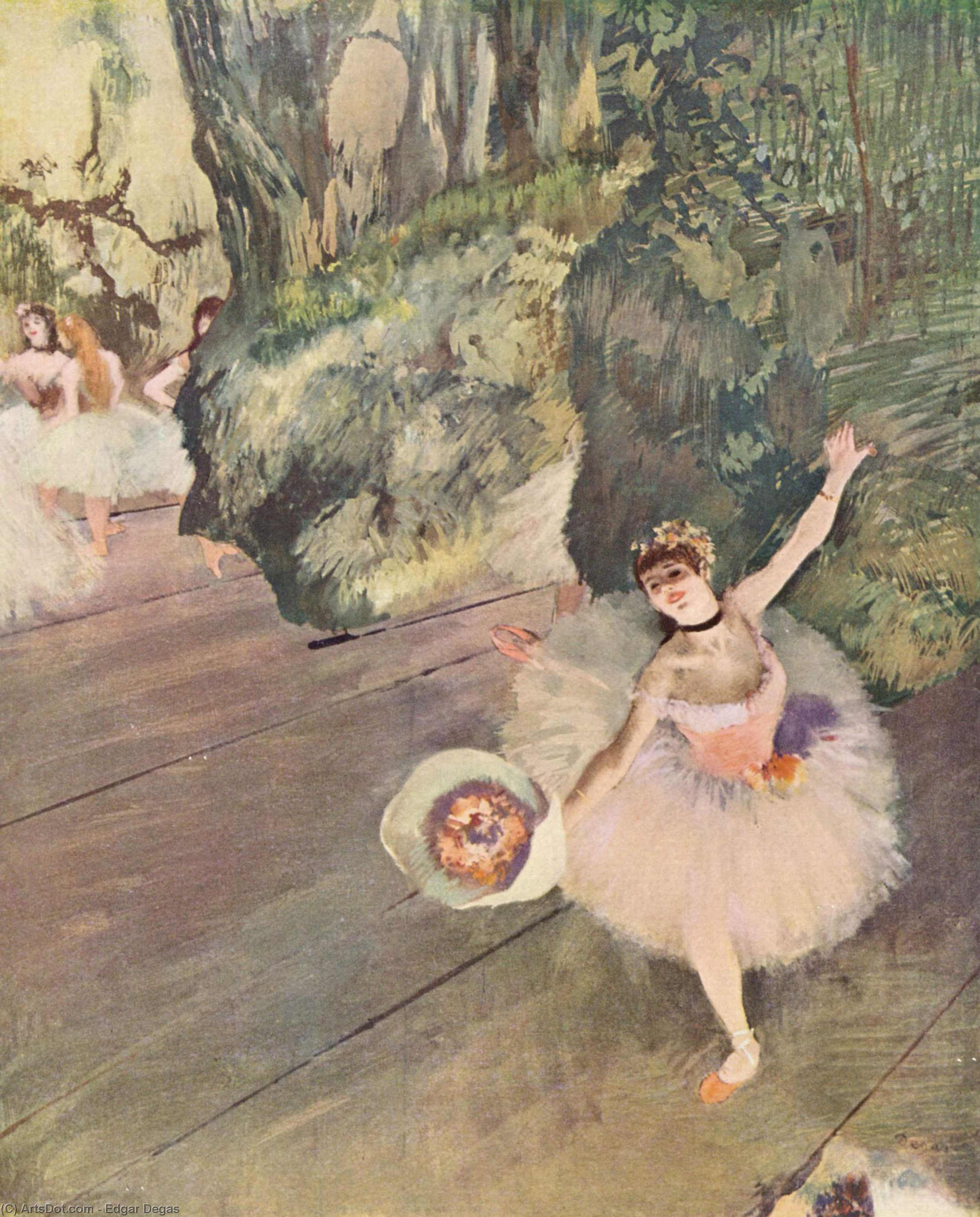
Discover Edgar Degas' "Dancer with a bouquet of flowers (The Star of the ballet)", a captivating 1878 Impressionist masterpiece. Explore its dynamic composition, vibrant colors & historical context. Own a high-quality reproduction today!
Edgar Degas: A revolutionary French artist known for his captivating ballet dancers, Parisian scenes, and innovative techniques—a true master of modern art.
A Moment Suspended in Time: The Allure of Degas’ “Dancer with a bouquet of flowers (The Star of the ballet)”
Edgar Degas' 1878 masterpiece, “Dancer with a bouquet of flowers (The Star of the ballet),” isn’t merely a depiction of a ballerina; it is an encapsulation of a fleeting moment—a breath held between exertion and grace. The painting draws us into the vibrant world of the Parisian ballet, not through grand spectacle, but through intimate observation. A young dancer, poised mid-performance, clutches a bouquet, her form radiating both strength and vulnerability. Degas doesn’t present a polished ideal; instead, he offers a glimpse behind the curtain, revealing the dedication and physical prowess required to achieve such ethereal beauty. The composition is dynamic, alive with implied movement, as if we've stumbled upon this scene during a rehearsal or perhaps just before the spotlight finds her. Her extended limbs and focused gaze command attention, yet there’s an underlying sense of quiet determination that resonates deeply.
Impressionism’s Embrace: Technique and Artistic Vision
While often categorized within the Impressionist movement, Degas himself resisted such labels, identifying more closely with realism. This distinction is evident in his approach to “Dancer with a bouquet of flowers.” He wasn't concerned with capturing fleeting light effects in the open air—a hallmark of many Impressionists—but rather with meticulously observing and portraying the human form in motion. The painting’s power lies in its expressive brushwork, loose and immediate, conveying energy and spontaneity. Earthy tones – browns, greens, and beiges – dominate the canvas, creating a warm, somewhat muted atmosphere that grounds the scene. This is beautifully contrasted by the lighter hues of the ballerina's tutu and costume, drawing our eye to her central figure. Degas’ technique isn’t about precise detail; it’s about capturing the *essence* of movement, the feeling of weightlessness and control. He builds texture through layered paint, creating a sense of depth that invites prolonged contemplation. The artist masterfully uses color not for realistic representation but to evoke emotion and atmosphere.
Beyond Beauty: Symbolism and Historical Context
Created during a period of significant social and artistic change in France, “Dancer with a bouquet of flowers” reflects Degas’ fascination with modern life. The ballet dancer became a recurring motif in his work—not as an object of romantic fantasy, but as a symbol of dedication, discipline, and the often-precarious existence of women in 19th-century society. The bouquet itself can be interpreted as both a reward for performance and a reminder of the fleeting nature of fame. Degas’s focus on the psychological complexity of his subjects sets him apart. He wasn't interested in portraying idealized beauty; he sought to reveal the inner lives, the vulnerabilities, and the quiet struggles of those around him. The surrounding figures—other dancers, stagehands, perhaps even patrons—hint at the social dynamics within the theater world, a microcosm of Parisian society itself. This painting isn’t simply about dance; it's about observation, human connection, and the stories hidden beneath the surface.
An Enduring Legacy: Bringing Degas into Your Space
The emotional resonance of “Dancer with a bouquet of flowers (The Star of the ballet)” transcends time and continues to captivate viewers today. Its dynamic composition and warm color palette make it a versatile addition to any interior, complementing both classic and contemporary design schemes. Imagine this piece adorning a living room, study, or even a bedroom—its presence would undoubtedly inspire contemplation and add a touch of sophisticated elegance. A high-quality reproduction allows you to experience the beauty and emotional depth of Degas’ work without the constraints of rarity or cost. It's an opportunity to bring a piece of art history into your home, a constant reminder of the power of observation, the grace of movement, and the enduring allure of the human spirit. For those seeking to enrich their surroundings with timeless artistry, this painting offers a compelling and deeply rewarding choice.