The Captivating World of Edgar Degas’s Dancers
Edgar Degas, a name synonymous with Parisian life at the turn of the 20th century, wasn't merely an artist; he was a chronicler of movement and emotion. His oeuvre, particularly his series of paintings and pastels depicting dancers, offers a remarkably intimate glimpse into the world of ballet during its burgeoning modern era. Among these captivating works, “Dancers,” housed within the prestigious Princeton University Art Museum, stands as a testament to Degas’s unparalleled ability to capture fleeting moments of grace, tension, and raw feeling – a skill honed through years of dedicated observation and an almost obsessive pursuit of realism in portraying the ephemeral nature of performance. This painting isn't simply a representation of dancers; it’s a distillation of their energy, their dedication, and the quiet intensity that resides within the backstage world.
Born Hilaire-Germain-Edgar De Gas in Paris in 1834, Degas initially pursued a path laid out for him by his family – law. However, a youthful fascination with drawing ignited an artistic passion that ultimately led him to abandon legal studies and embrace the challenges of becoming an artist. He rejected the label of “Impressionist,” preferring to describe himself as a realist, yet his work undeniably contributed significantly to the movement’s development. Degas's unique approach centered on capturing not just the visual appearance of subjects but also their psychological states – a characteristic vividly displayed in "Dancers." His meticulous study of anatomy, combined with an acute understanding of human expression, resulted in portraits that resonate with remarkable depth and authenticity.
A Study in Movement and Color
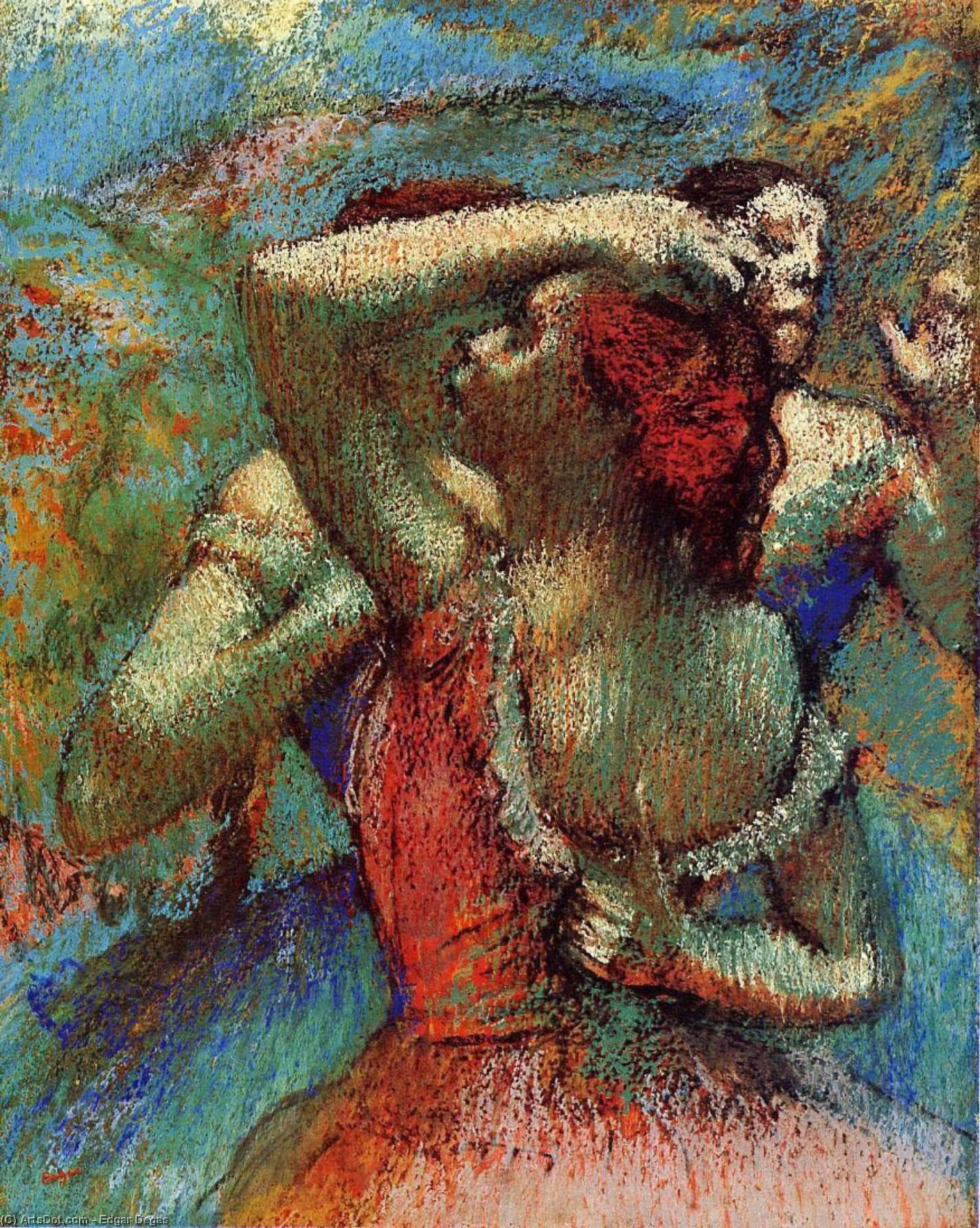
“Dancers” immediately draws the eye to its vibrant palette. The scene unfolds within a dimly lit space, dominated by the striking red clothing worn by the performers – a bold choice that injects energy and drama into the composition. The use of pastel is particularly noteworthy; Degas masterfully employed layering techniques to create an illusion of depth and texture, capturing the delicate folds of the dancers’ costumes and the subtle shifts in light and shadow. The painting isn't static; it pulsates with a sense of kinetic energy. Four figures are arranged dynamically across the canvas – a central dancer, her hands raised as if caught mid-gesture, surrounded by three others who seem to be circling her, lost in their own movements. The positioning of these dancers creates a diagonal flow that guides the viewer’s eye through the scene, mirroring the rhythm and fluidity of dance itself.
A key element contributing to the painting's power is its depiction of backstage life. The presence of a simple chair suggests the brief respite between performances – a moment of quiet contemplation amidst the frenetic energy of the stage. This detail adds a layer of realism, reminding us that these dancers are not simply idealized figures but human beings with their own needs and vulnerabilities. Degas’s ability to integrate such intimate details into his grander compositions is what elevates his work beyond mere representation; it transforms it into a profound exploration of human experience.
Technique and Legacy
Degas was renowned for his exceptional draftsmanship, particularly his mastery of depicting movement. His studies of dancers, both on stage and in rehearsal, were relentless, resulting in an astonishingly accurate portrayal of their physical forms and gestures. He employed a technique known as “broken color,” applying pastel in short, separate strokes to create a shimmering effect that mimics the way light interacts with fabric and skin. This method not only enhanced the painting’s visual richness but also conveyed a sense of immediacy and spontaneity – as if capturing a fleeting moment in time.
The impact of Degas's work extends far beyond the realm of art history. His innovative approach to depicting modern life, his focus on psychological complexity, and his groundbreaking use of pastel influenced generations of artists who followed. “Dancers” stands as a prime example of his genius – a captivating portrayal of beauty, grace, and the enduring power of human expression. For those seeking to experience the artistry of Degas firsthand, ArtsDot offers meticulously crafted reproductions that faithfully capture the vibrancy and emotional depth of this iconic masterpiece. Explore our collection today and bring the world of “Dancers” into your home or office – Lowering the Curtain, On Stage, and Three Women at the Races are just a few of the stunning options available.
References: Hilaire-Germain-Edgar Degas | Edgar Degas was a French Impressionist artist famous for his pastel drawings and oil paintings. He also produced bronze sculptures, prints, and drawings.
Edgar Degas [https://en.wikipedia.org/wiki/Edgar_Degas]