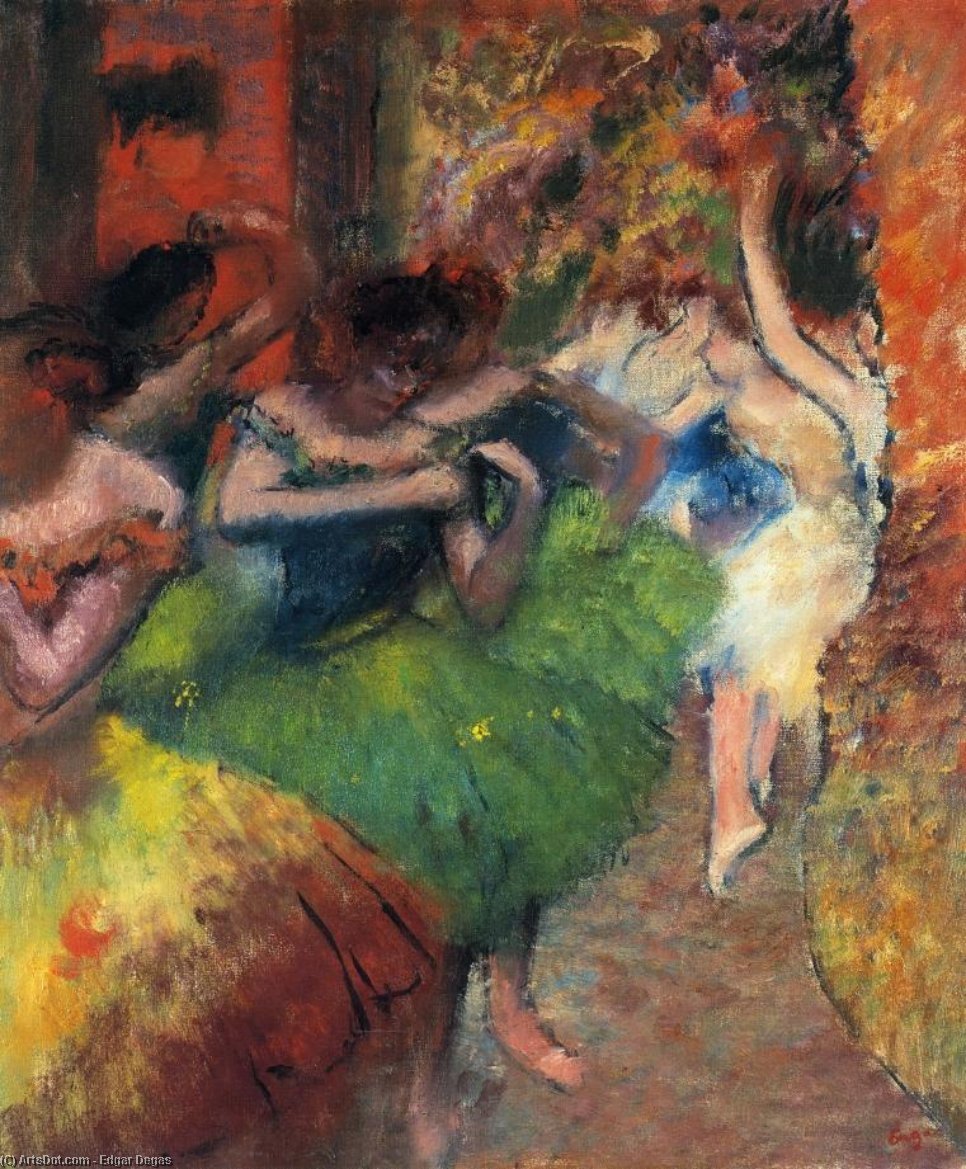
Captured in exquisite oil on canvas by Edgar Degas during the Impressionist era, 'Dancers in the Wings' portrays five women performing ballet with captivating movement and nuanced emotion—a testament to Degas’s realism and masterful technique. Explore this iconic masterpiece and bring artistic beauty into your home.
Edgar Degas: A revolutionary French artist known for his captivating ballet dancers, Parisian scenes, and innovative techniques—a true master of modern art.
A Moment Frozen in Motion: Exploring Edgar Degas’s Dancers in the Wings
The painting “Dancers in the Wings” by Edgar Degas stands as an enduring testament to Impressionism's fascination with capturing fleeting moments of life and emotion. Completed in 1885, this oil on canvas masterpiece—measuring 61 x 50 cm—isn’t merely a depiction of ballet dancers; it’s an embodiment of artistic innovation and psychological insight. Degas, famously resistant to the Impressionist label, nevertheless embraced the movement's core principles: prioritizing observation over idealized representation and striving for tonal harmony that mirrored the nuances of natural light.
Composition and Technique – The Dance Within Light
Degas meticulously crafted this scene with an eye toward dynamism. Five women—each dressed in distinctive dance attire—are positioned at varying heights and angles within the backstage area of a theater. This deliberate arrangement isn’t accidental; it reflects Degas's profound understanding of stagecraft and his desire to convey movement as much as stillness. The artist employed a technique reminiscent of the Musée Des Beaux-Arts Tourcoing, France, where Degas’s works are celebrated for their technical precision and aesthetic beauty. He utilized broken brushstrokes—a hallmark of Impressionism—to build up layers of color and texture, creating an illusion of depth that draws the viewer into the performance space. Notice how light plays across the dancers' costumes, highlighting folds and contours, mirroring the way light would illuminate a stage during a ballet rehearsal. This careful manipulation of illumination underscores Degas’s commitment to portraying not just what he saw but also *how* he perceived it—a crucial distinction from earlier academic painting styles.
Historical Context – Beyond Impressionism's Surface Glamour
The late 1880s witnessed a burgeoning interest in ballet and performance art, fueled by advancements in theater technology and a growing appreciation for the expressive potential of movement. Degas’s work emerged during this period, capturing not just the visual spectacle but also the palpable anticipation and energy surrounding the upcoming performance. Unlike many Impressionists who focused on landscapes or portraits bathed in dappled sunlight, Degas turned his gaze inward—specifically toward the backstage world—to explore themes of labor, discipline, and the psychological complexities of artistic creation. He sought to portray dancers not as idealized figures but as human beings grappling with physical exertion and emotional vulnerability.
Symbolism – The Quiet Intensity of Preparation
Beyond its technical brilliance, “Dancers in the Wings” resonates with symbolic significance. The backstage setting itself represents a realm of hidden activity—a space where performers prepare for their roles, honing their skills and cultivating an inner focus. The dancers’ poses convey a sense of poised readiness, hinting at the imminent performance yet simultaneously capturing a moment of contemplative stillness. Degas's masterful use of light and shadow contributes to this symbolic dimension, mirroring the philosophical discussions surrounding Light in Painting—where illumination is seen as representing enlightenment and conveying profound emotional truths.
Emotional Impact – Capturing the Soul of Performance
Ultimately, “Dancers in the Wings” succeeds in evoking a powerful emotional response. The painting transcends mere visual representation; it invites viewers to contemplate the beauty of movement, the dedication required for artistic achievement, and the subtle nuances of human emotion. It’s a piece that speaks to our fascination with performance art and reminds us that even in moments of preparation—before the spotlight shines—there exists an inherent richness and complexity worthy of artistic exploration. This reproduction offers a stunning glimpse into Degas's genius and invites you to bring this captivating image into your home or workspace.