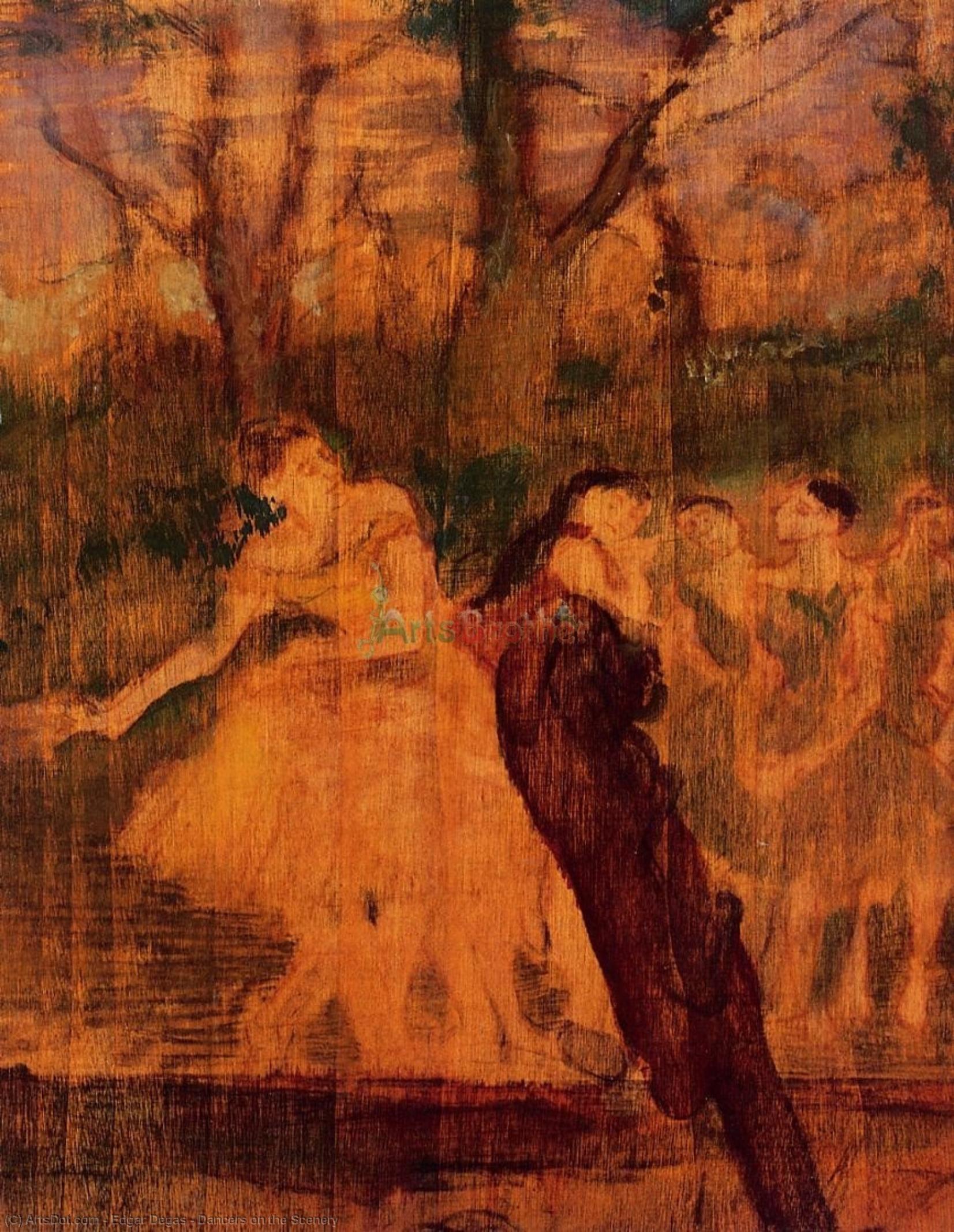
Dancers on the Scenery: A Window into Degas’s World
Edgar Degas, a name synonymous with Parisian life at the turn of the 20th century, wasn't simply an Impressionist painter; he was a meticulous observer, a chronicler of movement and emotion. His work transcends mere representation, offering glimpses into worlds often unseen – the backstage bustle of the ballet, the vibrant energy of horse racing, the quiet intimacy of Parisian social gatherings. Among his most captivating subjects is *Dancers on the Scenery* (1889), a piece that encapsulates Degas’s unique approach to capturing fleeting moments and revealing the underlying structure beneath apparent chaos. This painting isn't merely a depiction of dancers; it’s an exploration of performance, observation, and the delicate balance between reality and illusion – a testament to Degas’s genius.
Created during a pivotal period in his career, *Dancers on the Scenery* reflects Degas’s deep fascination with the ballet world. He wasn't interested in romanticized portrayals of dancers as ethereal figures; instead, he sought to document their rigorous training, the quiet moments of preparation, and the palpable tension between aspiration and execution. The scene unfolds within a rehearsal space – a crucial element that distinguishes this work from typical stage productions. Here, the dancers are not yet transformed into polished performers; they’re individuals engaged in the demanding process of honing their craft, stretching, adjusting, and anticipating the demands of the choreography.
Degas's masterful use of light is central to the painting’s impact. He employs a technique reminiscent of *chiaroscuro*, creating dramatic contrasts between illuminated areas and deep shadows that sculpt the figures and imbue the scene with atmosphere. The dappled sunlight filtering through an unseen window casts long, shifting patterns across the stage, emphasizing the dancers' forms and adding a sense of depth to the composition. Notice how he uses light not just to illuminate but also to define movement – the suggestion of a leap, a turn, or a poised stance is subtly conveyed through variations in tone and texture.
Composition and the Language of Movement
The composition of *Dancers on the Scenery* is anything but static. Degas deliberately avoids a traditional, symmetrical arrangement, opting instead for a dynamic grouping that mirrors the energy of the dancers themselves. The figures are positioned in various poses – some reaching, others bending, still others observing – creating a sense of continuous motion and interaction. This deliberate asymmetry draws the viewer’s eye across the canvas, inviting them to become active participants in the scene.
Furthermore, Degas's innovative use of perspective contributes significantly to the painting's dynamism. He employs a slightly skewed viewpoint, as if captured from an oblique angle, which enhances the sense of movement and creates a feeling of immediacy. The placement of the tree in the background—a seemingly simple element—adds depth and anchors the scene within a natural setting, subtly contrasting with the artificiality of the stage environment.
Technique: Oil on Panel – A Delicate Balance
Degas’s choice of medium – oil paint applied to a panel – is crucial to understanding the painting's character. Oil paints allow for rich colors and subtle gradations of tone, enabling Degas to capture the nuances of light and shadow with remarkable precision. The texture of the paint itself—a combination of smooth washes and broken brushstrokes—adds visual interest and contributes to the overall sense of movement. He skillfully blended traditional oil painting techniques with a more spontaneous approach, creating a style that is both refined and remarkably expressive.
Notably, Degas’s technique reflects his meticulous observation. The artist spent countless hours sketching dancers in rehearsal, studying their poses, gestures, and expressions. This detailed preparatory work informed the final composition, ensuring that each element—from the placement of a hand to the angle of a foot—was carefully considered and rendered with accuracy.
Context and Legacy: A Masterpiece of Impressionism
*Dancers on the Scenery* is part of a larger series of works by Degas focused on ballet, reflecting his lifelong fascination with this world. These paintings offer a rare glimpse into the behind-the-scenes realities of professional dance – the dedication, discipline, and physical demands involved in performing on stage. Degas’s work challenged conventional notions of portraiture, moving beyond idealized representations to capture the essence of his subjects in their natural state.
The painting's influence extends far beyond the realm of Impressionism. Degas’s innovative use of composition, perspective, and light paved the way for future generations of artists who sought to capture movement and emotion with unprecedented realism. *Dancers on the Scenery* remains a powerful testament to Degas’s artistic vision – a captivating portrayal of performance, observation, and the enduring beauty of human expression.
For those seeking to experience this masterpiece firsthand, ArtsDot offers meticulously crafted, hand-painted reproductions that faithfully capture the painting's original brilliance. Explore our collection today and bring Degas’s *Dancers on the Scenery* into your home or office – a timeless work of art that continues to inspire and delight.
Discover more exceptional art reproductions at ArtsDot.com.