The painting
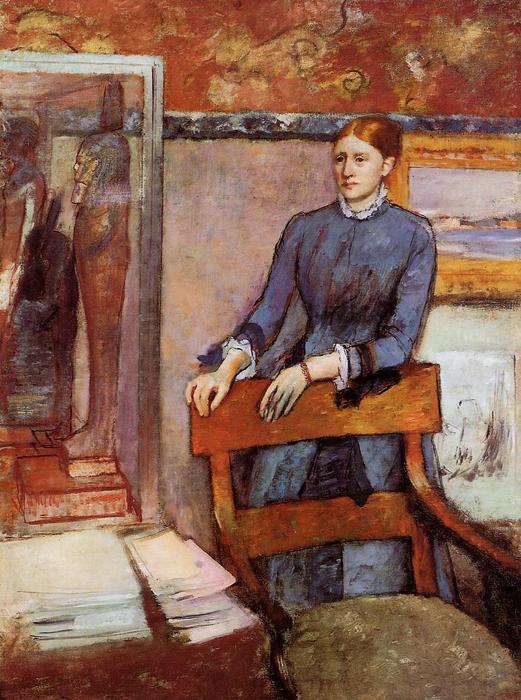
Helene Rouart in Her Father's Study is a captivating work of art created by the renowned French artist
Edgar Degas in 1886. This oil on canvas piece is currently housed at the
National Gallery in London, United Kingdom. As a prominent figure in the Impressionist movement, Degas' works are highly regarded for their unique blend of traditional and modern techniques.
The Painting's Composition and Style
The painting depicts
Helene Rouart sitting in a chair with her hands on her lap, lost in thought as she gazes off-camera. The room is filled with various objects, including a couch, bench, books, and a clock on the wall above her head. Degas' use of color and composition creates a sense of intimacy and tranquility, drawing the viewer into the quiet atmosphere of the study.
Key Features of the painting include:
- The use of soft, muted colors to create a warm and inviting ambiance
- The emphasis on capturing the play of light and shadow in the scene
- The incorporation of everyday objects to add depth and context to the composition
As seen in other works by Degas, such as
Woman Drying Herself and
Harlequin and Colombine, his ability to balance traditional techniques with modern innovations is a hallmark of his style. For more information on Degas' life and work, visit the
Edgar Degas page on ArtsDot.
Handmade Oil Paintings Reproductions of
Helene Rouart in Her Father's Study are available for purchase on
ArtsDot, allowing art enthusiasts to own a piece of history. The museum where the original painting is housed, the
National Gallery, can be found on Wikipedia at
National Gallery.
For those interested in learning more about the Impressionist movement and its key figures, such as
Paul Gauguin, visit the
Paul Gauguin: Ramasseuses de varech (II) (The Kelp Gatherers (II)) page on ArtsDot.