A Moment Frozen in Time: Analyzing Edgar Degas’s Jockey
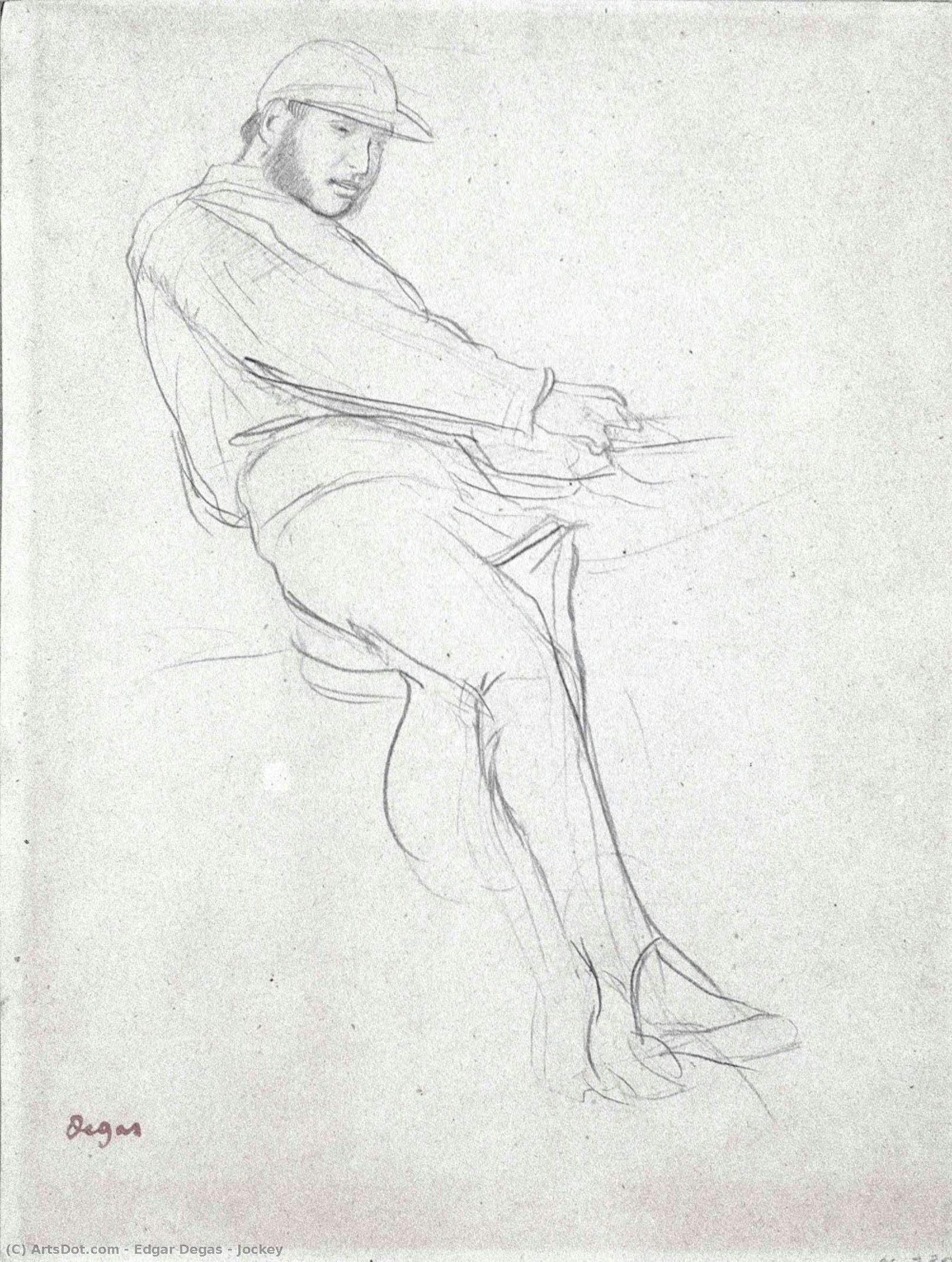
The pencil sketch titled “Jockey,” executed by Edgar Degas around 1866 and subsequently reworked between 1880-1881, offers a captivating glimpse into the artist's meticulous observation of human movement and form. More than just a depiction of a seated man—likely contemplating or engaged in activity—it embodies Degas’s signature approach to Impressionism: prioritizing spontaneity and capturing fleeting instants with remarkable accuracy. Unlike many of his contemporaries who sought to portray idealized beauty, Degas relentlessly pursued realism, documenting everyday life with an unflinching gaze. This particular drawing exemplifies this dedication, presenting a study of posture and gesture that speaks volumes about the artist’s artistic philosophy.
- Subject Matter: The composition centers on a single figure – a man seated in profile – capturing a moment of quiet contemplation amidst the bustle of the racetrack.
- Style & Technique: Degas's style leans towards realism, yet it’s tempered by the expressive qualities inherent in pencil drawing. Loose lines and minimal shading contribute to an atmosphere of immediacy and spontaneity.
- Material & Medium: Graphite pencil was employed on paper, a technique favored by Degas for its ability to convey subtle tonal variations and textural nuances.
The artist’s masterful use of hatching and cross-hatching creates a palpable sense of texture—the delicate layering of graphite lines mimics the surface of skin and clothing, enhancing the drawing's visual richness. Lighting plays an important role in shaping the image, emanating from above and slightly to the side, casting shadows that accentuate volume and form. Perspective is flattened, characteristic of sketches, prioritizing clarity of observation over illusionistic depth—a deliberate choice reflecting Degas’s commitment to capturing reality as he perceived it.
Historical Context & Impressionist Influence
Degas's work emerged during the height of the Impressionist movement, a period marked by experimentation with light and color and a rejection of academic conventions. While he resisted categorization as an Impressionist himself, his artistic sensibilities were undeniably shaped by this influential aesthetic current. Like Monet and Renoir, Degas sought to depict scenes from modern life—the racetrack, ballet dancers, Parisian cafes—with unprecedented honesty and vibrancy. However, unlike his peers who prioritized capturing atmospheric effects, Degas focused on portraying the human figure with exceptional precision, prioritizing anatomical accuracy and psychological insight.
Symbolism & Emotional Resonance
Beyond its technical brilliance, “Jockey” possesses a subtle symbolic dimension. The seated man represents an observation of human posture—a gesture of stillness amidst movement—suggesting contemplation and perhaps even melancholy. Degas’s sketches often convey emotions beneath the surface, inviting viewers to engage in a dialogue with the artwork on a deeper level. This drawing encapsulates the artist's fascination with capturing fleeting moments of human experience, reflecting his belief that art should strive for truthfulness and emotional resonance.
Exploring Reproduction & Artistic Inspiration
A high-quality reproduction of “Jockey” can serve as a beautiful addition to any interior space—bringing a touch of Impressionist elegance and artistic contemplation into your home. ArtsDot offers exceptional reproductions crafted with archival inks on premium canvas, ensuring that you experience the artwork's original vibrancy and textural detail for years to come. Consider how Degas’s masterful technique – his dedication to observation and his ability to convey emotion through simple lines – might inspire your own creative endeavors.