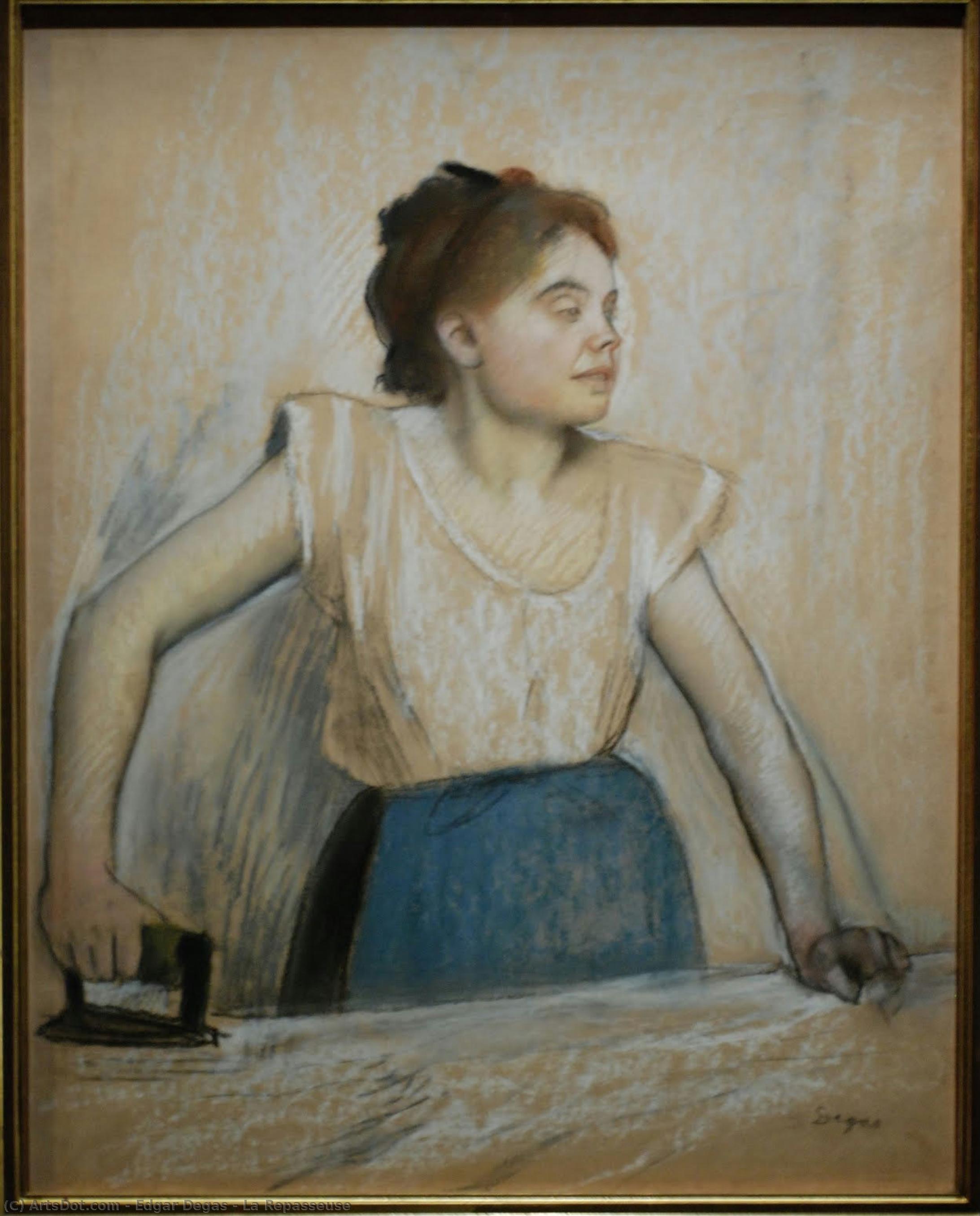
Captured in an evocative Impressionist style by Edgar Degas, this portrait depicts a woman diligently ironing—a moment of quiet domesticity rendered with remarkable detail and capturing the spirit of 19th-century France. Explore exquisite reproductions and bring this timeless masterpiece into your home.
Edgar Degas: A revolutionary French artist known for his captivating ballet dancers, Parisian scenes, and innovative techniques—a true master of modern art.
A Portrait Steeped in Observation: Decoding Degas’s “La Repasseuse”
The painting "La Repasseuse," executed by Edgar Degas in 1869, transcends mere depiction; it's a masterful distillation of Parisian life and an embodiment of Degas’s distinctive artistic vision. More than just capturing a woman ironing – a commonplace activity rendered with remarkable detail – the artwork speaks volumes about the era’s social dynamics and Degas’s unwavering commitment to portraying reality without romantic embellishment. It resides in the Musée d'Orsay, Paris, where its quiet dignity continues to captivate viewers.
Subject Matter and Context
At first glance, “La Repasseuse” presents a seemingly simple scene: a woman diligently ironing clothes at a dining table. However, Degas’s genius lies in elevating this everyday moment into something profound. The painting captures a snapshot of working-class life during the Belle Époque – a period marked by rapid industrialization and social change—yet it avoids sentimentality. Two figures stand behind her, subtly hinting at the presence of family and domesticity within this urban environment. This careful inclusion underscores Degas’s fascination with capturing fleeting impressions of human experience. The dining table itself serves as a visual anchor, grounding the scene in the tangible realities of daily existence.
Style and Technique: Impressionistic Realism
Despite his resistance to labeling himself an Impressionist, Degas undeniably employs techniques characteristic of the movement. Like Monet and Renoir, he prioritizes capturing light and atmosphere—though with a more restrained palette than is typically associated with Impressionism. The brushstrokes are loose and visible, conveying movement and immediacy without sacrificing accuracy. Degas’s meticulous attention to detail – evident in the folds of the woman's dress, the texture of the fabric, and the subtle shading on her face – distinguishes him from purely atmospheric painters. He achieves this remarkable blend of realism and Impressionistic sensibility through layering thin glazes of color, a technique honed during his extensive study of classical sculpture.
Symbolism Beyond the Surface
Beyond its immediate visual appeal, “La Repasseuse” carries symbolic weight. The ironing woman represents not just labor but also domestic responsibility—a cornerstone of Victorian ideals. Her posture exudes quiet determination and resilience, reflecting the fortitude required to navigate the challenges of urban life. Furthermore, the inclusion of two additional figures suggests a broader commentary on family relationships and social interactions. Degas’s deliberate framing invites contemplation about the complexities of human connection amidst the backdrop of societal progress.
Emotional Impact: Quiet Dignity and Observation
Ultimately, “La Repasseuse” succeeds in conveying a powerful emotional resonance—one rooted in understated dignity and profound observation. The painting doesn't strive for dramatic gesture or emotive expression; instead, it invites viewers to linger on the quiet beauty of everyday life. Degas’s masterful rendering captures not just what is seen but also what is felt – a sense of stillness punctuated by purposeful action. It serves as a poignant reminder that art can illuminate the human condition with remarkable subtlety and grace.