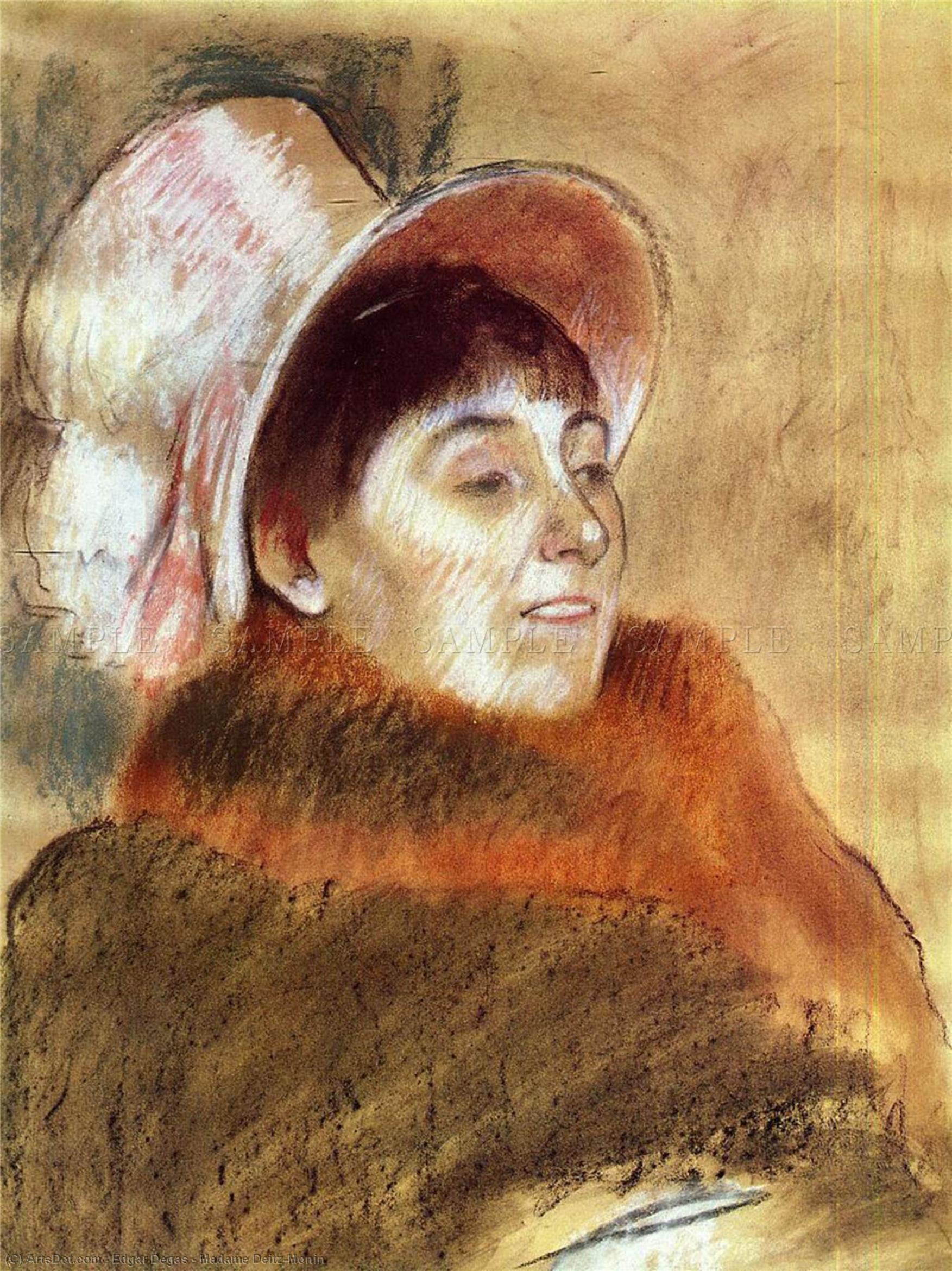
Madame Deitz-Monin: A Moment Frozen in Pastel Light
Edgar Degas, arguably the most celebrated artist of the Impressionist movement, gifted us with a captivating portrait titled Madame Deitz-Monin. Executed in 1879 and now residing within the esteemed collection of the National Gallery of Art in Washington, D.C., this pastel painting transcends mere representation; it captures a fleeting glimpse into Victorian society and embodies Degas’s masterful command of Impressionist principles.
The image depicts Madame Deitz-Monin seated elegantly, her gaze directly confronting the viewer—a bold gesture that speaks to the artist's intention to engage the audience emotionally. A delicately draped scarf adds an air of sophistication to her demeanor, while a feathered hat serves as a focal point, symbolizing status and refinement. Two figures positioned subtly in the background – one on each side – contribute to the composition’s depth and create a sense of intimacy.
The Painting's Composition and Style
Degas meticulously crafted this scene using pastel—a medium that allowed him to achieve remarkable luminosity and softness, mirroring the ephemeral quality of light itself. The artist skillfully employed asymmetrical balance, placing Madame Deitz-Monin centrally against a backdrop of muted tones, emphasizing her importance within the frame. This deliberate compositional choice reflects Degas’s fascination with capturing transient moments and conveying psychological nuance.
Impressionist Techniques
The pastel medium was pivotal to Degas's artistic vision. Unlike oil paints which require lengthy drying times, pastel pigments fuse directly onto the canvas surface, resulting in vibrant colors and textural richness. Degas’s meticulous layering of pastel shades—particularly capturing the subtle interplay of light on Madame Deitz-Monin’s face—demonstrates his unwavering dedication to faithfully reproducing visual sensations. As Lillian Schacherl notes, “Degas was fascinated with dancers on stage and behind the scenes, seeing the contrast between these spaces as a way to distinguish between real and artificial experiences.”
Context within Degas's Work
Madame Deitz-Monin stands alongside Degas’s broader exploration of women in Victorian society. His oeuvre frequently depicted dancers, laundresses, and other women engaged in everyday activities—subjects that challenged conventional artistic conventions and championed the dignity of ordinary life. This portrait aligns with Degas's commitment to portraying subjects with honesty and empathy, reflecting his humanist sensibilities.
Collection and Significance
The painting’s inclusion within the Chester Dale Collection underscores its significance as a cornerstone of Impressionist art history. The Dale Collection represents a remarkable philanthropic endeavor—a testament to the transformative power of art patronage—and ensures that Madame Deitz-Monin continues to inspire generations of viewers.
Relevance at ArtsDot.com
For those seeking to immerse themselves in Degas’s artistic legacy or explore similar Impressionist masterpieces, Madame Deitz-Monin and comparable reproductions are readily available at ArtsDot.com. This platform specializes in crafting exquisite oil painting recreations of iconic artworks—a celebration of artistic heritage that brings the beauty of Impressionism into modern homes.
Impressionism, a movement that sought to capture the fleeting moments of modern life, is beautifully exemplified in
Madame Deitz-Monin. This painting stands as a significant work within Degas’s oeuvre and the broader context of Impressionist art—a timeless testament to artistic innovation and enduring beauty.