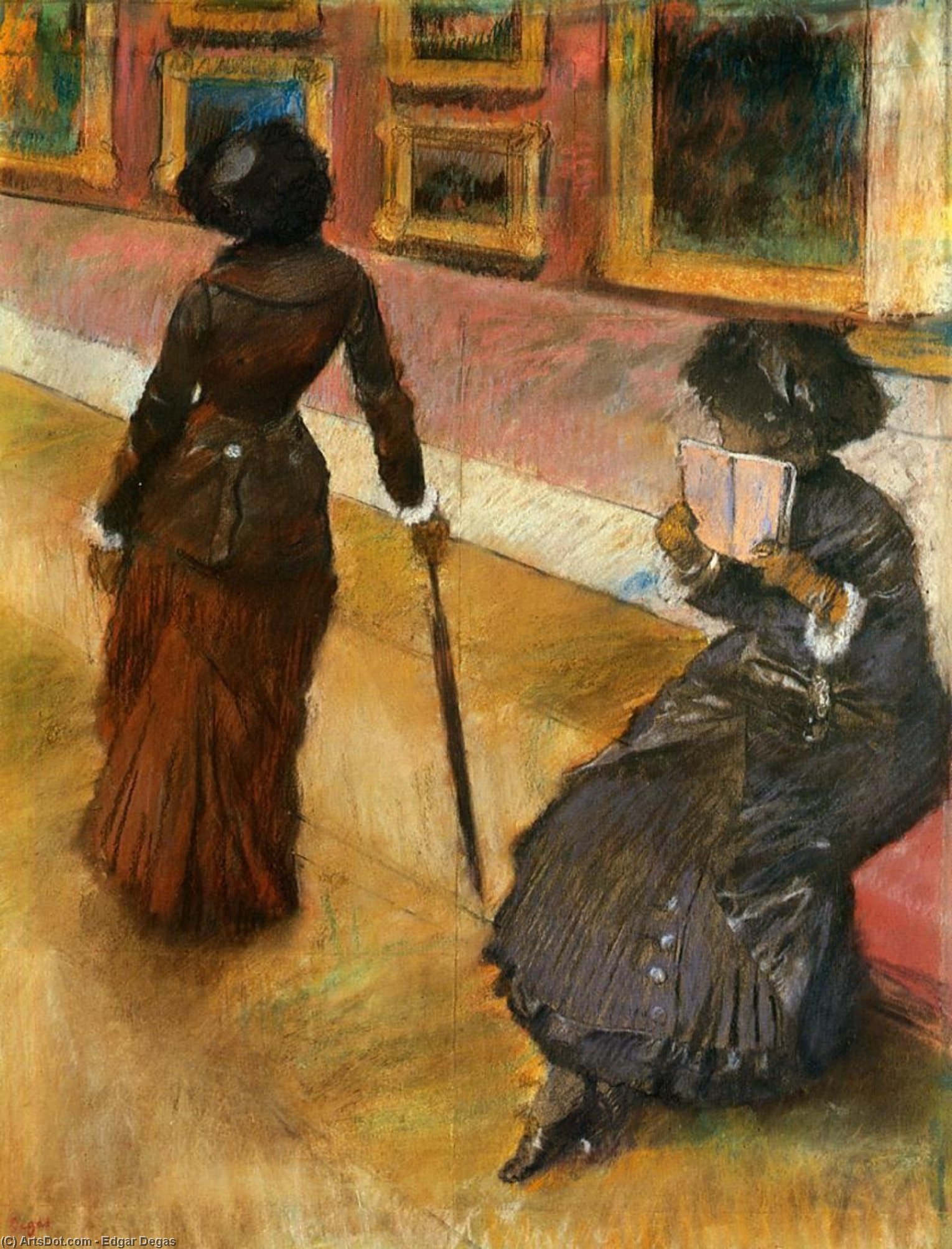
Mary Cassatt at the Louvre
Edgar Degas, a luminary of Impressionism and Realism alike, captivated audiences with his masterful pastel drawings and oil paintings. His oeuvre explored diverse subjects—dancers, horses, landscapes—but one particular piece stands as a testament to his artistic vision:
Mary Cassatt at the Louvre, created in 1880 using pastel. This artwork isn’t merely a depiction of Parisian life; it's an embodiment of Degas’s profound understanding of human emotion and his ability to convey subtle nuances within a seemingly simple scene.
Artistic Context and Style
Degas firmly positioned himself at the forefront of Impressionism, though he resisted categorization—preferring to describe his approach as “classical painting of contemporary life.”
Mary Cassatt at the Louvre exemplifies this distinctive blend. Unlike many Impressionists who prioritized fleeting impressions of light and color, Degas meticulously observed and rendered human figures with remarkable accuracy—a hallmark of his Realist tendencies. The pastel medium itself contributes to this effect, allowing for delicate tonal gradations and capturing textures with exceptional subtlety.
The Painting: A Glimpse into Parisian Life
The painting portrays two women strolling along a Parisian boulevard, an intimate snapshot of daily life during the Belle Époque. One woman is absorbed in reading a book—a gesture that speaks volumes about intellectual curiosity and female independence—while her companion gazes intently at something on the ground, perhaps contemplating a passing moment or observing the details of their surroundings. The backdrop is equally significant: a building adorned with paintings symbolizes the artistic spirit of the era and underscores Cassatt’s presence within a cultural milieu brimming with creativity. Additional figures—a woman carrying a handbag and a gentleman overseeing a dining table—add depth to the composition, hinting at social interactions and the rhythms of urban existence.
Significance and Artistic Influence
Mary Cassatt at the Louvre holds considerable importance not only as a visual record of Parisian society but also as an exploration of gender roles in art. Mary Cassatt herself—an American Impressionist painter and a lifelong friend of Degas—served as inspiration for this piece. Their mutual admiration for each other’s work is palpable, reflecting a shared commitment to portraying women with dignity and compassion. The painting's careful composition and nuanced portrayal of emotion resonate powerfully even today, cementing Degas’s legacy as one of the most influential artists of his time.
Other Notable Works by Edgar Degas
Degas’s artistic output spanned numerous subjects—dancers, horses, landscapes—each rendered with unparalleled skill and sensitivity. Among his celebrated masterpieces are:
Edgar Degas on ArtsDot provides an extensive collection of his works. To delve deeper into the world of Impressionism and its artists, visit
Wikipedia's page on Impressionism. For a unique art experience, consider visiting
The Barnes Foundation: A Hidden Gem of Philadelphia at ArtsDot.
Experience the beauty of handmade oil painting reproductions by visiting
Mary Cassatt at the Louvre on ArtsDot.