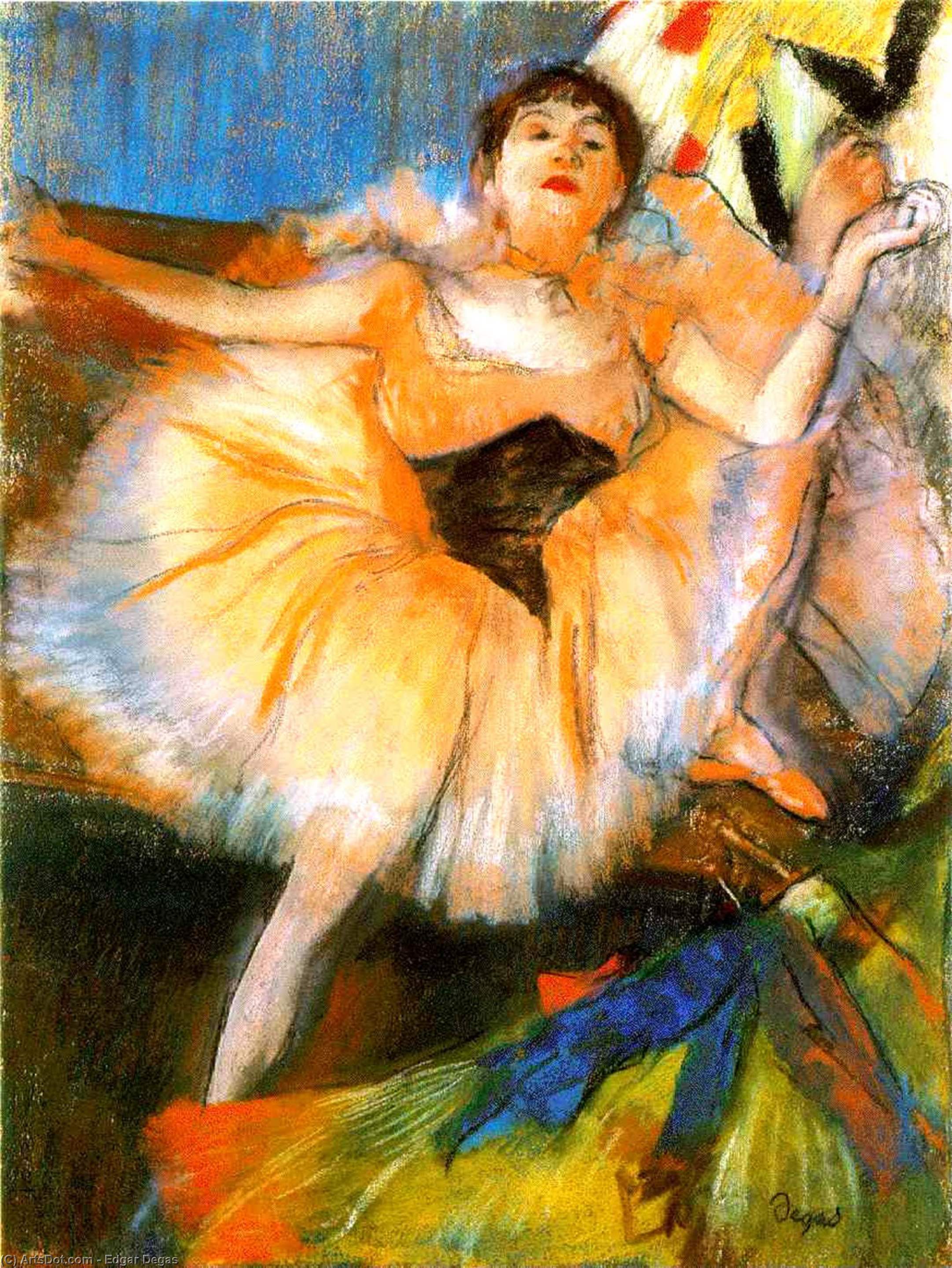
Experience Degas’s ‘Seated Dancer,’ an impressionistic pastel painting capturing a ballerina's grace and movement in a vibrant, lively scene with subtle bird details – perfect for art lovers seeking a timeless piece.
A Moment Frozen in Motion: DeGAs’s “Seated Dancer”
Hilaire-Germain-Edgar deGa’s “Seated Dancer,” painted circa 1880, is more than a depiction of a ballerina; it's a profound meditation on movement, grace, and the fleeting nature of beauty. This pastel masterpiece captures a pivotal moment in a dancer’s performance, frozen in time with an almost unsettling stillness. The subject, a woman dressed in a vibrant yellow gown, embodies the spirit of the burgeoning ballet scene of the late 19th century – a world increasingly fascinated by the athleticism and artistry of female performers.
- Subject Matter: The central figure is undeniably a dancer, likely inspired by deGa’s extensive observations of dancers at the Paris Opera Ballet.
- Style & Technique: Executed in a distinctive pastel style, “Seated Dancer” exemplifies deGa’s unique approach to Impressionism. Unlike his contemporaries who often focused on capturing fleeting light effects, deGa meticulously rendered form and posture, emphasizing the dancer's muscular structure and the delicate folds of her dress. The loose brushwork and vibrant color palette contribute to a sense of dynamism despite the static pose.
The Realist’s Eye: DeGa’s Approach
Despite being associated with Impressionism, deGa’s work is fundamentally rooted in realism. He wasn't interested in simply recording visual impressions; he sought to understand and portray the underlying structure of his subjects with unwavering accuracy. This dedication is evident in the precise rendering of the dancer’s anatomy – her outstretched arms, the curve of her spine, and the subtle tension in her muscles. The artist’s meticulous attention to detail elevates this work beyond a mere representation of a dance scene; it becomes a study in human form and movement.
DeGa's background—his bourgeois upbringing and early training at the Louvre—shaped his artistic sensibilities. He was deeply influenced by classical sculpture, particularly the works of Michelangelo, which informed his understanding of anatomy and composition. This influence is subtly reflected in the dancer’s poised posture and elegant lines.
Symbolism and Composition
The inclusion of two birds within the background adds a layer of symbolic richness to the painting. Birds have long been associated with freedom, grace, and spirituality – qualities that align perfectly with the dancer's performance. Their presence suggests an aspiration towards transcendence, elevating the scene beyond a simple depiction of a ballet dancer. The composition itself is carefully balanced, drawing the viewer’s eye to the central figure while utilizing negative space to create a sense of depth and movement.
Emotional Impact & Legacy
"Seated Dancer" resonates with viewers through its ability to evoke a powerful sense of nostalgia and wonder. DeGa's masterful use of color and light creates an atmosphere of quiet contemplation, inviting us to reflect on the beauty and fragility of human expression. This work stands as a testament to deGa’s artistic genius – a timeless masterpiece that continues to captivate audiences today. A hand-painted reproduction offers a unique opportunity to bring this evocative image into your home or office, adding a touch of elegance and sophistication.