A Moment of Contemplation: Deconstructing Degas's "Seated Violin Player"
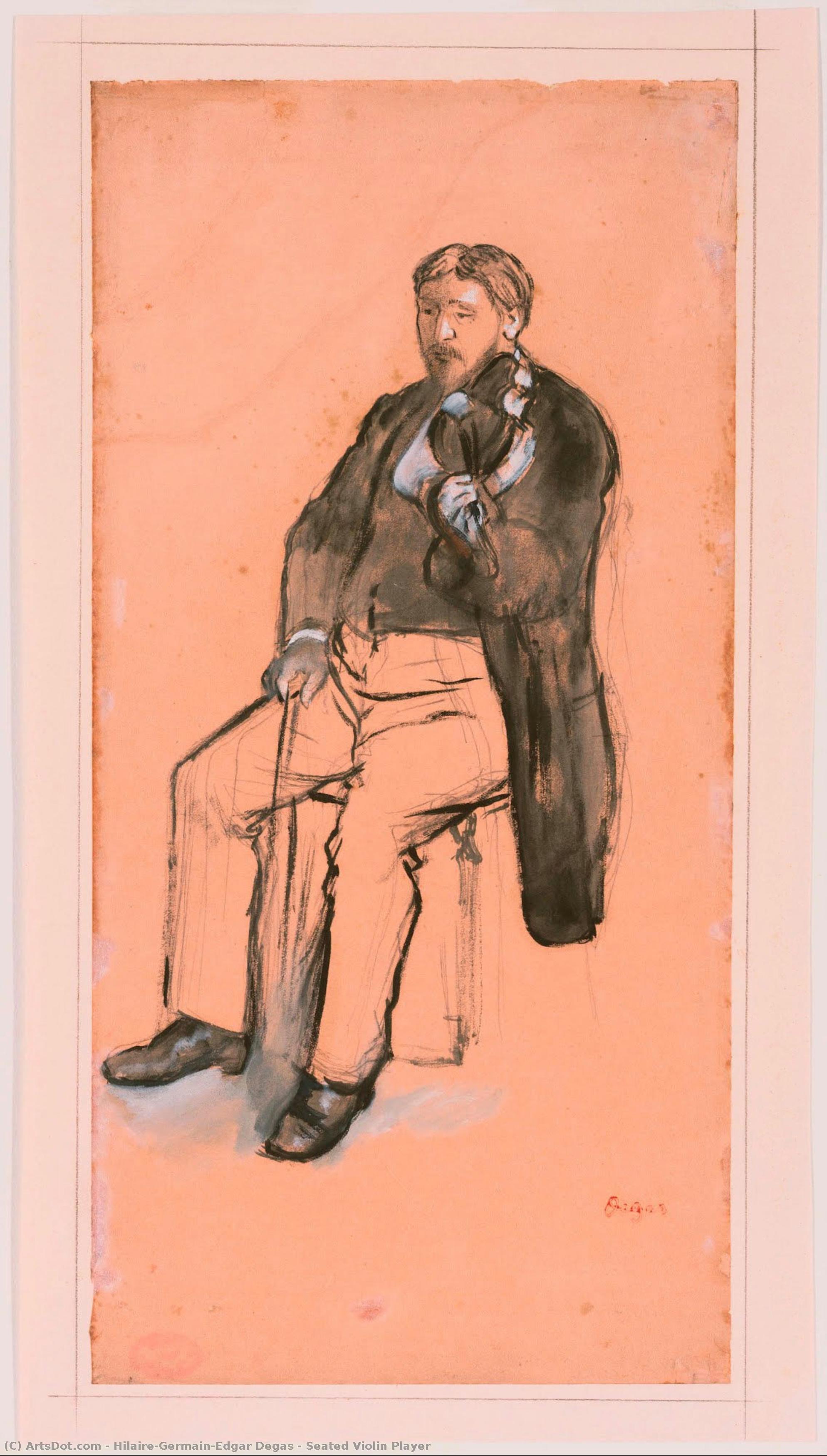
Hilaire-Germain-Edgar Degas’s “Seated Violin Player,” painted in 1872, is more than just a portrait; it’s a carefully constructed tableau of observation and emotion. This evocative sketch, rendered primarily in charcoal and pastel on paper, captures a fleeting moment – a man lost in thought, his violin resting beside him, the scene bathed in an ambiguous light that speaks volumes about the artist's fascination with capturing transient experiences.
Impressionistic Technique and Degas’s Rejection of Realism
Degas famously resisted being categorized as an Impressionist, despite his undeniable influence on the movement. “Seated Violin Player” exemplifies this approach. The loose brushstrokes, visible layering of color, and emphasis on gesture – rather than precise detail – are hallmarks of Degas’s style. He prioritized conveying a feeling, a mood, over a photographic representation. Note the deliberate roughness of the texture achieved through uneven application of pastel; it's not about flawless execution but about imbuing the image with an immediate, almost tactile quality. The simplified perspective and flattened space further contribute to this sense of immediacy, drawing the viewer into the scene as if they were witnessing it firsthand.
Symbolism and the Figure of the Musician
The subject himself – a man seated with his violin – carries significant symbolic weight. Degas frequently depicted musicians, particularly women, capturing them in moments of repose or intense concentration. This pose suggests contemplation, perhaps boredom, or even a quiet struggle with artistic expression. The man’s attire—a coat and cravat—hints at a certain social standing, adding another layer to the interpretation. The violin itself is a potent symbol of artistry, passion, and the pursuit of beauty – elements central to Degas's own artistic endeavors.
Historical Context: Paris in the 1870s
Painted in 1872, “Seated Violin Player” reflects the vibrant cultural landscape of Paris during the Second Empire. The city was a hub of artistic innovation, and Degas was deeply embedded within this environment. The rise of Impressionism challenged traditional academic painting styles, encouraging artists to explore new ways of seeing and representing the world. This work demonstrates Degas’s engagement with these evolving trends while simultaneously forging his own distinct path.
Emotional Impact and Artistic Value
“Seated Violin Player” possesses a remarkable ability to evoke a sense of quiet introspection. The unfinished quality of the sketch, combined with the evocative use of light and shadow, creates an atmosphere of melancholy and contemplation. It’s a piece that invites viewers to pause, reflect, and consider the complexities of human experience. A hand-painted reproduction offers a unique opportunity to bring this captivating artwork into your home or office, adding a touch of artistic sophistication and timeless beauty.