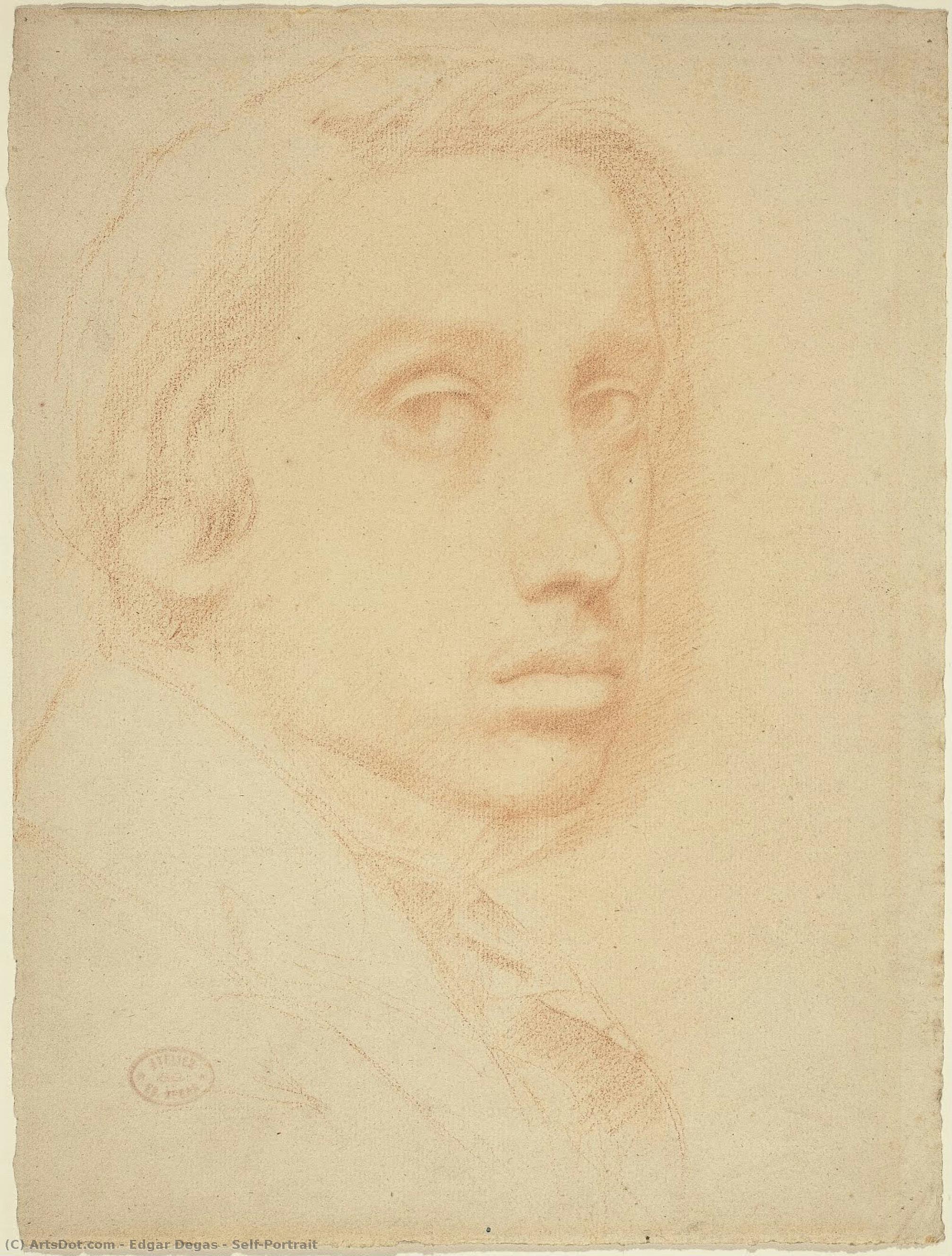
A Study in Quiet Intensity: Edgar Degas’s Self-Portrait
This meticulously rendered sepia self-portrait, executed by Edgar Degas in 1855, offers an intimate glimpse into the mind of a pivotal figure in late 19th-century art. More than just a likeness, it's a carefully constructed meditation on observation, aging, and perhaps, a subtle resistance to the prevailing artistic currents of his time. The painting’s immediate impact lies in its directness – the subject, identified as Degas himself, confronts the viewer with an unwavering gaze, devoid of sentimentality yet profoundly thoughtful. The serious expression etched upon his face speaks volumes about the artist's dedication to realism and his refusal to succumb to the romanticized portrayals favored by many of his contemporaries.
Technical Mastery and a Measured Palette
- Medium: Oil on canvas
- Size: 31 x 23 cm (approximately 12.2 x 9 inches) – a scale that invites close contemplation, fostering a personal connection with the artwork.
- Color Palette: The dominant sepia tone lends an air of timelessness and gravitas, reminiscent of early photography and classical portraiture. This deliberate choice emphasizes the textures of the subject’s skin, beard, and clothing, highlighting Degas's meticulous attention to detail.
- Brushwork: While not overtly Impressionistic in its broken brushstrokes, Degas employs a controlled technique, building up layers of paint to create subtle gradations of tone and shadow. This approach contributes significantly to the painting’s sense of depth and volume, particularly evident in the modeling of his face and hands.
Historical Context: A Realist Amidst Impressionism
Created during a period of immense artistic experimentation – the rise of Impressionism alongside Degas's own steadfast realism – this self-portrait reveals the artist’s unique position. While artists like Monet and Renoir were capturing fleeting moments of light and atmosphere, Degas remained focused on portraying the world with unflinching accuracy, often depicting subjects in their everyday environments—horse stables, ballet dancers, and bathers. This commitment to observation is powerfully evident here, suggesting a desire to capture not just an image but also a sense of time and place. The painting’s creation predates Degas's most famous works, offering a crucial insight into the development of his distinctive style.
Symbolism and Emotional Resonance
The subject’s direct gaze is arguably the most compelling element of the portrait. It suggests an awareness of being observed, inviting the viewer to engage in a silent dialogue. The wrinkles around Degas's eyes hint at the passage of time and the weight of experience – a subtle acknowledgment of mortality. The white background serves not as a distraction but rather amplifies the subject’s presence, drawing all attention to his face and expression. This self-portrait is less about vanity than it is an honest assessment of oneself, reflecting a profound engagement with the complexities of human existence.
A Timeless Masterpiece – Perfect for Display
This hand-painted reproduction captures the essence of Degas’s artistic vision, offering a stunning addition to any art collection or interior design scheme. Its size is ideal for smaller spaces, while its subject matter resonates with viewers across generations. The rich sepia tones and meticulous detail will bring a touch of timeless elegance to your home or office.