Singer in a Café-Concert: A Window into Impressionism’s Soul
Edgar Degas, born Hilaire Germain Edgar De Gas in Paris in 1834, stands as one of the most enigmatic figures in Impressionist art. Often overshadowed by Monet and Renoir's luminous landscapes, Degas carved his own distinctive path—a path rooted in meticulous observation and a profound fascination with capturing fleeting moments of everyday life. He resisted categorization, declaring himself a realist despite his stylistic innovations, reflecting a core belief that truth resided not merely in representation but in the palpable essence of experience. This conviction fueled his artistic endeavors and cemented his legacy as an artist who profoundly reshaped the visual language of his time.
The Painting’s Composition: Capturing Movement and Atmosphere
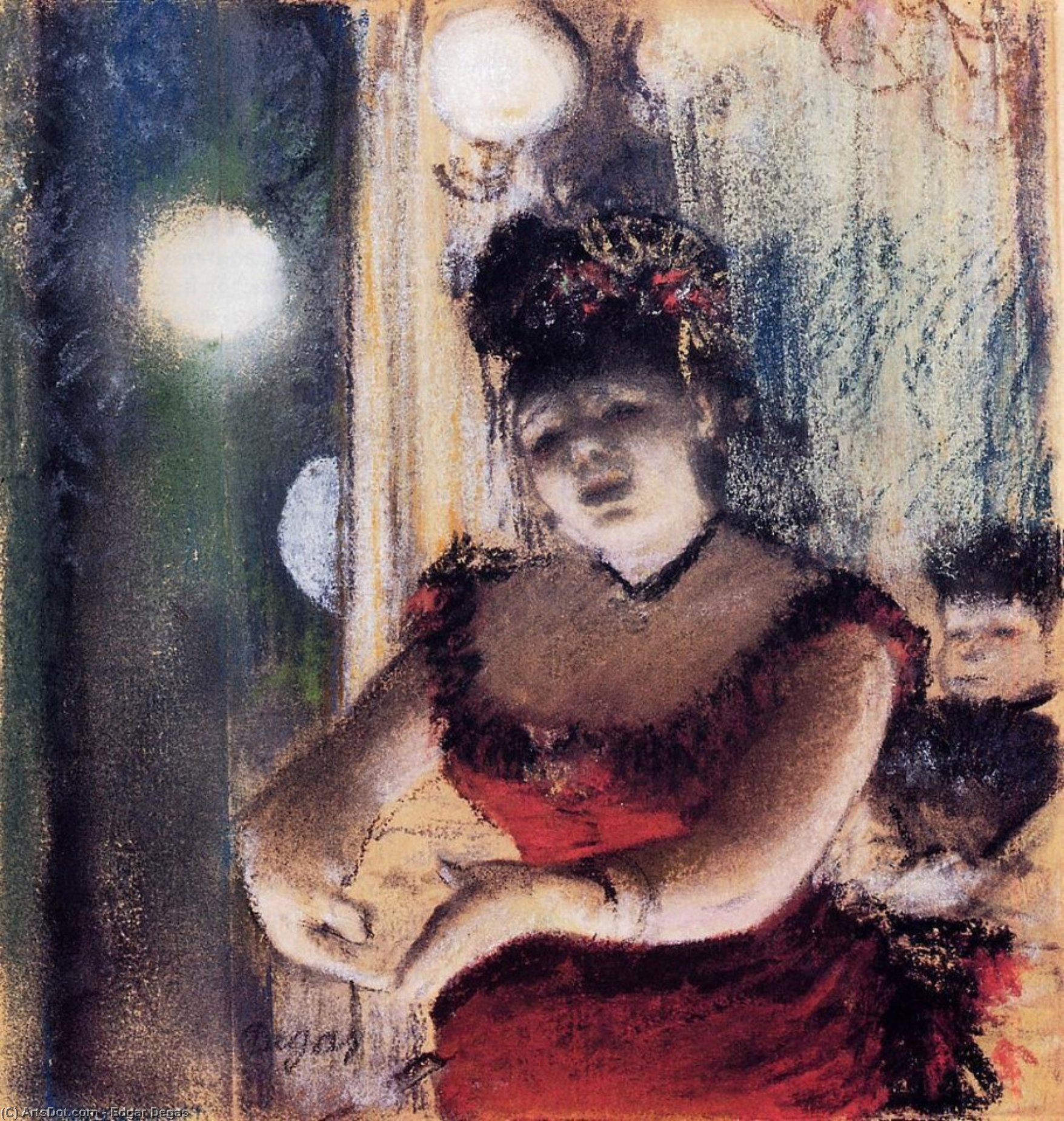
“Singer in a Café-Concert,” created around 1876–77, exemplifies Degas's masterful approach to portraying dynamism and atmosphere. The scene depicts a woman performing onstage in a Parisian café, surrounded by an audience—a quintessential emblem of the Belle Époque’s vibrant social life. Unlike Impressionists who prioritized capturing natural light, Degas deliberately chose to illuminate his subject with artificial gas lamps, creating a warm, intimate glow that envelops the performers and observers alike. The composition is strikingly asymmetrical, mirroring the spontaneity of the café setting itself. Careful attention to detail—the folds of fabric, the posture of the singer’s hands clasped together—reveals Degas's unparalleled skill in rendering movement with astonishing precision.
Impressionism at Its Finest: Technique and Style
Degas’s technique is characterized by loose brushstrokes and a palette dominated by muted tones—primarily browns, ochres, and grays—contrasting sharply with the vibrant hues favored by many of his contemporaries. He employed a method known as “plein air” painting, though he often worked in his studio to achieve similar effects. The artist’s meticulous layering of paint creates a textured surface that captures the subtle nuances of light and shadow, conveying an immediacy and spontaneity rarely found in academic art. This deliberate departure from traditional conventions—particularly the illusionistic rendering of depth—was central to Degas's artistic vision and solidified his position as a pioneer of Impressionism.
Beyond Technique: Symbolism and Emotional Resonance
“Singer in a Café-Concert” transcends mere visual representation; it embodies a deeper exploration of human emotion and social observation. The woman onstage represents not just a performer but also the vulnerability and ambition inherent in pursuing artistic expression—a theme that resonates powerfully with Degas’s own life experiences. Furthermore, the café itself symbolizes the bustling energy of Parisian society, capturing the spirit of innovation and change that defined the era. The painting's subdued palette contributes to its melancholic mood, prompting contemplation on themes of performance, identity, and the fleeting nature of beauty—elements that continue to captivate viewers today.
A Legacy Enduring Through Reproduction: Bringing Degas’ Vision Home
Hand-painted reproductions of “Singer in a Café-Concert” offer art lovers an opportunity to experience Degas's artistic genius firsthand. Created using traditional oil painting techniques and archival-quality materials, these reproductions faithfully recreate the original artwork's luminous glow and textural richness. They are available on
https://ArtsDot.com, allowing collectors and interior designers alike to infuse their spaces with a piece of Impressionist history—a testament to Degas’s enduring influence on art and culture. Discover more about Degas's artistic journey at
https://ArtsDot.com and explore the Museum Rothschild Art Foundation on
https://ArtsDot.com. Immerse yourself in the world of Impressionism via Wikipedia:
Wikipedia.