A Fleeting Moment in Paris: The Magic of Degas’ Singer in Green
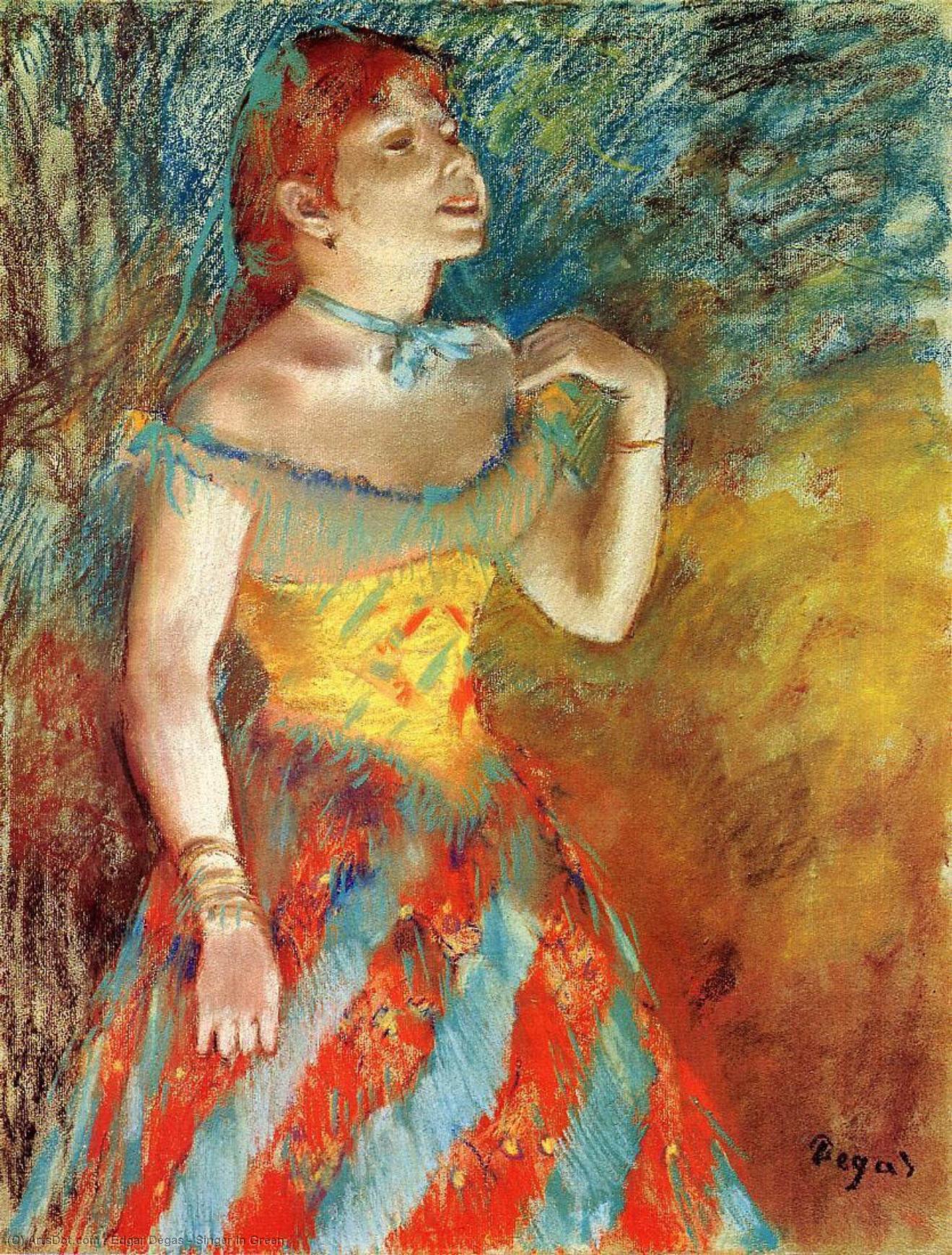
In the heart of 1884 Paris, amidst the gaslit glow of cabarets and the rhythmic pulse of urban nightlife, Edgar Degas captured a moment that transcends time. Singer in Green is not merely a portrait; it is a sensory immersion into the Belle Époque. The artwork presents us with a young performer poised on stage, caught in that breathless instant between notes. Unlike the formal, stiff portraits of the era that sought to immortalize status, Degas directs our gaze toward the raw, unvarnably human experience of performance. There is a profound intimacy in her presence—a sense of vulnerability masked by the vibrant theatricality of her costume. As she stands before an unseen audience, the viewer becomes a silent participant in the smoky atmosphere of a Parisian music hall, feeling the weight of the gaze and the electric anticipation of the song.
The brilliance of this piece lies in Degas’ masterful command of pastel, a medium that allows for a luminous, almost tactile quality. Through the delicate layering of chalks on paper, he achieves a breathtaking spectrum of color and light. The singer's attire—a striking arrangement of vivid yellows, turquoise, and deep oranges—shimmers against the softer, more muted tones of the background. This technique creates a shallow depth of field, where the subject seems to vibrate with life while the world around her dissolves into a soft, impressionistic haze. His brushwork, or rather his stroke of the pastel, is loose and expressive, imbuing the fabric of her dress and the contours of her face with a sense of movement. It is this very spontaneity that makes the work feel alive, as if the singer might exhale or shift her weight at any second.
The Realist’s Eye: Composition and Symbolism
While history often labels Degas an Impressionist, he famously preferred the mantle of a Realist, and Singer in Green serves as a testament to this distinction. He does not seek to paint the sunlight hitting a landscape, but rather the artificial, flickering light of the theater that defines modern life. His composition is heavily influenced by the asymmetrical aesthetics of Japanese woodblock prints, utilizing unexpected crops and off-center focal points to create a sense of candid photography. This deliberate departure from academic symmetry forces the eye to wander through the details—the tilt of her head, the way the light catches her shoulder, and the subtle, melancholic expression that lingers beneath her stage persona.
Symbolically, the artwork explores the duality of public spectacle and private emotion. The vibrant, almost aggressive colors of her costume represent the energy and passion of the performer, yet her eyes and posture suggest a deeper, more introspective reality. There is a quiet tension here—the struggle to maintain a facade of joy while navigating the demanding gaze of the public. For the collector or interior designer, this piece offers more than just aesthetic beauty; it provides a sophisticated narrative anchor. Whether placed in a contemporary gallery setting or a classic study, Singer in Green brings an air of cultured nostalgia and emotional depth, inviting anyone who views it to contemplate the beautiful, fleeting nature of human expression.