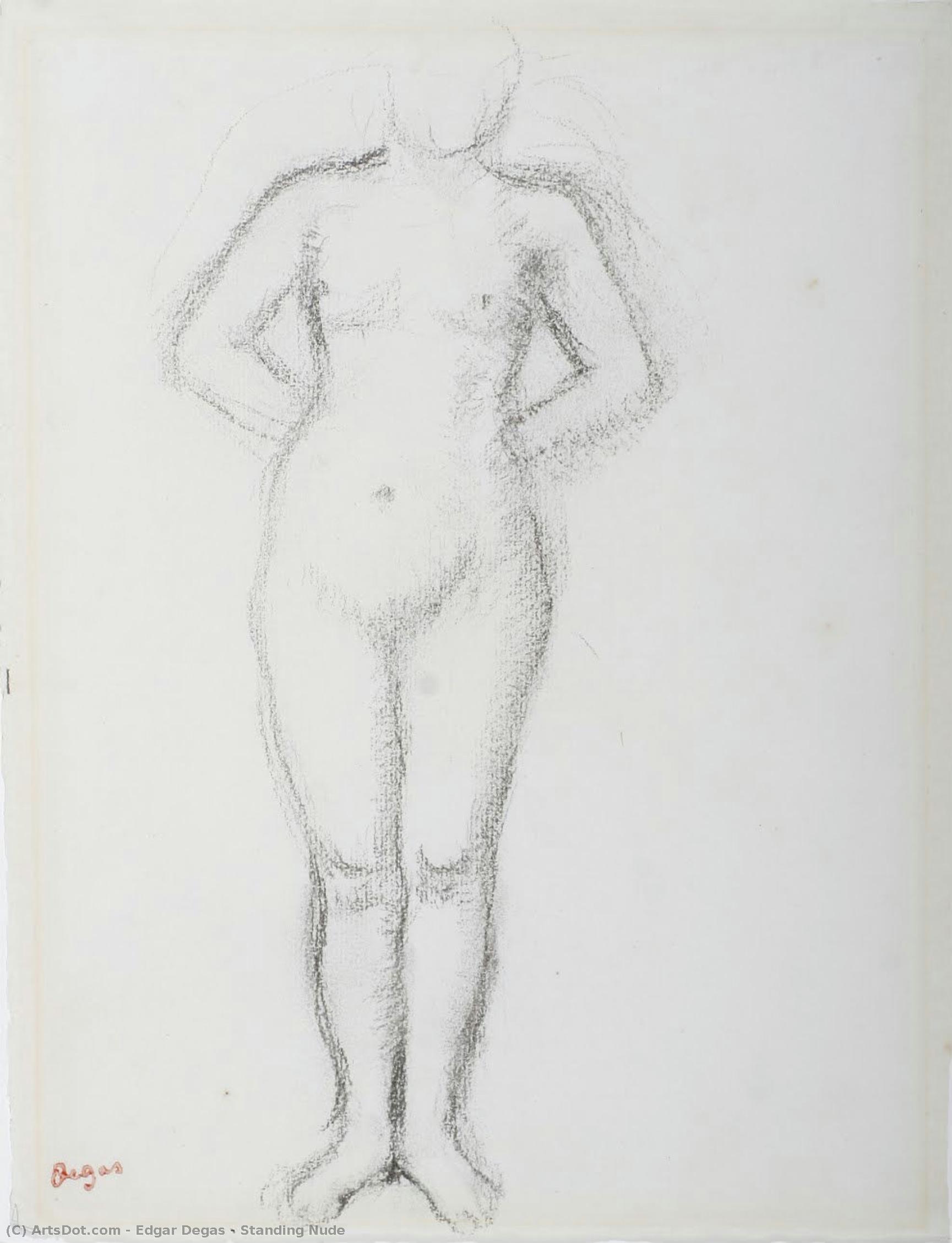
Discover Edgar Degas’ ‘Standing Nude,’ a dynamic charcoal study of female form & movement. Explore Impressionistic elegance & the artist's unique style – perfect for art lovers.
Edgar Degas: A revolutionary French artist known for his captivating ballet dancers, Parisian scenes, and innovative techniques—a true master of modern art.
Discover Boca Raton Museum of Art! Explore dynamic exhibitions, art prints & serene realism in South Florida's leading cultural institution. Experience creativity & inspiration through diverse collections and engaging programs.
A Study in Movement: Edgar Degas’s ‘Standing Nude’ (1893)
This captivating charcoal drawing offers a compelling glimpse into Edgar Degas's masterful exploration of the human form. Created in 1893, *Standing Nude* is not merely a depiction of the female figure; it’s an investigation of gesture, weight, and the fleeting beauty of movement – hallmarks of Degas’s unique artistic vision.
Subject & Composition
The artwork presents a solitary nude female figure standing centrally against a stark, undefined background. This deliberate simplicity focuses all attention on the model's anatomy and pose. Degas eschews elaborate settings or narrative elements, prioritizing instead the pure study of form. The figure isn’t idealized in the classical sense; rather, it feels remarkably *present* – caught in a moment of quiet contemplation or poised for action.
Style & Technique
While often categorized as an Impressionist, Degas preferred to be considered a realist. This distinction is evident in his meticulous observation and commitment to accurately representing the human body. However, *Standing Nude* also displays distinctly Impressionistic qualities through its loose, expressive lines and emphasis on capturing a momentary impression. The charcoal medium itself contributes significantly to the work’s character. Degas employs varying pressure to create a rich tonal range – from delicate highlights to deep shadows – defining the contours of the body with remarkable sensitivity. The lack of extensive blending emphasizes the artist's hand, lending an immediacy and energy to the drawing.
Historical Context & Artistic Influences
Degas’s fascination with the nude stemmed from a broader interest in depicting modern life. He moved away from traditional historical painting, choosing instead to portray scenes of everyday existence – dancers, laundresses, women at their toilette. This drawing reflects his ongoing study of anatomy and movement, likely informed by his extensive observation of ballet dancers. The influence of photography, a burgeoning art form in the late 19th century, is also apparent in Degas’s cropping and unconventional viewpoints. He frequently used photographs as studies for his compositions, capturing fleeting moments and dynamic poses.
Symbolism & Emotional Impact
Beyond its technical brilliance, *Standing Nude* invites contemplation on themes of vulnerability, beauty, and the human condition. The figure’s unadorned state strips away societal artifice, presenting a raw and honest portrayal of the body. While devoid of overt symbolism, the drawing evokes a sense of quiet intimacy and psychological depth. The absence of a narrative allows viewers to project their own emotions and interpretations onto the work, fostering a personal connection with the subject.
Collecting & Interior Design Considerations
A reproduction of *Standing Nude* would serve as a sophisticated focal point in any interior space. Its monochromatic palette lends itself well to a variety of décor styles, from minimalist modern to classic traditional. The drawing’s elegant lines and subtle emotional resonance make it an ideal choice for bedrooms, studies, or living areas seeking a touch of artistic refinement. Its size (unknown but likely intimate) suggests suitability for smaller spaces where its details can be fully appreciated. This piece is not just a visual delight; it's a testament to Degas’s enduring legacy as one of the most innovative and influential artists of his time.