A Study in Quiet Observation: Degas's Still Life with Lizard
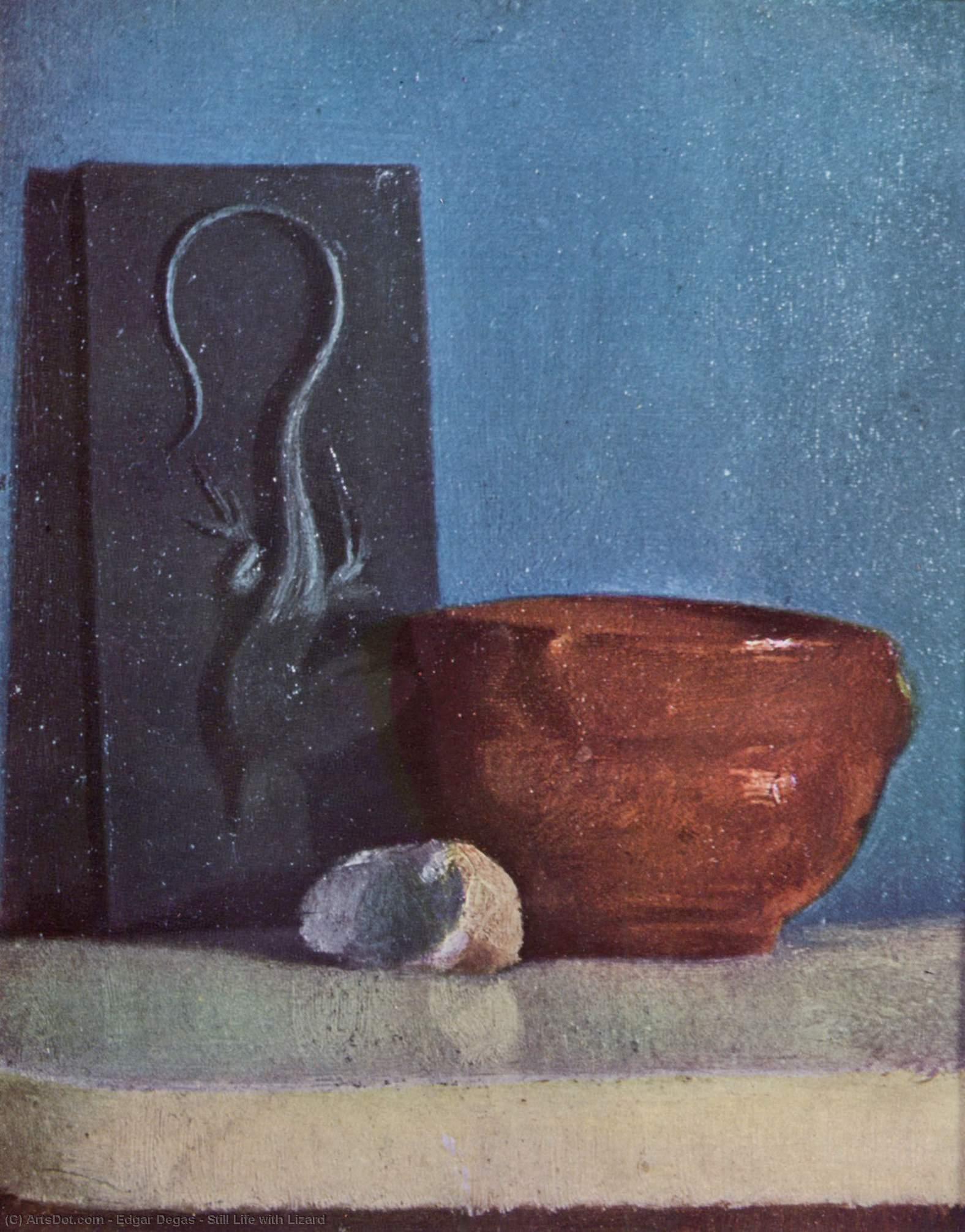
This meticulously rendered still life, measuring 18 x 14 cm and dating back to 1860, offers a compelling glimpse into the artistic world of Edgar Degas – a figure often associated with Impressionism yet fundamentally rooted in realism. More than just a depiction of objects arranged on a table, this work embodies Degas’s profound dedication to observing and capturing the nuances of everyday life with an almost unsettling honesty. The composition centers around a simple bowl, its form rendered with remarkable precision, surrounded by a carefully curated collection of items: a delicate vase, a worn book, and a smooth stone – each contributing to a sense of quiet contemplation.
- The Artist's Vision: Degas’s resistance to the Impressionist label speaks volumes about his artistic philosophy. He wasn’t interested in fleeting moments of light or atmospheric effects; instead, he sought to freeze a particular scene, imbued with a sense of stillness and observation.
- Technical Mastery: The artist's skill is evident in the detailed rendering of textures – the glossy surface of the bowl, the rough grain of the stone, the aged paper of the book. This meticulous approach reflects Degas’s training in classical art, combined with his own unique eye for detail.
Symbolism and Narrative
The inclusion of a lizard within this still life is particularly intriguing. Lizards, often associated with reptiles and transformation, can be interpreted as symbols of change, adaptability, or even hidden secrets. In the context of Degas’s work, it adds an element of mystery and invites the viewer to consider the deeper meanings behind the arrangement. The two birds, one perched delicately near the top left corner and another positioned towards the bottom right, further contribute to this sense of narrative – perhaps representing freedom, observation, or even a subtle commentary on the natural world.
- The Blue Wall: The backdrop of a blue wall provides a cool, neutral canvas that allows the objects in the foreground to take center stage. It also subtly evokes a sense of formality and restraint, aligning with Degas’s commitment to realism.
Historical Context and Artistic Significance
Created in 1860, this piece reflects the artistic climate of the mid-nineteenth century. While Impressionism was beginning to emerge, artists like Degas were still grappling with traditional academic styles. This work demonstrates a transitional phase in his career, showcasing his growing interest in capturing realistic details while retaining a classical sensibility. It’s a testament to Degas's ability to synthesize diverse influences – from his early admiration for the Louvre’s collection to his own independent observations of Parisian life.
- Degas and Movement: Though known for his depictions of dancers, Degas’s interest in capturing stillness and observation is equally evident in this still life. It highlights a recurring theme throughout his oeuvre – the tension between movement and repose.
Emotional Impact and Collector's Value
“Still Life with Lizard” transcends a simple depiction of objects; it evokes a sense of quiet contemplation, inviting viewers to pause and consider the beauty in everyday details. This hand-painted reproduction captures not only the visual accuracy of Degas’s original but also the emotional depth and intellectual rigor that define his artistic legacy. A remarkable addition to any collection, this piece offers a tangible connection to one of art history's most intriguing figures.