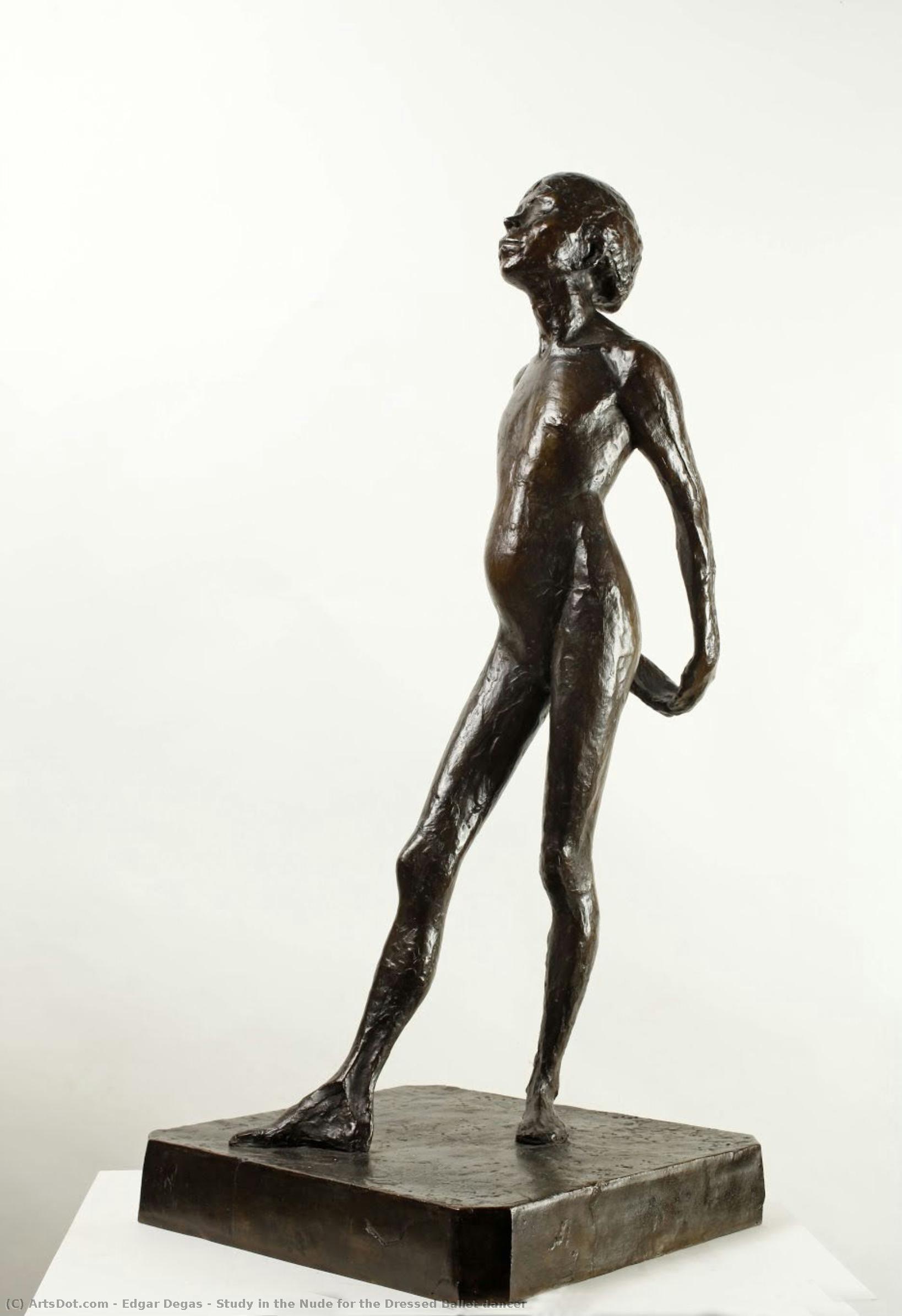
A Study in Quiet Dynamism: Edgar Degas’s ‘Study in the Nude for the Dressed Ballet Dancer’
Edgar Degas, a figure perpetually shadowed by the brilliance of Impressionists like Monet and Renoir, nevertheless carved out an indelible mark on art history through his singular approach to observation and representation. This photograph captures a bronze sculpture – arguably his most iconic – titled ‘Study in the Nude for the Dressed Ballet dancer,’ offering a glimpse into the artist’s fascination with capturing fleeting moments of movement and emotion within seemingly static forms.
- Subject Matter: The sculpture portrays a young male nude figure positioned on one leg, arms raised in an expressive gesture. This posture immediately speaks to Degas's preoccupation with ballet dancers – specifically the challenges of portraying their dynamism while maintaining compositional balance.
- Style & Technique: While often categorized as Impressionistic due to his rejection of academic conventions and focus on capturing light and atmosphere, Degas’s style transcends easy categorization. He prioritized realism, meticulously documenting anatomical detail alongside subtle tonal variations that convey a sense of palpable energy. The bronze casting technique itself contributes to this effect; the surface texture reveals deliberate marks and irregularities indicative of oxidation – a process carefully controlled by Degas to enhance visual depth and authenticity.
The sculpture’s placement on a square pedestal establishes a grounding element against the dancer's movement, emphasizing stability while simultaneously highlighting the precariousness of his stance. The diffused lighting—a hallmark of Impressionism—minimizes harsh shadows, allowing the contours of the body to emerge with remarkable clarity. This deliberate compositional choice underscores Degas’s intention to capture not just an image but a feeling – the tension between stillness and motion inherent in artistic expression.
- Historical Context: Created around 1898, ‘Study in the Nude for the Dressed Ballet dancer’ reflects the broader artistic landscape of the Belle Époque. Degas was deeply invested in documenting everyday life, particularly the rituals surrounding ballet performances. This sculpture represents a pivotal moment in his exploration of human anatomy and gesture, anticipating developments in modern sculpture that would prioritize expressive form over idealized beauty.
- Symbolism & Emotional Impact: Beyond its technical prowess, the sculpture embodies a profound symbolic resonance. The nude figure symbolizes vulnerability and purity, juxtaposed against the upward reach of the arms – representing aspiration and striving for perfection. Degas’s masterful rendering evokes a sense of quiet contemplation alongside palpable energy, inviting viewers to consider the complexities of human experience.
The photograph itself serves as an exceptional tool for appreciating the sculpture's nuances—the subtle variations in bronze tone, the textural richness of the surface, and the carefully considered lighting. It’s a testament to Degas’s unwavering commitment to observation and his ability to transform fleeting moments into enduring works of art.