Edgar Degas: A revolutionary French artist known for his captivating ballet dancers, Parisian scenes, and innovative techniques—a true master of modern art.
A Moment Frozen in Time: Edgar Degas’s “The Pedicurist”
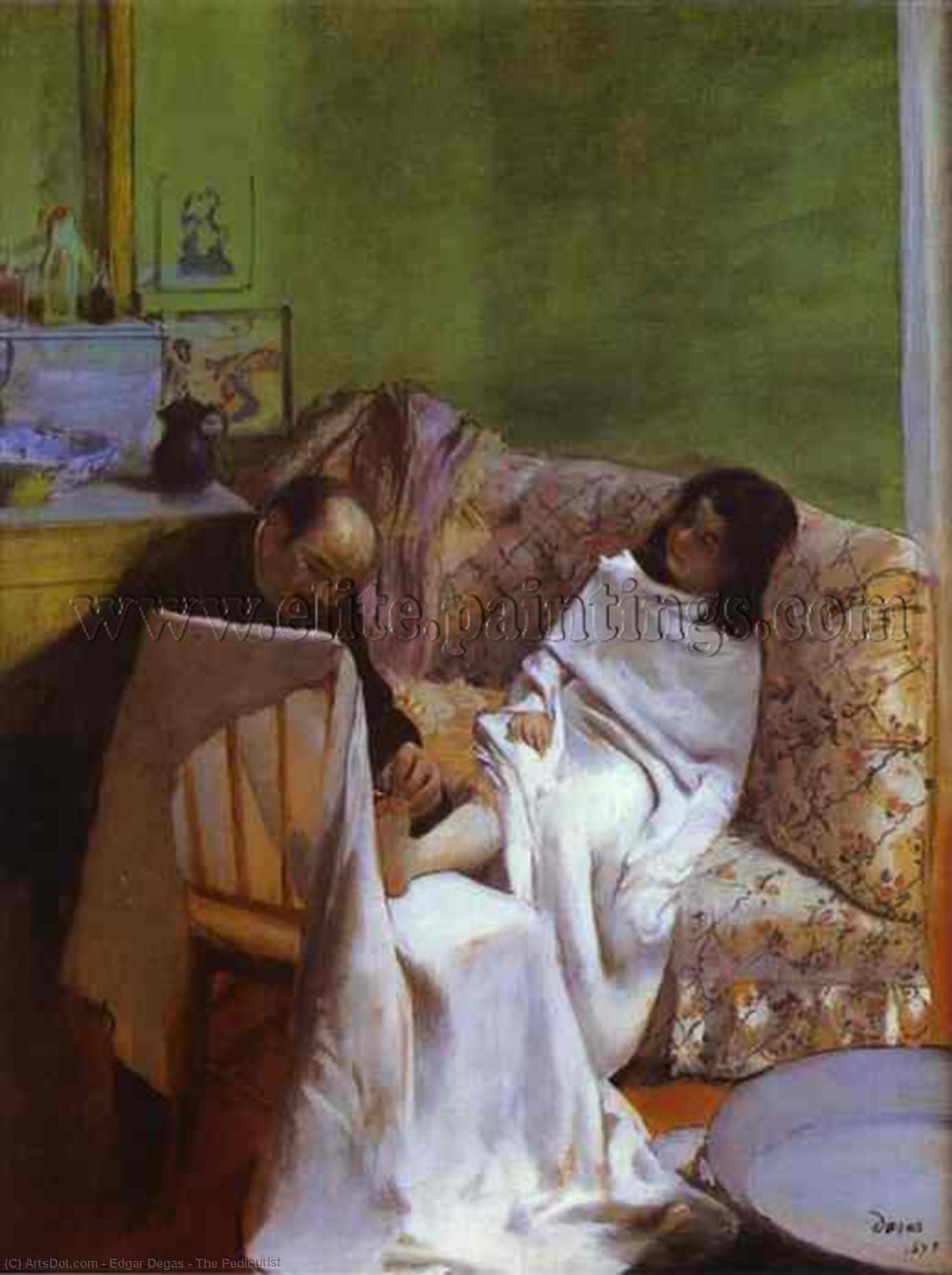
“The Pedicurist,” painted by Edgar Degas in 1873, isn't merely a depiction of a domestic scene; it’s an exquisitely crafted distillation of Impressionism itself. More than just capturing the visual appearance of a Parisian salon, Degas delves into the psychological nuances of everyday life—a characteristic that firmly distinguishes him from his fellow Impressionists who often prioritized fleeting beauty over profound observation. This painting stands as a testament to Degas's unwavering dedication to realism, albeit filtered through the lens of artistic innovation.
The Style and Technique of Impressionism
Degas’s approach aligns perfectly with the burgeoning Impressionist movement. Rejecting the academic conventions of his time—characterized by meticulous detail and idealized forms—he embraced a looser brushstroke technique that prioritized capturing the effects of light and atmosphere. Notice how Degas eschews sharp lines, favoring soft, blended colors to convey the diffused illumination of the room. The artist’s palette is muted yet vibrant, reflecting the subtle tonal variations present in the scene. He skillfully utilizes broken color—applying pigment in small patches rather than blending it seamlessly—to create an illusion of shimmering light and texture. This technique isn't simply about replicating what the eye sees; it's about conveying how the viewer perceives the world.
A Window into Victorian Society
The painting’s historical context illuminates the social mores of Victorian England. The scene unfolds within a private home, reflecting the growing emphasis on domesticity and refinement during this era. The woman receiving the pedicure embodies the idealized femininity of the period—quiet dignity, graceful posture, and an aura of serene composure. Her companion, standing attentively beside her, represents the supportive role expected of men in Victorian society. The inclusion of a cat adds an element of domestic tranquility, symbolizing comfort and companionship within the home.
Symbolism Beyond Surface Appearance
Beyond its immediate visual appeal lies a subtle layer of symbolism. The act of pedicure itself speaks to concerns about hygiene and beauty—values paramount in Victorian culture. However, Degas’s gaze is focused not on these outward symbols but rather on the unspoken connection between the two women. Their postures convey intimacy and vulnerability, hinting at deeper emotional complexities beneath the surface. The dimly lit room reinforces this sense of privacy, inviting contemplation about the private sphere of domestic life.
Emotional Resonance: Capturing a Fleeting Impression
Ultimately, “The Pedicurist” succeeds in conveying an arresting emotional impression. Degas doesn’t aim to portray a narrative drama; instead, he captures a single moment—a quiet exchange between women—with remarkable sensitivity. The painting's subdued palette and masterful brushwork evoke a feeling of stillness and contemplation, prompting viewers to consider the beauty found within ordinary routines. It is this ability to distill complex emotions into visual form that cements Degas’s legacy as one of the most influential artists of his time. If you desire to experience the elegance and artistry of “The Pedicurist” firsthand, a meticulously crafted reproduction from ArtsDot.com offers an unparalleled opportunity to bring this masterpiece into your home. Explore our collection at https://ArtsDot.com/.