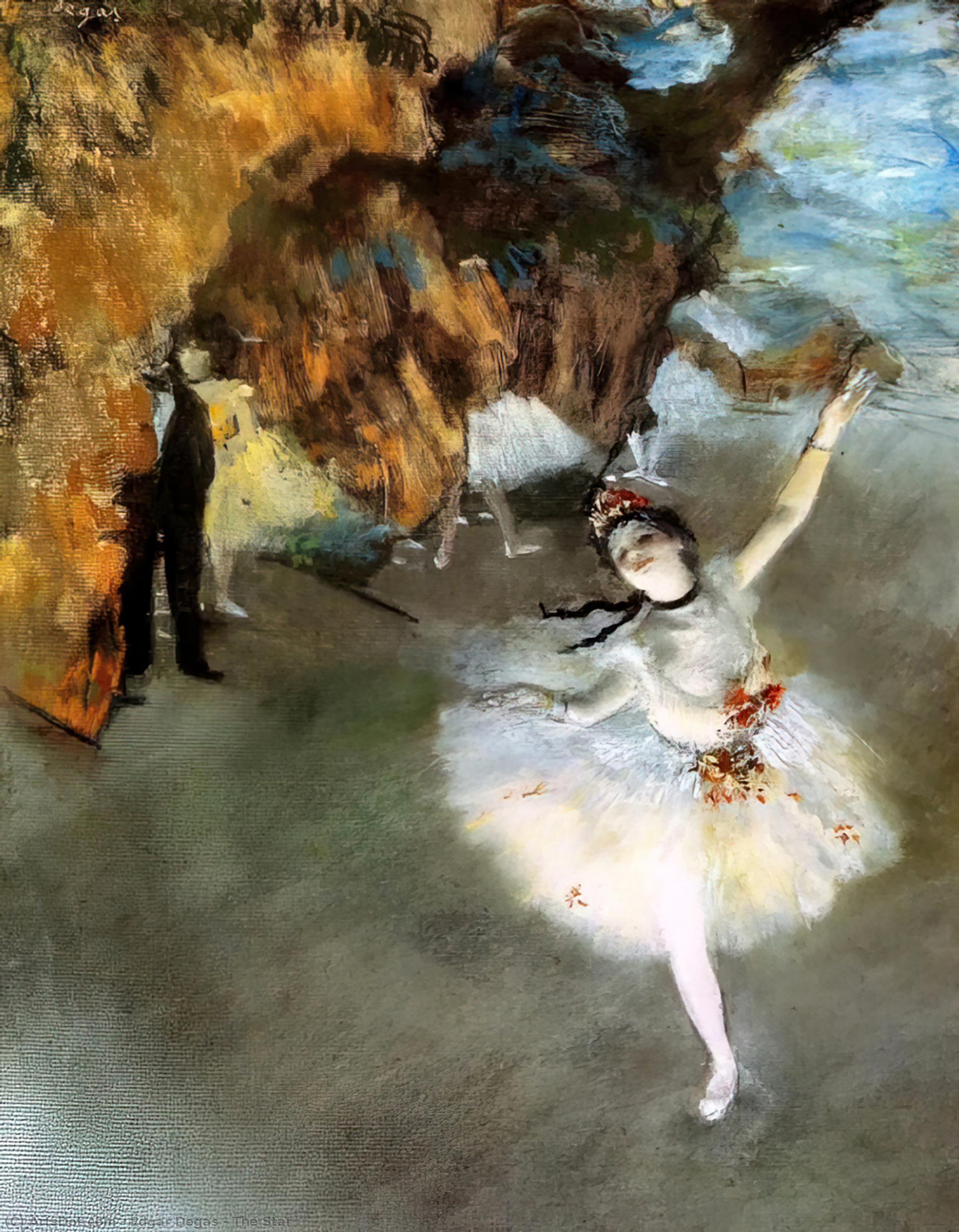
A Glimpse into the World of Ballet – The Star by Edgar Degas
Edgar Degas, a name synonymous with Impressionism, possessed a singular fascination that transcended mere artistic pursuit; he was utterly captivated by the world of ballet. Within his extensive oeuvre, The Star, also known as Dancer with a Bouquet of Flowers or Star of the Ballet, stands as a particularly poignant and evocative example of this obsession. Created between 1876 and 1877 in pastel on monotype, it’s not simply a depiction of a dancer; it's a carefully constructed tableau brimming with psychological depth, movement, and an almost palpable sense of atmosphere.
Degas wasn’t content to merely record the surface appearance of his subjects. He was driven by a desire to capture their essence – their isolation, their intensity, and the fleeting moments that defined their existence. This is brilliantly realized in The Star, where the dancer, Rosita Mauri, isn't posed statically but imbued with a sense of poised anticipation, her gaze directed towards an unseen audience. The painting whispers of a world behind the curtain – a world of ambition, scrutiny, and perhaps, a touch of melancholy.
The Artist’s Unique Approach: Realism in a Modern World
While often categorized as an Impressionist, Degas deliberately resisted this label, preferring to describe himself as a realist. He eschewed the plein-air painting favored by many of his contemporaries, instead meticulously crafting his works within the confines of his studio. This deliberate choice allowed him to exert greater control over every detail – from the delicate texture of the pastel to the precise arrangement of the background figures. His mastery of drawing is immediately apparent; the dancer’s form is rendered with astonishing accuracy and a remarkable understanding of anatomy, yet she's not frozen in time but captured mid-movement, radiating grace and power.
The technique itself – pastel on monotype – contributes significantly to the painting’s unique character. Monoprinting allows for subtle variations in tone and color, creating a luminous quality that mimics the effects of natural light. The use of multiple layers of pastel builds up depth and richness, while the slightly blurred edges contribute to the sense of movement and immediacy.
A Symphony of Details: Horses, Shadows, and Symbolism
Beyond the central figure, The Star is replete with carefully considered details that enrich its narrative. The presence of horses in the background – a detail often overlooked – has been interpreted as a symbolic link between dance and equestrianism, reflecting Degas’s lifelong fascination with horses and his desire to capture the dynamism of both disciplines. Notice also the shadowy figure lurking behind the curtain; this enigmatic presence hints at the demanding world of professional ballet, where talent is nurtured alongside rigorous discipline and often, a degree of exploitation.
The bouquet of flowers held by the dancer adds another layer of meaning. It’s not merely an ornamental detail but a symbol of beauty, fragility, and perhaps even fleeting fame. The arrangement itself – a simple yet elegant bunch of white flowers – speaks to the purity and grace associated with ballet.
A Legacy Preserved: Degas's Ballet Series and Beyond
The Star is part of a larger series of paintings by Degas focused on the world of ballet, offering an unprecedented glimpse into this often-hidden realm. These works, now housed in prestigious institutions like the Musée d'Orsay in Paris, are celebrated for their psychological insight and their ability to capture the essence of dance. Degas’s influence on subsequent generations of artists is undeniable, and his legacy continues to inspire awe and admiration today. For those seeking a high-quality reproduction of this captivating masterpiece, ArtsDot offers meticulously crafted hand-painted reproductions that faithfully capture the spirit and artistry of Edgar Degas.